
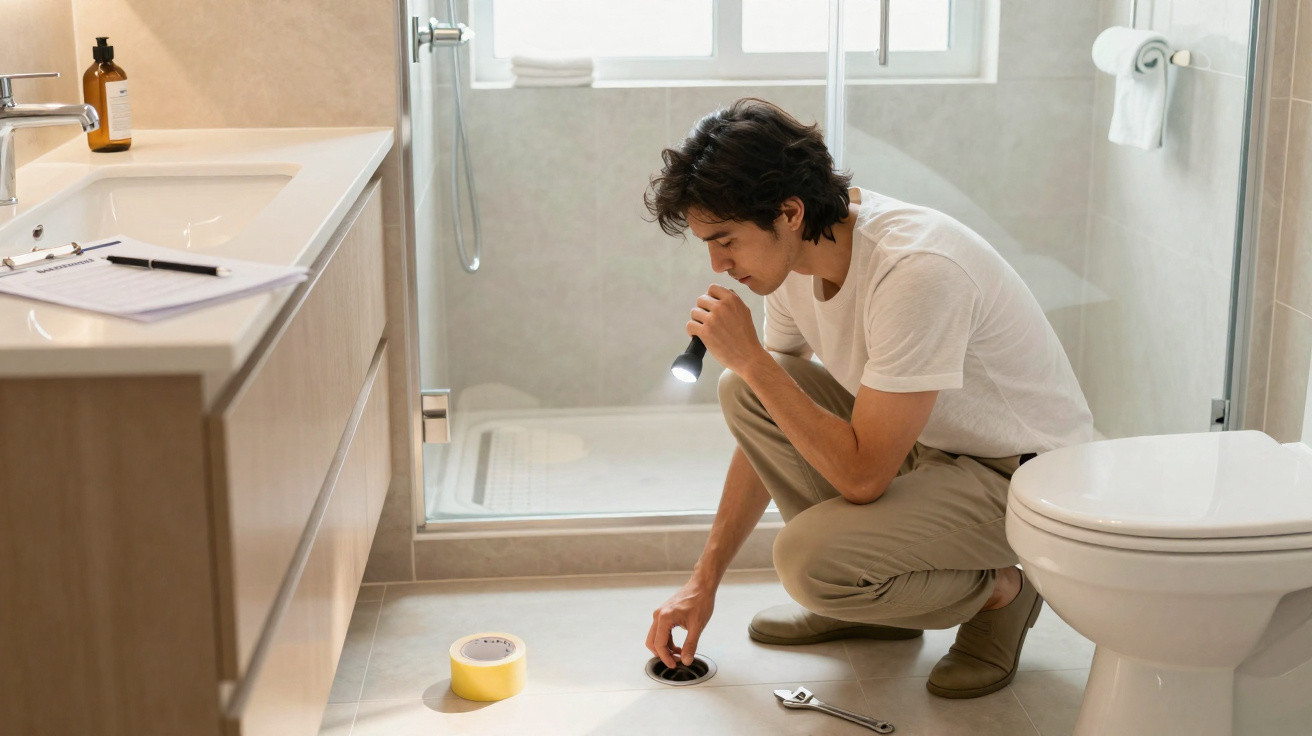
You walk into the bathroom, switch on the light, glance quickly in the mirror and… that blast of sewer smell seems to rise straight from the floor.
The basin is spotless, the toilet gleams and there is no build-up of hair in the drain. Yet the odour remains, stubborn as an unwanted guest who refuses to leave. You open the window, pour in scented disinfectant and spray an air freshener. It works for a few minutes. Then everything returns. Eventually, a question many people would rather avoid comes up: is this merely dirt, or is something wrong with the plumbing? When a sewer smell appears, it is usually a quiet warning sign. In most cases, the real source is hidden somewhere beyond sight.
The smell that reveals an invisible problem
A sewer smell in a clean bathroom creates a very particular kind of frustration. It is not simply unpleasant; it feels unfair at home. You scrub, mop, wash the bath mat and spend money on fragranced products. But your nose does not lie. Everything in the house may appear to be in order, while your sense of smell signals that a connection to the drainage system is allowing gas into the room. It may sound like something from a plumbing horror film, but it is not. It is routine in older flats, homes altered badly during refurbishment and even new-build properties completed in a rush.
A building manager at a block in east London said that, in one particular month, more than half of residents’ complaints involved sewer smells coming from bathrooms. There were no visible leaks, no raised flooring and no damp penetration. In one case, a resident had already replaced the toilet twice. The cause? A simple sealing ring fitted incorrectly. In another flat, the shower drain looked fine, but its internal trap had dried out through lack of use, allowing gas to rise directly from the pipework. Small, almost imperceptible issues-but enough to turn every shower into a test of patience.
The process behind the bad smell is nearly always the same: sewer gases find an unobstructed route into the room. In correctly installed systems, that route is blocked by water-filled traps, rubber rings and dedicated seals. When one of these fails, the bathroom becomes something like a chimney. The smell may emerge from the shower drain, the basin, a utility-area drain connected to the same branch pipe or even from the base of the toilet. This is the point many people overlook: pouring in scented products only disguises the problem. The actual solution is finding where the seal has failed. Without that, it is a losing battle.
How to track down the real source of a sewer smell
The first step is not at all glamorous: calmly put your nose near each suspect point. Check the shower drain, floor drain, washing-machine drain, toilet base and basin trap. Do this one at a time, with the door shut and the window as closed as possible. In many bathrooms, the strongest smell comes from only one specific place but spreads quickly. If possible, temporarily cover individual drains with a plastic bag weighed down with water. Leave them for a few minutes. If the odour eases, you have found the culprit. This straightforward test can already help distinguish between a toilet issue, a drain problem or deeper pipework trouble.
Next, note whether the odour becomes worse at particular times. In the morning, when many neighbours use their bathrooms simultaneously, the increased flow through the drainage pipes can cause gas to seek out any gap. On dry days, or when a bathroom is rarely used, the trap in some drains can dry up and lose its water barrier. We have all experienced it: you cannot be bothered to use the utility-room bathroom for days, then walk in and find the smell unbearable. Sometimes it is not a major structural drama at all; the trap simply needs water. A bucketful would solve it, although no one mentions that in adverts for stylish show flats.
Let us be honest: no one does this every day. Few people realise, for instance, that a basin trap needs minimal maintenance, that a dry drain is an open invitation for gas, or that cracked silicone around the toilet base is more than a cosmetic issue. When the source is not immediately obvious, many people are tempted to pour harsh chemicals down the drain in the hope of “killing the smell”. That can damage pipes and rubber joints, and may even release more gas all at once. The right approach is different: establish whether the issue is a simple sealing failure, a lack of pipe ventilation-because a vent stack is blocked or absent-or incorrectly fitted drainage. Anyone who ignores these possibilities may live with the smell for years, assuming it is “normal in an old block”. It is not.
Seals, simple tests and when to call in help
Once you have identified the most likely source, a practical way to tackle the cause is to concentrate on the seals. Around the toilet, check for any gaps between its base and the floor. Carefully run your hand around it and look for dust collecting where it should not, which can indicate air passing through. If the silicone is loose or brittle, the barrier against gas may have failed. At the drain, remove the grille and check whether there is a trapped gully or an internal cup containing water. If it is dry, fill it. If the water disappears quickly, there may be a crack. It is also worth inspecting the basin trap-the U-shaped fitting below the washbasin. If it is poorly connected or loose, smells can rise from there.
Many people get the dose of makeshift repair wrong. They seal a drain with electrical tape, apply three layers of silicone over everything or throw a toilet freshener block into every opening. It may work for a few days, then the smell returns even stronger. The best option is to do as little as possible, but do it correctly. Before opening any drainage connection, wear gloves, use a mask if you have one and keep the area well ventilated. Loose fittings may need tightening or, at times, a straightforward replacement part; builders’ merchants sell sealing kits for this purpose. If the smell seems to come from inside a wall, or from several points at once, it has moved beyond a do-it-yourself fix. That is the time to hire a professional with a smoke-testing machine or inspection camera.
An experienced plumber often says: a resident’s nose is the first diagnostic tool, but it cannot be the only one.
- Always check that the drain and basin traps contain water before blaming “the building drainage system”.
- Replace toilet sealing rings if there is any sign of leaking, odour or movement at the base.
- Notice whether the smell worsens on days of heavy use of the drainage system or after heavy rain, as this may indicate a pipe-ventilation issue.
- Avoid using excessive amounts of harsh chemicals, as they corrode seals and can make the problem worse over time.
- Call a professional if the odour comes from several places at once or persists despite all simple sealing measures.
A sewer smell is not inevitable: it is a sign
Once you begin to see the bathroom as a system rather than merely a room, the odour stops being a “disgusting mystery” and becomes a clue. Every drain, pipe bend and seal has a clear job: keeping waste where it belongs. When something fails, the first warning is rarely a huge leak. It is a faint smell that grows over time and is almost always ignored during the first few days. The sooner someone genuinely investigates the source, the simpler the remedy is likely to be: a glass of water in a forgotten drain, a replacement sealing ring or an adjustment to the fall of a poorly installed pipe.
| Key point | Detail | Value to the reader |
|---|---|---|
| Identify the precise source of the smell | Test drains, the toilet base and the trap separately | Prevents wasted time and money tackling the wrong area |
| Maintain traps and seals | Keep water in trapped gullies and sealing rings in good condition | Creates a genuine barrier against incoming sewer gases |
| Know when to call a professional | Odour coming from several points or from inside a wall | Reduces the risk of structural damage and living with the issue for years |
FAQ:
Question 1 What causes a sewer smell even when the bathroom is clean? In most cases, the issue is a failed seal: a dry trap, a worn toilet ring, a drain without a trapped gully or cracks in the pipework. Surface cleaning cannot stop gases passing through if the water and rubber barrier has been compromised.
Question 2 Does putting disinfectant or a toilet freshener block in the drain solve the problem? It can disguise the smell for a few hours, sometimes for one or two days, but it does not address the cause. If the drain is dry or its seal is defective, gas will continue to rise, only mixed with the product’s fragrance.
Question 3 How can I tell whether the problem is the toilet? Check whether the smell is stronger near the toilet base, whether there are marks or dampness around it and whether the silicone is cracked. If the odour appears when you flush, this can also point to a possible failure in the sealing ring between the toilet and the pipework.
Question 4 Is it dangerous to breathe this smell for a long time? Small quantities of sewer gases generally cause more discomfort than immediate risk. In closed, unventilated spaces, prolonged exposure may cause headaches, nausea and feeling unwell, especially for children, older people and those who are sensitive.
Question 5 When is it worth calling a specialist? Do so when the smell quickly returns even after filling traps, checking drains and strengthening simple seals, or when it seems to come from inside a wall or ceiling. In these cases, a plumber with testing equipment can identify cracks, poorly connected points and failures in the vent stack that a resident is unlikely to find alone.



Comments
No comments yet. Be the first to comment!
Leave a Comment