
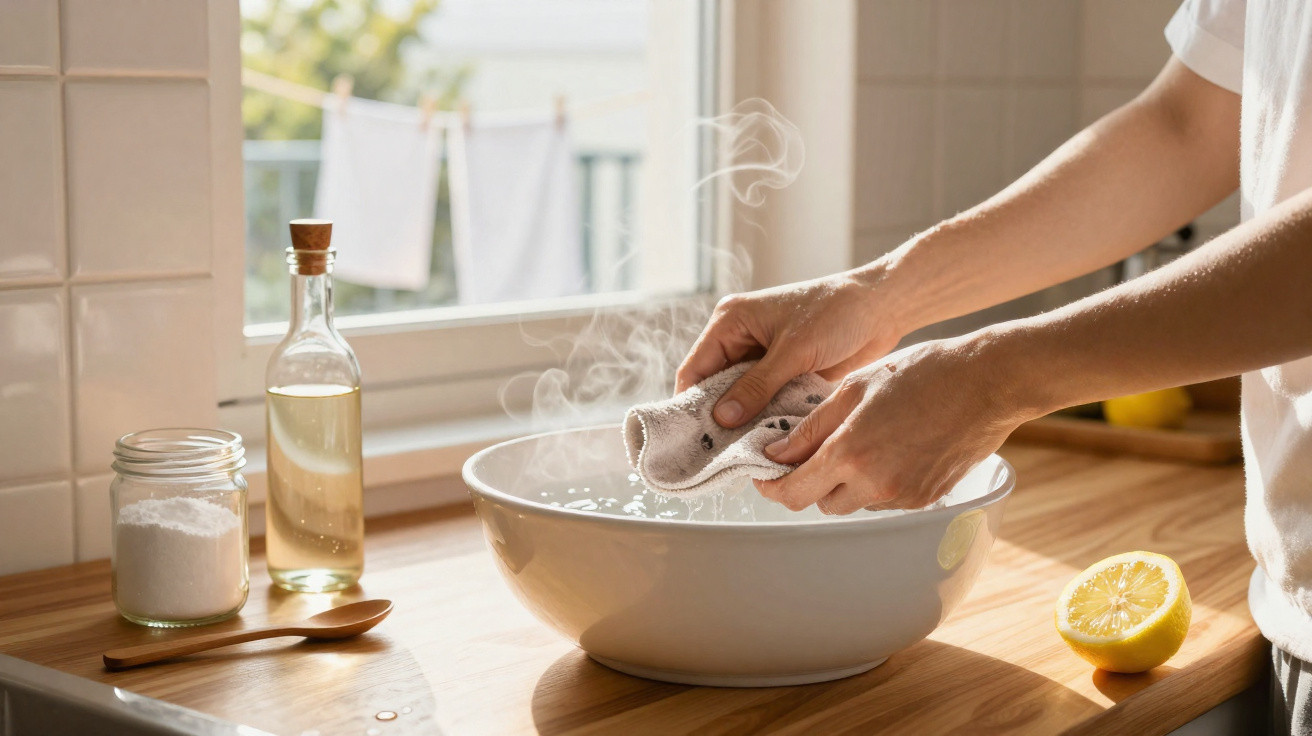
Many homes have tea towels that have seen better days: greasy marks, a greyish cast and a musty smell. Yet even old, yellowed cloths can often be restored remarkably well with a few straightforward household remedies, without resorting to harsh shop-bought chemicals.
How often should tea towels be washed?
Tea towels are among the dirtiest textiles in the home. They are continually exposed to grease, sauces, food and moisture, creating ideal conditions for bacteria and unpleasant odours.
As a general rule, change tea towels at least every two to three days – or daily if they are used heavily.
If one cloth is used to wipe the worktop, dry hands and dry dishes, it should genuinely be replaced every day. Leave it hanging in the kitchen for a week and, eventually, it will not only look dirty but smell that way too.
Changing a tea towel too infrequently is about more than appearance. It can transfer germs to freshly washed plates, glasses and work surfaces, putting the grime that was painstakingly wiped away straight back where it does not belong.
Choosing the right temperature: when to use 40, 60 or 90 °C?
Wash temperature determines how effectively stains and bacteria are removed. White cotton tea towels in particular can safely be washed at a higher temperature.
- White cotton tea towels: best washed at 60 °C; up to 90 °C for extremely heavy soiling
- Coloured tea towels: usually 40–60 °C, depending on the care label
- Tea towels containing synthetic fibres: always check the label, as they may lose their shape
White cotton cloths cope very well with high temperatures and are hygienically clean after washing at 60 or 90 °C. Stubborn grease marks lift more readily, while odours are removed reliably too.
Coloured cloths require more care, as excessively hot water can cause colours to fade. If they can only be washed at 40 °C, soak them first – for example, in vinegar or bicarbonate of soda – so the lower temperature can still do the job.
Why soaking before washing is worthwhile
Many people skip soaking, but it makes a major difference with old grease and sauce stains. It allows the fibres to swell and loosens the dirt, making the washing machine’s task far easier afterwards.
A tried-and-tested basic soaking mixture is:
- 2 tablespoons of bicarbonate of soda per 1 litre of warm water
- Soaking time: 2–4 hours, or overnight for heavily yellowed tea towels
Bicarbonate of soda softens the fibres, breaks down grease and prepares the cloths well for an ordinary wash. Those who prefer vinegar can combine half a glass of household vinegar with a bowl of water. It neutralises odours and has a mildly disinfecting effect.
Soaking prevents hassle later on, saves detergent and can sometimes even avoid a second wash.
Household remedies that really brighten tea towels again
Before adding expensive specialist cleaners to the shopping trolley, check the kitchen cupboards and bathroom cabinet. Many effective solutions may already be there.
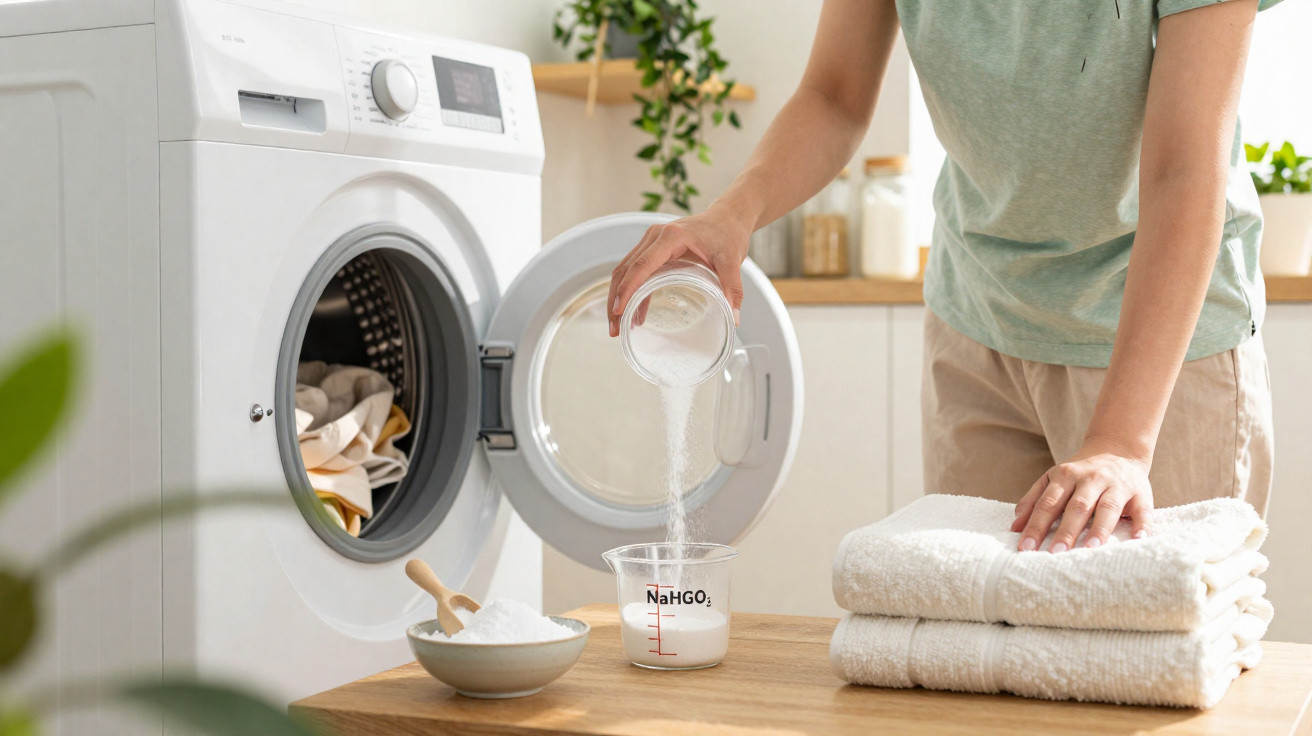
Bicarbonate of soda and vinegar: a powerful pairing against greying
Bicarbonate of soda and vinegar are classic household staples, and they are particularly useful for tea towels that have turned grey. Using them is straightforward:
- Put half a cup of bicarbonate of soda in the detergent drawer.
- Pour half a cup of vinegar into the fabric conditioner compartment.
- Start the washing machine as usual.
The two substances are introduced at different points in the wash cycle. This helps lift deposits and light yellowing much more effectively, leaving the cloths looking fresher without damaging their fibres.
For isolated, particularly persistent marks, try a bicarbonate of soda paste: mix three tablespoons of bicarbonate of soda with a little water, spread it over the stained area, leave it for around 30 minutes, then wash as normal. It works surprisingly well on grease and sauce splatters.
Lemon and sunlight: a gentle brightening treatment
Lemon contains naturally acidic compounds with a mild bleaching action. Combined with sunlight, it creates a gentle brightening effect that is especially suitable for white cotton tea towels.
- Add the juice of one lemon to a bowl of warm water.
- Soak the tea towels in the mixture.
- Wash them normally afterwards, then dry them outdoors, ideally in the sun.
UV light gives the fibres an additional brightening boost and also helps reduce germs. This approach is only partly suitable for strongly coloured cloths, but it is ideal for pale and white fabrics.
Hydrogen peroxide: gentle bleaching without chlorine
A bottle of hydrogen peroxide (3% solution) is often found in the medicine cabinet. It can be used as a mild bleaching agent for light-coloured tea towels.
Add half a glass of hydrogen peroxide directly to the wash – that is usually all that is needed.
The liquid can go straight into the drum or the detergent drawer. To target individual stains, apply a little directly to the affected area, wait 10 to 15 minutes, and only then start the wash.
Hydrogen peroxide breaks down into water and oxygen, so it does not leave problematic residues in the fabric. For high-quality tea towels with colourful patterns, carry out a colour test on an inconspicuous corner first.
Boiling: an old but highly effective method
When tea towels are in a truly poor state – with yellow edges, old grease stains and a grey cast – a more forceful approach may be the only option: boiling them.
You will need:
- a large pot of water
- 2–3 tablespoons of bicarbonate of soda or grated household soap
- a wooden spoon for stirring
Put the cloths into the water and simmer everything gently for around 20–30 minutes. Stir occasionally to prevent anything catching on the bottom. Then allow the tea towels to cool before washing them normally in the machine once more.
This technique is suitable only for white cotton tea towels. Coloured fabrics may fade, while synthetic fibres can be damaged or lose their shape. However, anyone hoping to rescue old white cloths is often pleasantly surprised after boiling them: many stains become far lighter or disappear entirely.
Common mistakes when washing tea towels
Small everyday habits can significantly reduce both the lifespan and absorbency of tea towels.
| Mistake | Result |
|---|---|
| Washing tea towels with clothing | Grease and odour particles transfer to T-shirts, underwear and bed linen |
| Using too much detergent | Residue remains in the fibres, making cloths stiff and less absorbent |
| Using fabric conditioner | Fibres become coated, water is more likely to bead off and absorbency falls |
| Leaving wet cloths in the machine | Musty smells, grey shadows and bacterial growth |
To keep tea towels soft while maintaining their absorbency, replace fabric conditioner with a little vinegar in the final rinse. It also neutralises detergent residue and gives the fabric a more pleasant feel.
Hygiene, fabric and storage: other points to consider
Pure cotton remains the best choice for tea towels. It handles high temperatures with ease, keeps its shape and absorbs moisture dependably. Cloths with a high polyester content may often feel soft, but they dry less effectively and cannot be washed as hot.
After washing, tea towels should dry completely before being put away in a cupboard. Slightly damp cloths stacked closely together quickly develop a mildly stale smell. If space allows, store clean folded cloths on an open shelf or in a cupboard that is not packed completely full.
One practical everyday tip is to use different cloths for different jobs – one only for hands, one for dishes and one for work surfaces. This limits how much dirt is spread around and makes it easier to replace individual towels when necessary.
Combining the household remedies described here often produces noticeably better results than a standard wash alone: soak with bicarbonate of soda or lemon, wash at a sufficiently high temperature, avoid fabric conditioner, and boil the occasional difficult case. This means yellowed tea towels do not have to go straight in the bin, but can be given a second chance on the hook rail beside the cooker.




Comments
No comments yet. Be the first to comment!
Leave a Comment