
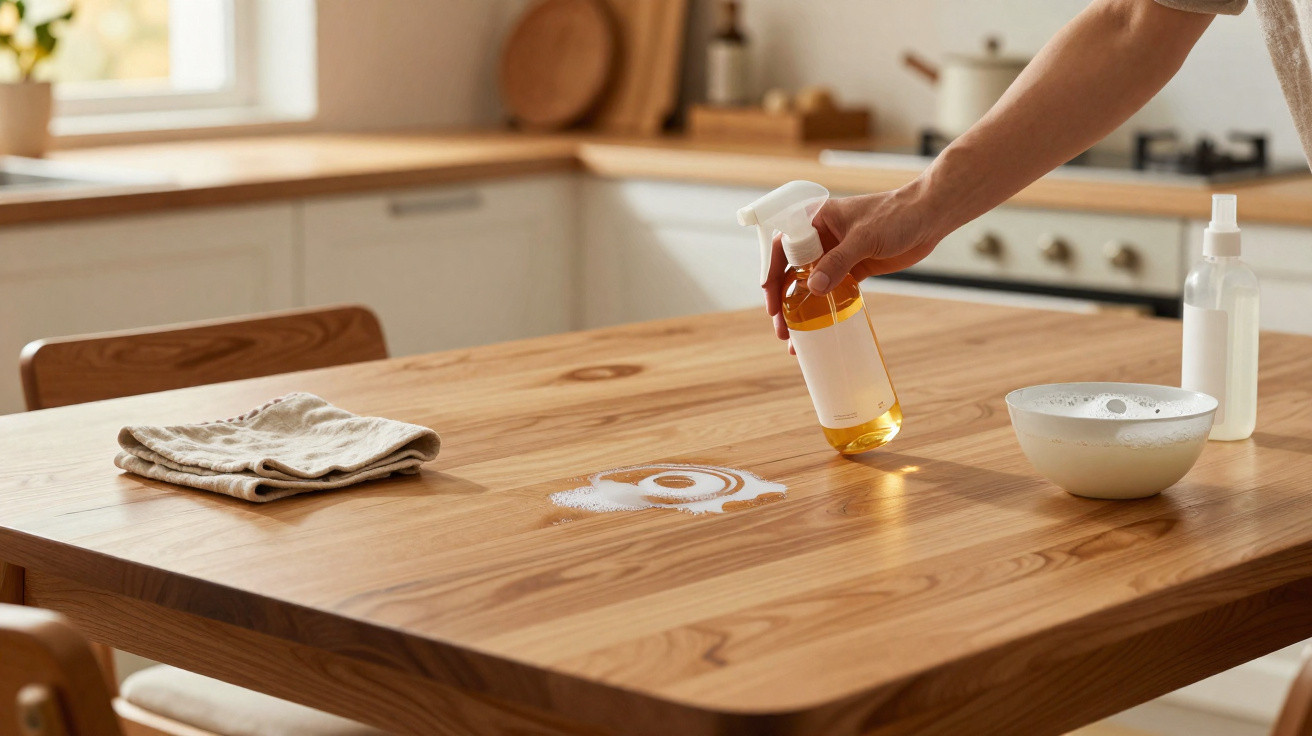
In many homes, vinegar has become an almost essential part of the cleaning routine because it is inexpensive, familiar and seemingly versatile. Yet frequent or concentrated use on certain furniture and surfaces can cause subtle damage, including dull patches, lost shine and warping. These effects are often mistaken for normal wear or humidity in the room.
What is the main mistake when using vinegar to clean furniture?
Vinegar is a mild acid, but it can still react with sensitive finishes, including varnish, paint, wax and laminates. On varnished wooden furniture, MDF and lacquered surfaces, repeated contact may leave the protective layer more porous, dull and prone to water or grease marks.
The risk is greater when undiluted vinegar is applied with a very wet cloth or an abrasive sponge, without rinsing properly afterwards. Over time, this can wear away varnish, leave marks along MDF edges, reduce the sheen of lacquered furniture and gradually strip protective waxes, shortening the furniture’s lifespan.
Which furniture can be damaged by vinegar and how can you spot the first signs?
The likelihood of damage varies according to the material and the finish used. Varnished or waxed wood, MDF, MDP, lacquered furniture and more porous stone are particularly vulnerable to regular cleaning with acidic solutions, especially in brightly lit spaces where marks are easier to notice.
The following signs can show that vinegar has begun to affect the surface. They indicate that you should stop using it and reconsider your cleaning routine:
- Localised loss of shine in areas regularly cleaned with vinegar.
- Whitish marks on varnished or coloured worktops.
- A rougher texture, creating the impression that the finish has “thinned”.
- Slight fading on lacquered or painted furniture.
- Small cracks or crazing in varnish after prolonged use.
When can vinegar be used safely for household cleaning?
Despite the risks to delicate furniture, vinegar can be useful in certain situations. Glass, some types of ceramic, stainless steel and the internal parts of appliances generally tolerate mild acidic solutions well, provided they are diluted and then wiped away with a damp cloth.
To balance convenience with safety, dilute vinegar with water, apply it only with a slightly damp cloth, test it first on an inconspicuous area and dry the surface thoroughly afterwards. It is also worth checking the furniture or covering manufacturer’s guidance before making the product part of your regular cleaning routine.
Which alternatives to vinegar help protect sensitive furniture?
For anyone seeking to avoid damage to wooden furniture, MDF and delicate surfaces, there are gentler alternatives to vinegar. Mild washing-up liquid thoroughly diluted in water, applied using a well-wrung cloth, will usually remove light dirt without attacking the finish or drying out the surface.
You can also use wood-care products recommended by manufacturers, dry or lightly damp microfibre cloths for everyday dusting, and waxes suited to the particular varnish or sealant. By choosing more neutral products and using chemicals sparingly, it is possible to keep furniture clean, attractive and protected for many years.



Comments
No comments yet. Be the first to comment!
Leave a Comment