
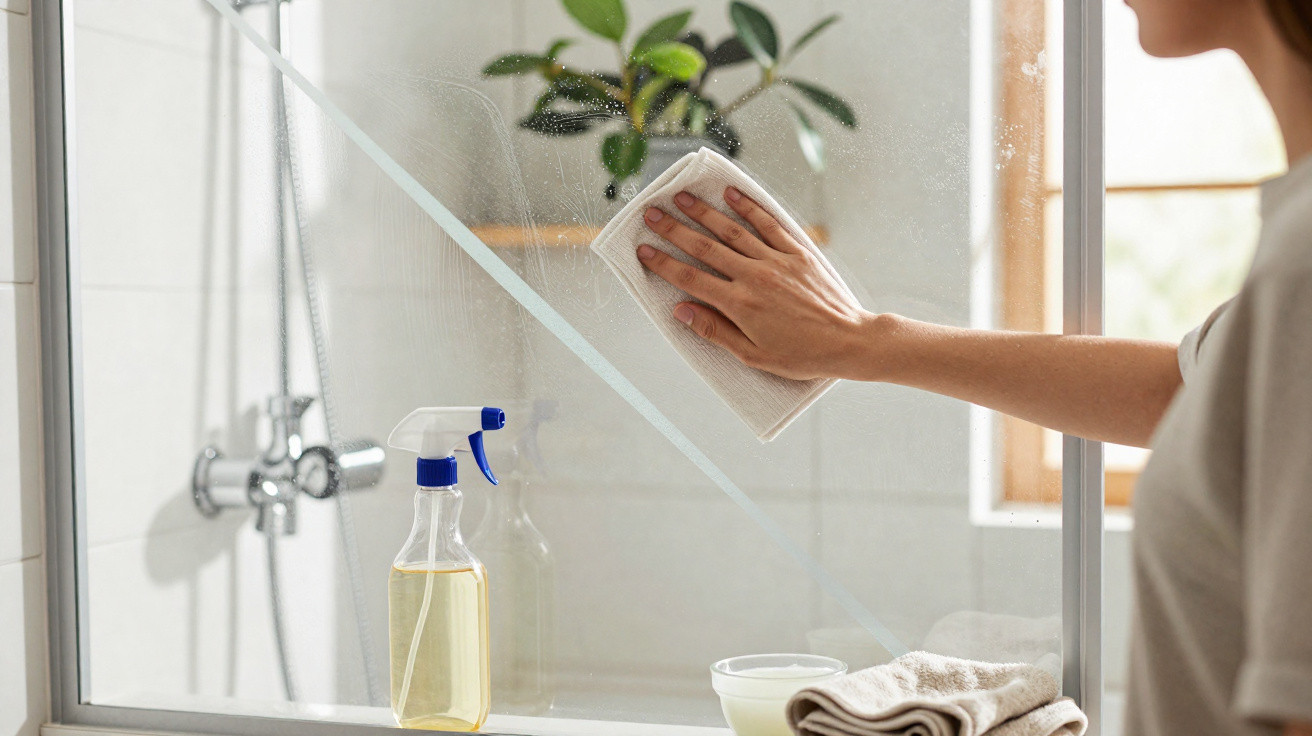
Keeping a glass shower enclosure transparent is often difficult in many homes. Soap residue, body oils and, above all, limescale deposits from the water can leave the glass cloudy, dull and covered in marks. Vinegar, however, stands out as a straightforward, inexpensive ingredient found in most kitchens that can restore shine without harsh products.
Why is vinegar effective for cleaning a glass shower enclosure?
White distilled vinegar is mildly acidic, so it reacts with the mineral deposits found in hard water and helps loosen the whitish layer that reduces the glass’s clarity. It works gradually to lessen water marks and stains without harming the glass, provided it is rinsed away thoroughly.
As well as the glass itself, the solution can help clean the enclosure’s tracks, handles and plastic components, as long as it is not left in prolonged contact with metal parts. If the glass has special films or manufacturer-applied treatments, always test the mixture first on a small, inconspicuous area before using it across the whole surface.
What vinegar-to-water ratio should be used to clean a shower enclosure?
For everyday cleaning, the most common mixture is equal parts white distilled vinegar and water, at a 1:1 ratio, such as 1 cup of vinegar to 1 cup of water. This dilution balances effectiveness with comfort, avoiding an overly strong smell while still dealing with typical dirt.
For glass with long-standing limescale marks, use roughly 2 parts vinegar to 1 part water, while keeping contact time limited and rinsing carefully afterwards. In areas with very hard water, carrying out this clean each week helps prevent marks from reappearing quickly.
How to apply vinegar to a glass shower enclosure step by step
For the best result, how the vinegar solution is applied matters, so it is best to work through the task in stages. A spray bottle is convenient, although a cloth or soft sponge will also work, provided it is non-abrasive and will not scratch the glass.
Follow this simple step-by-step method to organise the cleaning and make the process quicker and more effective:
- Prepare the solution: Combine white distilled vinegar and water in the chosen ratio, ideally in a clean spray bottle.
- Wet the glass first: Briefly dampen the shower enclosure with warm water to remove any loose dust.
- Spray the mixture: Apply it generously to both the inside and outside, paying extra attention to stained areas.
- Leave it to work: Allow 10 to 20 minutes, extending this to 30 only for more stubborn cases.
- Rub gently: Use a soft sponge or microfibre cloth with light movements.
- Rinse thoroughly: Wash away all of the solution with running water, including from the tracks and corners.
- Dry the enclosure: Finish with a squeegee or dry cloth to prevent fresh water-drop marks.
What precautions and frequency are recommended when using vinegar on a shower enclosure?
When cleaning with vinegar, never combine it with bleach, chlorine disinfectants or any other chlorine-based product, as this can release toxic gases. It is also important to ventilate the bathroom, wear gloves to protect your skin and avoid steel-wool pads, which can scratch the glass and spoil its appearance over time.
The ideal frequency depends on how often the bathroom is used and on water quality, but weekly cleaning is generally enough in heavily used bathrooms. Between deeper cleans, using a squeegee after showering and keeping the room ventilated limits limescale build-up, making the next vinegar clean faster and easier-almost like preventive maintenance for the shower enclosure’s shine.






Comments
No comments yet. Be the first to comment!
Leave a Comment