
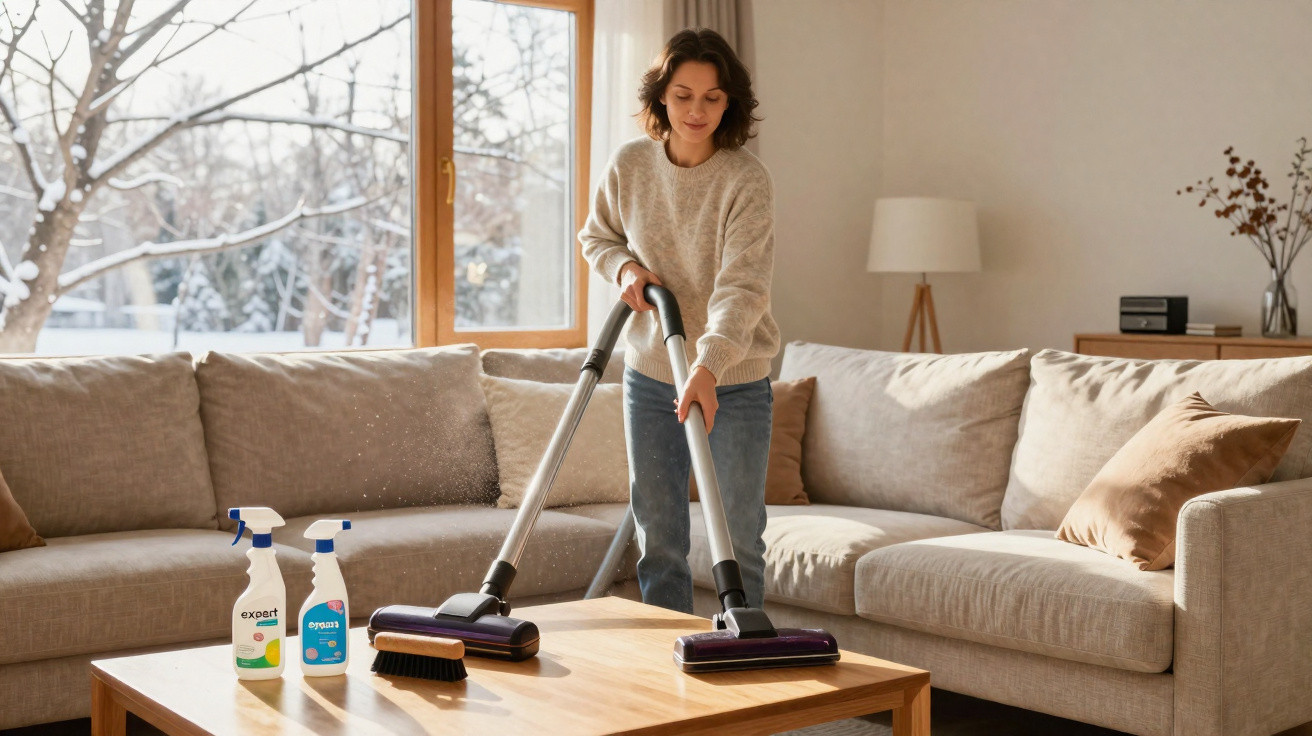
Every winter, usually by the time we have reached the second box of tissues, we begin pointing the finger at everything: the weather, the children, the office, even the dog. You wake with a woolly head, irritated eyes and a nose that seems unreliable, then reassure yourself: “It’s just the season.” Outdoors, the air is cold and wet; indoors, radiators murmur and the house is cosy yet a little stagnant, as though it has not exhaled since October. You crack open a window for five minutes, shiver theatrically, and promptly close it. Then it is back under the blanket, back to sniffling.
In reality, winter can turn a home into a closed container, with dust, pet dander and tiny remnants of daily life circulating unnoticed. We burn candles, use plug-in diffusers, spritz pleasantly scented products and cross our fingers. But some of the things that create a cosy atmosphere may also be quietly affecting our lungs. When allergy professionals were asked which winter cleaning job has the greatest impact, their answer was the same - and perhaps not the one you would expect.
Your living room’s unseen allergen factory
The likely culprits may seem obvious: carpets, curtains and perhaps the dog bed with its faint aroma of biscuits and wet leaves. Each can contribute. However, allergists and environmental health specialists increasingly agree that one winter cleaning task outperforms the others for tackling concealed allergens: deep-cleaning soft furnishings and upholstery. That means more than a quick pass with the vacuum cleaner. It requires a thorough, gradual and rather unglamorous clean of sofas, mattresses, cushions and fabric-covered chairs.
It is not hard to see why. During winter, we sit, sleep, binge-watch and work at home on surfaces that often receive little beyond a cursory wipe or the arrangement of a few cushions. Every sneeze, skin flake, strand of pet hair and crumb from a late-night biscuit drops into the fabric and remains there. Since nothing appears particularly filthy, we barely notice it accumulating. There is no conspicuous stain or layer of grime - only a sofa carrying the gentle scent of fabric conditioner and Sunday roast.
Ask an allergy expert where dust mites thrive, and the response will be mattresses, pillows, sofas and upholstered chairs. These are warm places, made slightly humid by breath and perspiration, and seldom cleaned deeply. It’s like a luxury hotel for microscopic freeloaders. In winter, when windows stay shut, central heating is running and we spend longer against these materials, our exposure to allergens rises.
Why winter increases the risk from soft furnishings
A subtle change arrives in November. The clocks go back, evenings become darker and the home turns into both sanctuary and confinement. With less air circulation, allergens remain indoors for longer. Sofa cushions gather dust, then release it in minute, invisible puffs as your weight and movement compress them when you sit down. You do not see that cloud; you simply notice a tickle in your throat five minutes into a Netflix programme.
In truth, few people pull out the sofa every week, remove every cover, vacuum each seam and steam-clean the whole thing. Most of us are doing well if we shake a throw once a month and make a vague sweep across the seats with the vacuum before visitors arrive. Upholstery tends to be treated as background furniture: permanent, unchanging and not in need of attention. Yet experts say that seeing what can gather on a family sofa over one winter under a strong forensic light would be enough to make you sleep on the floor.
The expert verdict: the task that makes people say “Oh wow”
Allergy consultants often encounter the same situation. People arrive certain that cold weather is causing their symptoms, or that they have acquired a baffling “winter bug that never goes away”. They may have changed their toothpaste, laundry detergent and even their diet. Then somebody asks, “When was the last time you properly cleaned your mattress and sofa?” The response is generally an embarrassed laugh followed by something like “Er… when we bought it?”.
During controlled tests and home evaluations, one recommendation keeps emerging as having a practical effect: a thorough winter deep-clean of all major soft furnishings. This is not a miracle treatment for asthma or persistent allergies, nor a magic fix. It is more like switching off a tap that has been steadily dripping irritants into the air throughout the day and night. People commonly find that they wake less congested, or that their supposedly permanent “cold” is no longer quite so persistent.
Most of us have experienced turning over a mattress and seeing a plume of stale dust rise, accompanied by the faint smell of old nights and forgotten dreams. That is only the visible element. Specialists are more concerned with what remains unseen: dust-mite droppings, minuscule fragments of skin and pet dander that no longer resembles fur. Freshly laundered lavender-scented sheets do not deter these particles. They sit deeper in layers that are rarely disturbed.
Mattress or sofa: which causes more trouble?
Asked to name the one item most worth deep-cleaning in winter, many specialists struggle to choose between the mattress and the sofa. The mattress comes first for contact time: eight hours each night, with your face close to it and breathing in whatever has settled inside. The sofa has the advantage in variety: pets, snacks, footwear, visitors and children all add to its concealed ecosystem. In practice, the two operate as an allergen double act.
What leads experts to focus on “soft furnishings” as a group is how routinely overlooked they are. Carpets generally get vacuumed, bedding is washed and curtains occasionally make it into the washing machine. Sofas, armchairs and mattresses, however, are the neglected middle children of household cleaning. They are used all the time but rarely receive meaningful care. As a result, when somebody finally completes a full winter deep-clean, the outcome can feel unexpectedly striking for such a mundane job.
What a thorough winter deep-clean involves
You cannot change the outdoor winter air, and you cannot prevent central heating from drying out your nose. Within your own home, though, there is a routine that experts quietly endorse. It does not call for expensive designer equipment or a TikTok-famous trick - only determination and an afternoon you would probably prefer to spend doing anything else.
An expert routine adapted for normal life
In an ideal world, you would remove every detachable cover from sofas, armchairs and cushions, then wash them on the hottest cycle permitted by the care label. While they are washing, vacuum all exposed upholstery using the appropriate attachment, taking particular care with seams, corners and underneath cushions. If available, follow this with a steam cleaner or upholstery-cleaning machine to reach deeper layers, and allow everything to dry completely before replacing the covers.
For mattresses, allergy specialists advise slow, methodical vacuuming on both sides, followed by fitting a mattress protector specifically made to block dust mites. Some also recommend a winter “airing day”: draw back the bedding, turn the heating off, open a window for half an hour and allow cold, dry air to reach the mattress surface. It can feel rather old-fashioned, as though your grandmother were insisting that “fresh air is good for you”, but scientific evidence supports it. Reducing moisture makes the environment less hospitable for mites.
The textbook approach is one thing; everyday life is another. In practice, you may spend one Saturday finally vacuuming the mattress, turning it over with a groan and promising to tackle the sofa next weekend. That still counts as progress. Experts say doing part of the job is better than doing none of it, particularly in winter when every allergen removed means one less irritant circulating in the living room.
The personal side of hidden allergens
There is an unusual intimacy to deeply cleaning the spaces where you sleep and relax. You may find biscuit crumbs from last Christmas, a lost Lego head, a hair band, a stray coin or a faded takeaway receipt you scarcely remember. They are small archaeological records of family life. Strike a cushion too firmly and a light scent of dust and old fabric emerges. Suddenly, you remember everything that has taken place on that sofa: rows, naps, tears, children’s fevers, Sunday lunches and quiet scrolling in the dark.
Allergy experts discuss quantities, triggers and exposure, but beneath that is a more gentle idea: tending to your surroundings can also be a quiet form of caring for your body. Not in an immaculate, influencer-style-home sense, but in a “my lungs live here” sense. A winter clean becomes less about embarrassment - “my house is dirty” - and more about comfort: “maybe I can breathe a bit easier by Tuesday”.
Guilt can also appear when a child or partner has been sniffing for weeks and you realise the mattress has not been properly cleaned for years. You picture them lying there each night, breathing in the gradual build-up left by previous seasons. It is not a pleasant image. Still, understanding the connection can feel empowering: it is among the few actions available to you that science genuinely supports.
Why it matters more than immaculate floors and gleaming worktops
When most people imagine a clean home, they picture polished kitchen worktops, a sparkling bathroom and no socks left on the floor. Those results are satisfying, but they are almost cosmetic from an allergen perspective. Experts quietly despair when someone is fixated on disinfecting every hard surface but is sitting on a sofa that has not had a deep clean since the previous World Cup. The bacteria on an immaculate worktop may be less concerning than the dust mites in a favourite armchair.
The brain is naturally drawn to what it can see. A mark on a mirror is more irritating than invisible particles hanging in the air. That is why this winter chore rarely reaches the top of a cleaning list: it does not provide the immediate reward of a shiny sink. Instead, its benefits are less sneezing, slightly more settled airways, perhaps fewer headaches, and a home that feels subtly easier to breathe in. It is not glamorous, only gentler.
One allergy consultant stated it plainly to a patient frustrated by recurring winter colds: “If you only have energy for one big winter clean, choose your bed and sofa over your bathroom tiles.” It sounded almost improper, as though it broke a fundamental rule of cleaning. But the patient followed the advice and returned months later to say that the “cold” lasting six weeks each winter… simply had not appeared in the same way.
Make it a modest winter ritual rather than a punishment
If cleaning every upholstered item in your home feels overwhelming, you are far from alone. The answer is to break it into manageable pieces, almost as though preparing the house for hibernation. One room, then one item at a time: the sofa today, the mattress next weekend, and eventually the children’s beanbags with their faint popcorn-and-feet smell. There are no gold stars and no judgement.
Some households make it an annual winter tradition. On the first properly cold weekend, when going outdoors feels less like a plan and more like a challenge, they choose a day and call it “air-out day” or another slightly silly name. Windows are opened briefly, bedding comes off, vacuum cleaners whine and music is played a little too loudly to make the work bearable. Children jump on mattresses to “help shake them out”. There is grumbling, dust and probably the odd argument. But there is also a quiet satisfaction when everyone later sinks into a sofa that smells less of last year and more like nothing at all.
A week afterwards, you may notice a small difference. Your nose might be less blocked on waking. Your partner may not snore quite as loudly. The child who coughed nightly may start coughing every other night instead. It is not a miracle - simply a modest change you can sense, like opening a window in a stuffy room.
The unglamorous job that improves the air you live in
When specialists discuss winter allergens, the language can sound rather dramatic: dust mites, dander, mould spores and volatile compounds. The terms feel clinical and remote. Yet the reality is extremely close. These allergens are in the fabric touching your skin, the cushion you hold when tired and the mattress supporting you after a long day you barely managed to get through.
There are countless parts of winter beyond our control: grey skies, a freezing bus stop, coughing passengers on the train and the cold that seems to slip beneath your clothes and linger. This small action - giving soft furnishings a proper, unapologetic deep-clean - belongs firmly in the “can do” category. It is not fashionable and will not make it onto Instagram. Nevertheless, experts consider it the single most effective winter cleaning job for reducing the hidden allergens that quietly drain you.
Perhaps that is the real winter reset, rather than a gym subscription or an ambitious meal plan: reclaiming the air inside your own home, one stubborn sofa cushion and heavy mattress at a time. It is slow, mildly tedious and wholly unglamorous. Yet somewhere between the vacuum lines and clean pillowcases lies the uncomplicated reassurance that, when you settle into the softness tonight, your lungs will not have to work quite so hard.

Comments
No comments yet. Be the first to comment!
Leave a Comment