
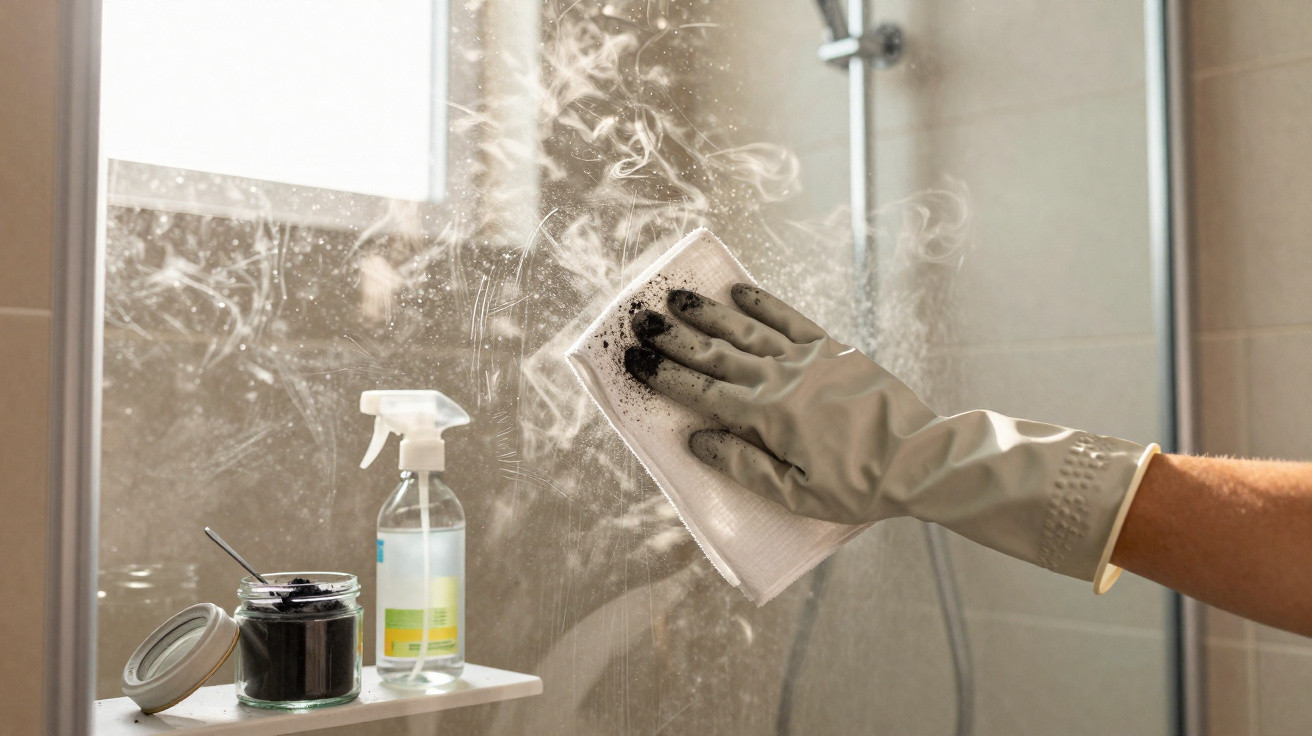
If you clean your shower regularly yet still lose the battle against streaks, limescale marks and dull glass panels, you will know the frustration: expensive bathroom cleaners, pungent smells and little result. A simple activated charcoal method now promises the exact opposite: fewer chemicals, minimal effort and surprisingly clear results.
Why activated charcoal is becoming a bathroom secret
Activated charcoal is best known from water filters and medicine, for example in cases of poisoning. Until now, it has played a fairly minor role in the bathroom. Yet it relies on a physical effect that is ideally suited to cleaning glass and tiles.
Unlike ordinary barbecue charcoal, activated charcoal undergoes special treatment. It contains countless tiny pores, cracks and channels. This creates an enormous internal surface area – a teaspoonful of activated charcoal theoretically contains the area of a small flat.
This vast surface acts like a magnet for grease, soap residue, limescale particles, metals and odour-causing substances – they adhere to the charcoal surface and can then simply be rinsed away.
The technical term is adsorption: dirt particles do not penetrate the material but instead cling to the surface of the charcoal particles. In the bathroom, that means less scrubbing and more chemical-free “pulling power”.
Deposits that can be removed effectively
The most stubborn build-up in shower enclosures is the kind that accumulates day after day:
- Greasy films from shower gels, oils and shampoos
- Dried-on soap residue
- Fine limescale haze caused by hard tap water
- Traces of metals from the pipes
- Organic dirt particles that create odours
This is exactly where activated charcoal shows its strengths. Rather than merely spreading these substances around, as some standard cleaners do, it binds them.
How to use activated charcoal correctly in the shower enclosure
The process is straightforward and requires only a few simple steps. What matters is a fine charcoal powder that spreads easily, such as the type sold for water filters or cosmetic use.
Step-by-step guide to the shower glass trick
- Put one to two level teaspoons of activated charcoal into a small bowl.
- Add only enough water to make a thick, spreadable paste.
- Use a slightly damp microfibre sponge or soft cloth.
- Apply the charcoal paste to the cloth and rub it over the glass, fittings and tiles in circular motions.
- Finally, rinse thoroughly with warm water and finish with a dry cloth or shower squeegee.
The fine charcoal particles have a dual effect: they adsorb dirt while also acting as a very gentle abrasive. Because the granules are rounded and soft, glass and smooth tiles remain undamaged.
Many users report that cloudy panels look noticeably clearer and feel fresher after treatment – without stinging cleaning fumes.
Three tips that greatly improve the cleaning effect
Anyone who fine-tunes the method slightly can get considerably more from the black powder. Three easy adjustments make the difference between “reasonably good” and “wow, it really is clear again”.
1. Work with heat
Before applying the activated charcoal, run hot water in the shower briefly. The resulting heat and steam open up the fine structures within the limescale deposits. This makes the surface more receptive, allowing the charcoal to bind dirt and minerals more easily.
2. Add a splash of vinegar for hard water
In areas with very hard water, a tiny dash of household vinegar in the charcoal paste can help. Its mild acidity loosens the limescale layer, while the charcoal catches the released particles.
One important limitation applies: this mixture must not be used on natural stone such as marble, travertine or certain types of engineered stone. Acid can damage their surfaces. If you are unsure, first test it in an inconspicuous spot – and, when in doubt, leave out the vinegar altogether.
3. Allow time for it to work
For heavily affected shower panels or ones neglected for years, a quick rub is often not enough. It is helpful to leave a thin layer of charcoal paste on the affected areas for two to three minutes. During this time, more dirt particles can attach to the charcoal surface. Only then should you rinse and dry the surface.
How does activated charcoal compare with conventional bathroom cleaners?
Activated charcoal cannot replace every specialist cleaner, but it takes much of the work away from many products. Especially for everyday use, it can become a regular part of bathroom care.
| Aspect | Activated charcoal | Conventional bathroom cleaner |
|---|---|---|
| Chemical exposure | no aggressive additives, usually low odour | often contains acids, fragrances and preservatives |
| Effect on light limescale | very good with regular use | also good, sometimes faster |
| Effect on thick limescale crusts | limited | powerful descalers are clearly superior |
| Risk of scratching glass | low with fine powder | depends on the sponge and cleaning product |
| Odour in the bathroom | very low | ranges from “fresh” to strongly irritating |
For routine care and slightly dull panels, the charcoal method is usually sufficient. Very thick, hard limescale crusts or old deposits may occasionally require a specialist descaler as an additional treatment. Afterwards, activated charcoal makes it much easier to keep the glass in good condition.
Frequently asked questions from everyday use
Will the black powder not just make everything dirtier?
At first glance, it does indeed look messy: a dark grey film on the glass and fittings. However, if you use a fine powder and rinse thoroughly with warm water, no lasting residue remains in the bathroom. It is important not to neglect hard-to-reach joints and silicone edges – these must be rinsed clean too.
Is this trick suitable for plastic shower enclosures as well?
Yes, provided the plastic is still smooth and not heavily scratched. A soft microfibre cloth or gentle sponge is essential; harsh scouring pads should stay in the cupboard. Charcoal can settle temporarily in deeper scratches, so it is best to work with light pressure.
Does activated charcoal also help with musty bathroom odours?
Odour-causing substances are usually volatile organic compounds. Activated charcoal is especially effective at binding precisely these compounds. For example, gently rubbing the shower channel, drain strainer or silicone joints with a slightly thinner charcoal paste before rinsing thoroughly removes the basis for many unpleasant smells.
How often can I clean my shower enclosure with activated charcoal?
With normal use, weekly application is not a problem. The charcoal does not damage glass, ceramic or most plastics. If you also wipe down the glass with a rubber squeegee after every shower, the effort is reduced even further – intensive cleaning every two weeks is then often enough.
What to look for when buying and using activated charcoal
Activated charcoal comes in many forms, from coarse pellets to ultra-fine powder. Fine grades are best suited to shower enclosures, including products intended for water filters or cosmetic use.
- Choose powder rather than tablets or pellets
- Select the finest possible grain size to avoid micro-scratches
- Store it somewhere dry so the charcoal does not absorb moisture in the container
- Test first on a small area when using it on sensitive stone and metals
Anyone with particularly sensitive hands should preferably wear thin household gloves. Charcoal may temporarily stain the skin, but it washes off easily with soap.
More benefits than simply shiny glass
Using activated charcoal in the shower has another advantage: many conventional cleaners contain fragrances, preservatives and surfactants that not everyone tolerates well. Anyone who reacts to these additives can switch to the charcoal method as a much less irritating alternative.
The option of combining methods is also interesting: in a showerhead filter, activated charcoal already binds metals and chlorine before the water reaches the glass panel. During subsequent cleaning, the same substance then removes the remaining soap and limescale residue from the glass. This creates a kind of cycle that keeps the shower enclosure clear for longer and noticeably reduces cleaning effort.



Comments
No comments yet. Be the first to comment!
Leave a Comment