
Over the years, even high-quality plastic can become discoloured. Sunlight, heat and grease splashes can turn bright white into a dull cream shade. The good news is that a few simple household remedies can noticeably lighten much of this discolouration again – provided you choose the right products and avoid common mistakes.
Why plastic turns yellow – and what makes the damage worse
The cause is usually a combination of UV light, heat and dirt. Sunlight attacks certain components in the plastic, causing the surface to oxidise and take on a yellowish hue. In kitchens, an additional greasy film builds up, attracting dirt and nicotine like a magnet.
UV radiation, heat and grease are the main reasons why brilliant white gradually becomes a dull yellow.
Before getting started, carry out a quick material check: is it hard, smooth plastic, such as a light switch or the casing of an electrical appliance, or a softer, slightly flexible plastic, such as storage containers or toys? The more delicate the surface, the more cautiously you should proceed.
Mistakes that make yellowing worse
Many well-intentioned cleaning attempts cause more harm than they solve. Typical pitfalls include:
- Water that is too hot: Heat can warp plastic and may even bake in discolouration.
- Harsh abrasives: Powders and rough sponges scratch the surface, allowing dirt to settle even more quickly afterwards.
- Chlorine-based cleaners: These attack the material, leaving it brittle and patchy.
- Putting everything in the dishwasher: Some plastics yellow more rapidly because of the combination of hot water, alkaline detergent and drying air.
A brief test in an inconspicuous area – on the back, underside or inside – will show whether the chosen product is suitable for the plastic. If the surface changes, becomes dull or develops patches, stop immediately.
Brightening yellowed plastic with hydrogen peroxide
Hydrogen peroxide, commonly sold as a “hydrogen peroxide solution” or “oxidising agent”, is among the most effective options for very light, heavily yellowed plastics, including the casings of kitchen appliances and computer accessories.
What you will need
- Hydrogen peroxide solution (at the required concentration, usually 3–12%)
- Disposable gloves
- Cling film or a shallow tray
- A soft cloth or brush
There is no need to use an unnecessarily high concentration. A mid-range strength is entirely sufficient for most household items. Stronger solutions should only be handled by experienced users and with particular care.
Step by step towards a brighter white
- Clean the item roughly first to remove grease and dust.
- Apply the hydrogen peroxide evenly, using a cloth or brush, or by placing the item in a tray.
- Cover areas that are not submerged with cling film so the product does not evaporate too quickly.
- Leave it to work for a while according to the strength of the solution, checking it regularly.
- Rinse thoroughly with water and dry.
Patience pays off: it is better to treat an item briefly several times than to be too aggressive in one go.
For some plastics, this method works more quickly in sunlight; for others, a bright room is enough. The only approach is to proceed gradually and observe the reaction.
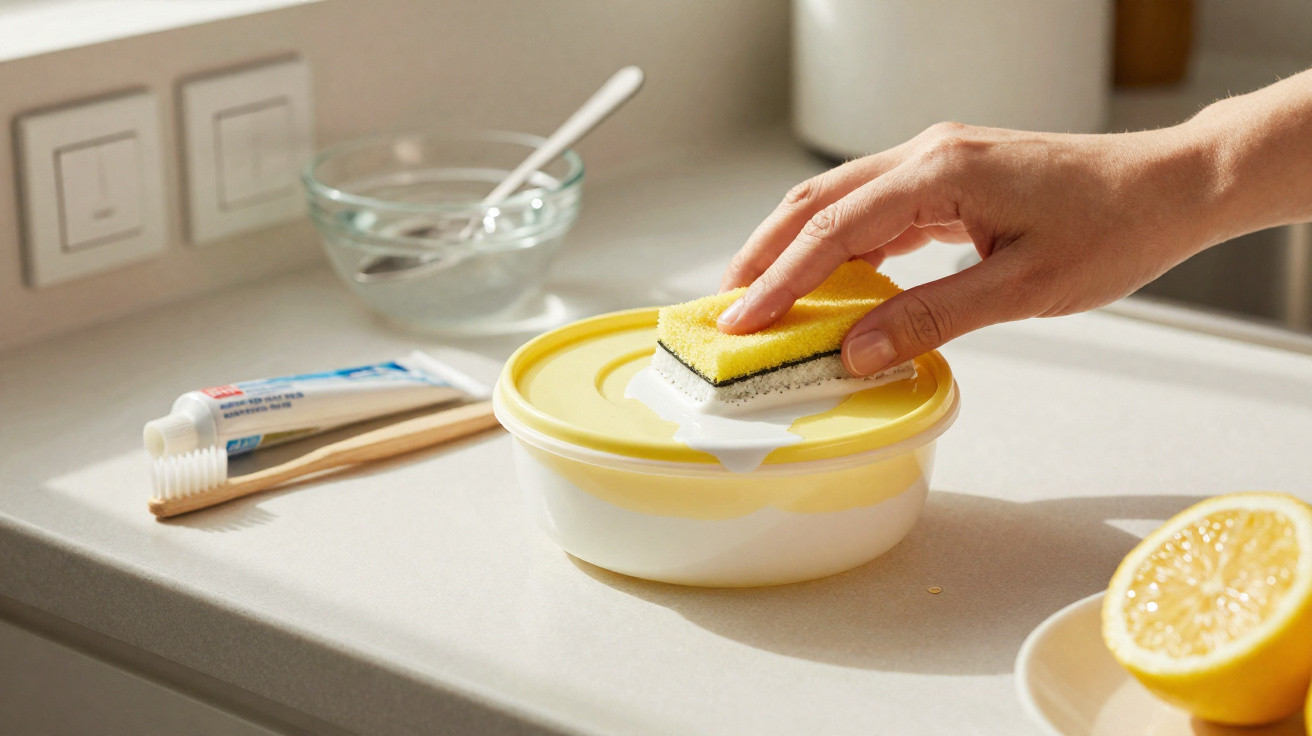
Toothpaste as a gentle polish for switches and appliances
Ordinary toothpaste works like an extremely fine polishing paste. It is ideal for refreshing slightly yellowed or dull surfaces without effectively sanding them down.
Which toothpaste works – and which does not
- Suitable: Mild white toothpastes without pronounced granules.
- Less suitable: Highly abrasive “whitening” toothpastes or products containing coarse particles.
- Avoid: Gel toothpastes with colourants that could stain the plastic.
Common uses include light switches, remote controls, fridge handles and the fronts of small appliances. This method has limits on severely yellowed surfaces, but it can still create a somewhat fresher overall appearance.
How to achieve the “polishing effect”
- Put a little toothpaste onto a slightly damp soft cloth.
- Work over the surface in circular motions without pressing too hard.
- Use a soft toothbrush for crevices and raised details.
- Remove all residue thoroughly with a damp cloth, then rub dry.
If you notice a clear change in the gloss or texture while polishing, stop: the material is probably too delicate.
Talcum and starch as a “grease magnet” for dirty plastic
When grease contributes to the discolouration, a mixture of talcum and cornflour can help. These powders draw grease from the surface, helping the white look more even.
A simple paste for greasy films
- 2 tablespoons of talcum
- 2 tablespoons of cornflour
- Enough water to make a spreadable paste
- Optional: a squeeze of lemon juice
Apply the mixture to a dry surface that has been lightly pre-cleaned, spreading it evenly. Depending on the level of dirt, it can be removed with water after 20 to 60 minutes.
The paste works like blotting paper for grease – the more undisturbed it is left to work, the more even the result.
Always rinse thoroughly at the end so that no powdery residue remains, as this could later become sticky or attract fresh dirt marks.
Lemon as a fresh finishing touch for odour and shine
Pure lemon juice, or lemon juice diluted with water, works very well as a finishing treatment. Its acidity removes light deposits, neutralises odours and makes pale plastics appear fresher.
When lemon is enough – and when it is not
- A good option: Slightly yellowed containers, plastic chopping boards and odorous kitchen accessories.
- Limited effect: Deep-set, old discolouration on appliances or switches.
- Care required: Delicate plastics or coloured parts that should not fade.
Depending on the item, use pure juice, a juice-and-water mixture, or a combination with a little table salt or bicarbonate of soda. The key is to keep contact brief and rinse afterwards, so the acid is not left on the material for too long.
How to keep plastic white for longer
To keep newly brightened plastic items light for the long term, it helps to adjust a few habits. Even small everyday changes can make a difference.
- Do not leave appliances in direct sunlight permanently.
- Wipe down light switches and handles regularly with a mild cleaner.
- In the kitchen, remove grease splashes promptly rather than allowing them to dry on.
- Do not clean delicate plastics at unnecessarily high temperatures.
For certain outdoor items, a thin layer of specialist plastic-care product with UV protection can also be worthwhile. It acts rather like sun cream and noticeably slows the ageing process.
What to know before using household remedies
Not every discolouration can be removed completely. Some plastics have aged throughout the material, meaning their colour has genuinely changed. In such cases, the shade can only be lightened slightly or made more uniform.
When using hydrogen peroxide, wear gloves, do not inhale or swallow it, and keep it away from children. On sensitive surfaces, painted parts or printed areas, the product may cause more damage than benefit – so test it only with great care in a hidden spot.
It is also worth doing a trial run with toothpaste or citric acid. What glass, ceramic or stainless steel tolerates easily may quickly cause scratches or dull patches on soft plastic.
Everyday practical examples
Typical candidates for a refresh include:
- Light switches and socket surrounds in hallways or kitchens
- The casings of food mixers, kettles or bean-to-cup coffee machines
- Plastic storage boxes, especially those used for dry goods or frozen food
- Computer and console casings, keyboards and mouse housings
For heavily yellowed appliance casings, combining methods can make sense: first clean thoroughly with a degreaser, then treat with hydrogen peroxide, and finally go over the surface with a little lemon. Slightly yellowed switches often look noticeably fresher with just a mixture of toothpaste and a little lemon water.
Used thoughtfully, and with a quick check of how the material reacts on every item, these methods can rescue many yellowed plastic pieces and reduce the need for replacements. That is kinder to both your budget and resources.



Comments
No comments yet. Be the first to comment!
Leave a Comment