
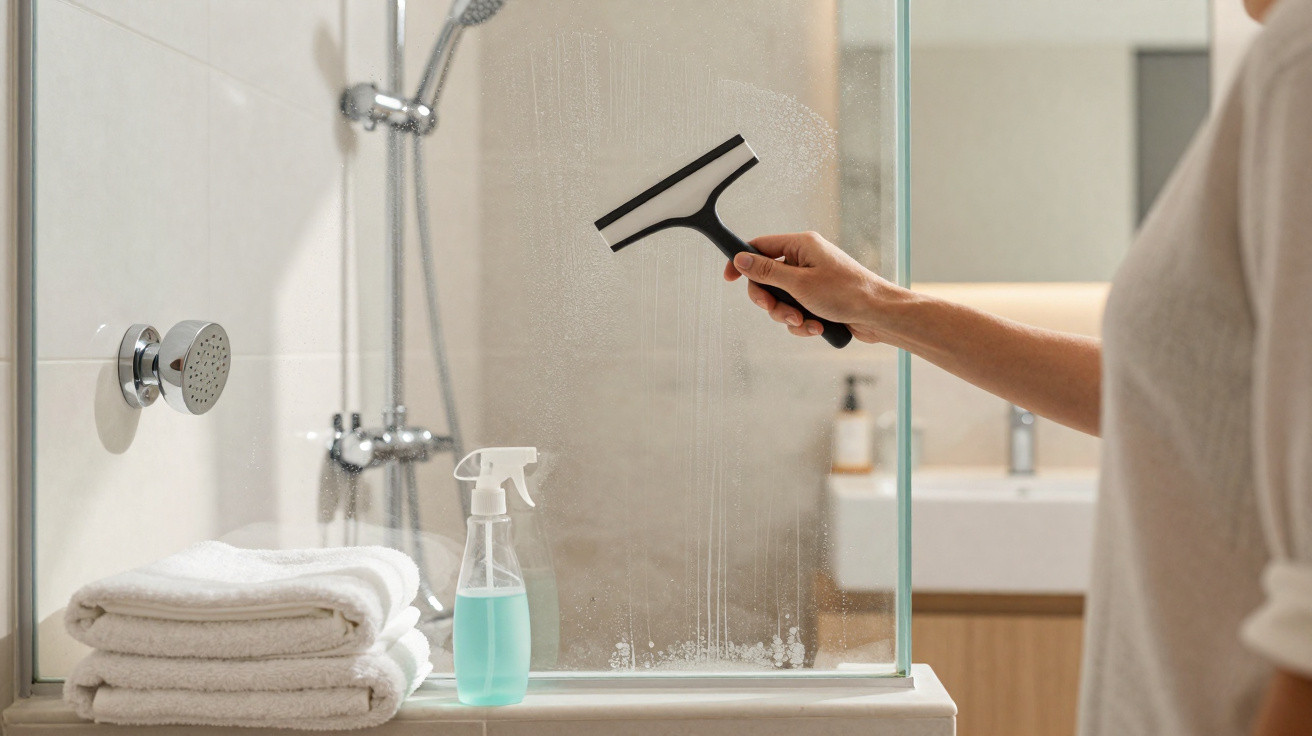
When you step into a spotless hotel bathroom, you may well wonder: how do they keep the glass shower enclosure so clean, transparent and “as good as new”? At home, it can feel as though you scrub until your arms ache, try expensive specialist products, and still that cloudy, dull grey layer remains on the screen. The professionals’ method is surprisingly straightforward, inexpensive and requires hardly any chemicals.
Why shower glass becomes cloudy so quickly at home
Before the hotel method can work, it helps to understand what makes shower glass look so unattractive in the first place. It is not simply a case of “a little dirt”.
Hard water: limescale is the main culprit
Tap water is particularly rich in minerals in many areas. As water dries on the glass panel, it leaves behind limescale and magnesium salts above all else. These white, hard deposits are what eventually create the familiar streaks and marks on the glass.
Over time, they can build into a genuine crust. If you leave it too long, ordinary bathroom cleaners will barely shift this layer. Even stronger products then work only slowly or need a long contact time.
Soap, shower gel and body oils make matters worse
Limescale is joined by another unpleasant layer: residue from soap and shower gel, along with natural body oils. Combined with limescale, these form a greasy film that clings stubbornly to the glass.
This mixture has several consequences: the screen looks dull and dirty, fresh limescale deposits adhere even more easily, and the shower panel can seem to lose its shine almost permanently.
| Source of the problem | Appearance | Can be removed with |
|---|---|---|
| Limescale | White, hard and rough on the surface | Acids such as vinegar or citric acid |
| Soap residue / oils | Grey, greasy film | Surfactants, meaning grease-dissolving cleaners |
This makes it clear why one spray struggles to remove both completely at once. This is precisely where many hotels move away from chemicals and use a particular tool instead.
The hotel secret: an unassuming sponge with a powerful effect
“The trick used by professional cleaners is not hidden in an expensive specialist bottle, but in a white sponge made from melamine resin.”
What is really inside the “magic sponge”
The so-called “magic sponge” is made from melamine resin foam. In technical terms, it is a plastic whose microscopic structure resembles extremely fine sandpaper. Millions of tiny, firm fibres grip the dirt layer and lift it mechanically from the glass.
In everyday use, this means the sponge works like an ultra-fine eraser. It does not wear away the glass itself; it removes only the layers sitting on top, such as limescale and soap film.
Mechanical cleaning instead of a chemical overload
Every minute matters in hotels. Housekeeping staff cannot apply ten different products and wait for them to take effect. With a melamine sponge, they take a different approach:
- Dirt is removed by tiny “micro-scrapers”.
- Strong chemicals are needed far less often.
- Taps, grout lines and glass can all be treated with one tool.
The result is fewer products, lower costs and visibly quicker results. That explains why larger hotels in particular use this method throughout their properties.
How hotels use a melamine sponge step by step
1. Wet the sponge properly
Never use the sponge dry on the glass. Saturate it fully with water, then squeeze it gently until it is merely damp. Only then can its structure work at full effectiveness while gliding over the glass in a controlled way.
2. Use very little pressure
Many people assume that more pressure means more cleanliness. With melamine, the opposite is more effective. Hotel cleaners use calm, circular motions with a light touch. The sponge does virtually all the work itself, while excessive pressure simply wears it out more quickly.
“Gentle, even movements usually produce a better result than frantic scrubbing.”
3. Rinse the surface thoroughly
Once the entire shower screen has been treated, a thin film of dirt and small pieces of sponge will remain. Staff rinse these residues away thoroughly with clean water. For a streak-free finish, they then use a shower squeegee to draw the water downwards from top to bottom.
To finish, many room attendants wipe the frame, edges and taps with a microfibre cloth. The shower enclosure then looks as though it has just been installed.
How to recreate the professional hotel trick at home
Where to buy melamine sponges
The sponge has long ceased to be a secret product. It is available in the cleaning aisle of many chemists and supermarkets, often in unbranded packs. DIY shops and online retailers also sell it in larger sets. The exact name varies, but the white, slightly firm foam structure is nearly always the same.
A plan for a heavily limescaled shower
If your shower screen has years of deposits, the best approach is as follows:
- Remove loose dirt and hair with a normal cleaner.
- Dampen the shower screen.
- Run the damp melamine sponge across the glass in strips, concentrating especially on cloudy areas.
- Rinse the sponge from time to time so its pores do not become clogged.
- Finally, rinse everything well, use a squeegee and rub the edges dry.
The change is usually noticeable within just a few minutes: the glass appears clearer, light is reflected evenly again, and the characteristic milky haze gradually disappears.
Cost and environmental impact
Compared with specialist cleaners, the sponge is very inexpensive. One pack will often last for many uses. At the same time, it significantly reduces the amount of strong cleaning chemicals used, lowering the burden on wastewater and indoor air.
The method is not entirely “green”, however: melamine sponges are made of plastic and must go into general waste once worn out. Using them efficiently, not opening a new one for every minor task, and also relying on gentler reusable tools such as microfibre cloths offers a workable compromise.
Keeping shower glass clear for longer, just like in a hotel
A daily squeegee routine
Cleaning experts swear by one simple action: pull the water off the screen with a shower squeegee immediately after showering. It takes barely 30 seconds, yet prevents the bulk of the limescale marks that would otherwise develop later.
Anyone who makes this part of their routine will need the melamine sponge only rarely for a more thorough clean, saving considerable time.
Vinegar water for light limescale protection
A spray bottle containing a mixture of water and ordinary household vinegar is a useful addition. A light mist over the glass and taps after use dissolves fresh mineral residue before it can set hard.
Vinegar is unsuitable for sensitive materials such as natural stone, though. For these surfaces, follow the manufacturer’s guidance and, if in doubt, choose neutral cleaners instead.
Good ventilation to prevent moisture and mould
Humid air encourages not only limescale marks but also mould around grout and silicone sealant. Opening the window after showering, or leaving the extractor fan running for longer, dries the room more quickly. The less time moisture remains in the bathroom, the less often you need stronger cleaning products.
What to consider when using a melamine sponge
Not every surface can tolerate micro-abrasion
Although the sponge works very finely, it remains an abrasive tool. It may leave subtle marks on high-gloss plastic surfaces, delicate paint finishes or certain coatings. It is therefore particularly suitable for glass, ceramic and robust tiles; on other materials, test it first in an inconspicuous area.
Combining it sensibly with other cleaners
In many cases, water alone is entirely sufficient. If exceptionally stubborn spots need extra help, apply a mild bathroom cleaner briefly before using the sponge, then rinse it off. The sponge can then remove the remaining residue without the need for litres of chemicals.
This creates a kind of modular system: light dirt is handled with a squeegee and vinegar water, moderate deposits with a mild cleaner, and the melamine sponge is used for the “big clean”, following the hotels’ example.
Comments
No comments yet. Be the first to comment!
Leave a Comment