
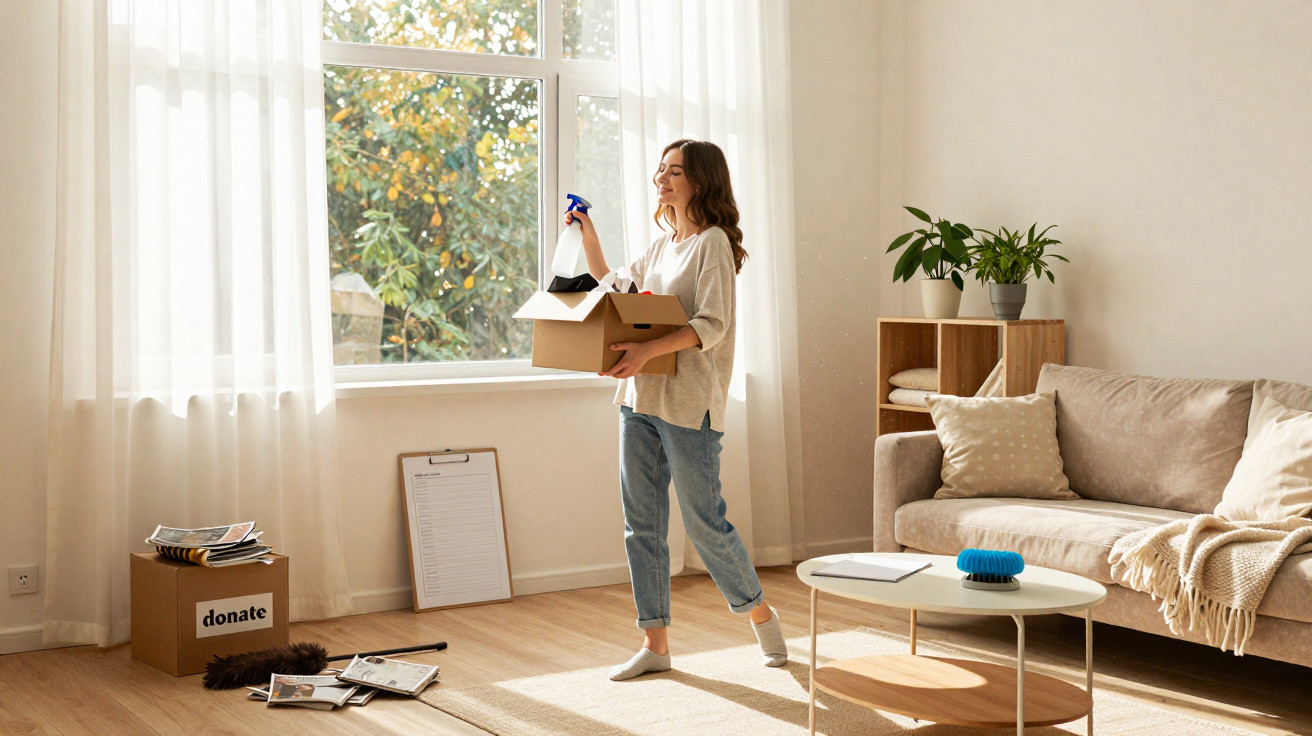
Open the windows, let fresh air in and send winter packing: that is exactly how organising professionals describe spring cleaning. It is not simply a quick vacuum and mop, but a deliberately planned top-to-bottom clear-out that makes a home not only cleaner, but noticeably lighter and more orderly. And yes, it requires no chemistry set – chiefly a clear structure and around 15 to 20 hours of time.
Why now is the ideal moment for a major reset
The first genuinely spring-like day changes how a home looks. The light becomes sharper, suddenly revealing every mark on the sideboard and every speck of dust on the shelf. At the same time, you can finally air the rooms properly without the living room feeling like a fridge.
Spring cleaning is less an act of cleaning than a reset button for your home – and often for your mind as well.
In the garden, dead branches are removed to make room for new shoots. Ideally, the same process happens indoors: unnecessary possessions go, hidden areas are brought into view, and light and air have more space. Many household professionals intentionally use this point in the year as the signal to begin a more thorough clean.
The 15-to-20-hour plan: what the job really involves
Professional organisers allow roughly 15 to 20 hours for an average home when the aim is to do the job properly: every room, concealed corner, textile and appliance. That may sound like a lot, but it is manageable when broken into stages.
Three common spring-cleaning schedules
- The weekend boost: Two days of 7–8 hours each, suited to anyone who wants to get everything done in one go.
- The after-work plan: One hour a day, five days a week, for three weeks – fairly relaxed, but consistent.
- The hybrid approach: One longer Saturday session of 4–5 hours, plus two evenings of 1–2 hours.
A clear order matters: plan first, declutter second, clean third. Anyone who simply starts “somewhere” can quickly end up with three half-finished rooms and a huge cloud of frustration.
Whole-home checklist: staying on top of the job
A basic sheet of paper or notes app will do. The important thing is to divide the list by rooms and by the areas that are usually overlooked.
| Area | Tasks |
|---|---|
| Hallway & entrance | Sort the shoe storage, declutter coats, clean light switches, door handles and the doormat, and remove cobwebs from the ceiling |
| Living room | Clean shelf edges, picture frames, lamps and sofa crevices; wash cushion covers; vacuum or clean the rug thoroughly |
| Bedroom | Turn the mattress, wipe the bed frame, sort the wardrobe, wash curtains and clean beneath the bed |
| Kitchen | Clean cupboard fronts and handles, the inside of the fridge, oven and extractor hood; check food supplies and clean the dishwasher |
| Bathroom | Clean grout and the shower enclosure, descale taps, empty cupboards and dispose of expired products |
| Cellar/loft | Go through boxes, discard broken items and reorganise seasonal belongings |
| Balcony/patio | Sweep the floor, wipe railings, clean furniture and remove dead plant material |
The minimum kit: deep cleaning with simple supplies
A thorough spring clean does not call for ten specialist bottles. Professionals mainly rely on a small number of proven basics:
- Microfibre cloths for dust, glass and surfaces
- A bucket and a soft brush
- A vacuum cleaner with narrow attachments for gaps and edges
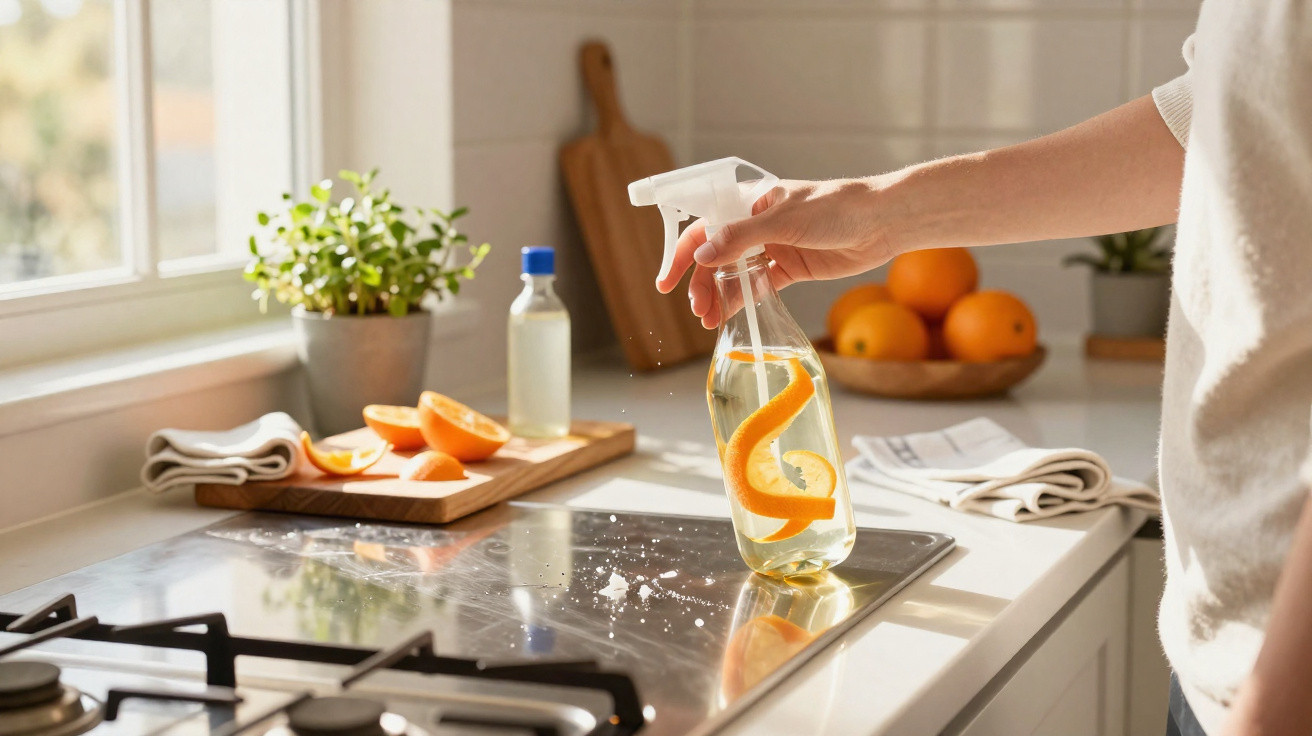
- Vinegar cleaner or clear household vinegar for limescale and germs
- Plant-based liquid soap for degreasing the kitchen and barbecue
- Sodium bicarbonate (baking soda) as a gentle abrasive cleaner
Vinegar breaks down limescale on taps, shower heads and in the toilet. Soap cleaner tackles grease and built-up kitchen grime. Baking soda mixed into a paste with a little soap solution cleans grout, dirty tiled steps and heavily used worktops without scratching them.
The soap-and-baking-soda mixture that makes trainers white again works just as well on tiled grout.
A room-by-room spring-cleaning routine that becomes a regular date
The rule of thumb for every room is simple: get rid of excess first, then work from top to bottom.
Step 1: Declutter before wiping
Before any cloth comes out, put unwanted belongings into three boxes:
- Donate: clothes in good condition, decorative items and crockery
- Recycle: paper, glass, scrap metal and electrical waste
- Rubbish: broken objects, old plastic containers and textiles that can no longer be used
This stage often feels more demanding than cleaning itself, but it has the greatest effect on how a room feels.
Step 2: From ceiling to floor
This sequence works well in every room:
- Remove cobwebs and dust from ceilings, corners and lamps
- Wipe high surfaces, including cupboards, shelves and picture rails
- Clean fronts, handles, window sills and radiators
- Clean windows and mirrors without streaks
- Finally, vacuum and mop the floors
This prevents dust from settling on surfaces you have already cleaned. If you like, set a 60-minute timer for each room – it helps avoid perfectionism traps and makes progress measurable.
Textiles: the heart of the spring ritual
Every fabric in the home is an important part of the reset. Textiles retain odours, dust and moisture, and can significantly affect the atmosphere in a room.
- Wash duvets and pillows, or at least air them thoroughly
- Turn and vacuum the mattress, treating individual marks if needed
- Take down and wash curtains
- Clean sofa covers and cushion covers
- Vacuum rugs thoroughly; beat smaller rugs firmly outdoors
- Reorganise the wardrobe: move winter items to the back and spring clothes to the front, using the opportunity to declutter at the same time
Anyone who reorganises their wardrobe in spring removes not only dust, but often a few kilos of decision stress too.
Balconies, patios and stairs: do not overlook outdoor spaces
A complete reset includes the outside area, even if it is “only” a narrow balcony. A single two-to-three-hour session is often enough:
- Sweep the floor thoroughly and treat any green growth with a brush and baking-soda solution
- Wipe down furniture, then beat or wash cushions
- Clean railings, planters and window frames
- Remove old plant debris and cut dead shoots from shrubs and climbing plants
The garden comparison is an obvious one: just as dead wood is removed there to encourage fresh growth, clearing space at home gives light, air and movement more room again.
Motivation: keeping spring cleaning relaxed rather than a punishment
Organising professionals strongly advise against doing the major household clean alone and in silence. Instead:
- Put on a playlist that feels more like a party than a cleaning shift
- Involve family members according to their age: children can sort toys, hand out cleaning wipes or arrange books by size
- Use small rewards: after two hours in the kitchen, have a coffee on the balcony or enjoy a relaxing bath
- Take before photographs, then compare them afterwards. The result is motivating for the following year.
When spring cleaning is marked as a fixed ritual in the calendar, it feels less like an obligation and more like a regular reset. Afterwards, many people find that their home is not only cleaner, but that their thoughts feel somehow “clearer” too.
Practical insights: what is often missed and why it is worth cleaning
Common household blind spots include light switches, socket surrounds, radiator fins, remote controls and door handles. They are touched often but wiped only rarely, making them an ideal place for germs to collect. A quick wipe with a slightly damp cloth and a little cleaner is enough to make a major difference to hygiene in precisely these areas.
Appliance care is another consideration. Washing machines and dishwashers benefit from a cleaning cycle with a little vinegar or a specialist cleaner, while rubber seals can be refreshed with a soft cloth and baking-soda paste. This prolongs their lifespan and prevents typical odours.
Used wisely, spring cleaning is also an opportunity to carry out a few small safety checks: loose cables, unsteady shelves, smoke-alarm batteries and extension leads. All of these can be checked briefly as part of the major reset – an underestimated benefit for many households.


Comments
No comments yet. Be the first to comment!
Leave a Comment