
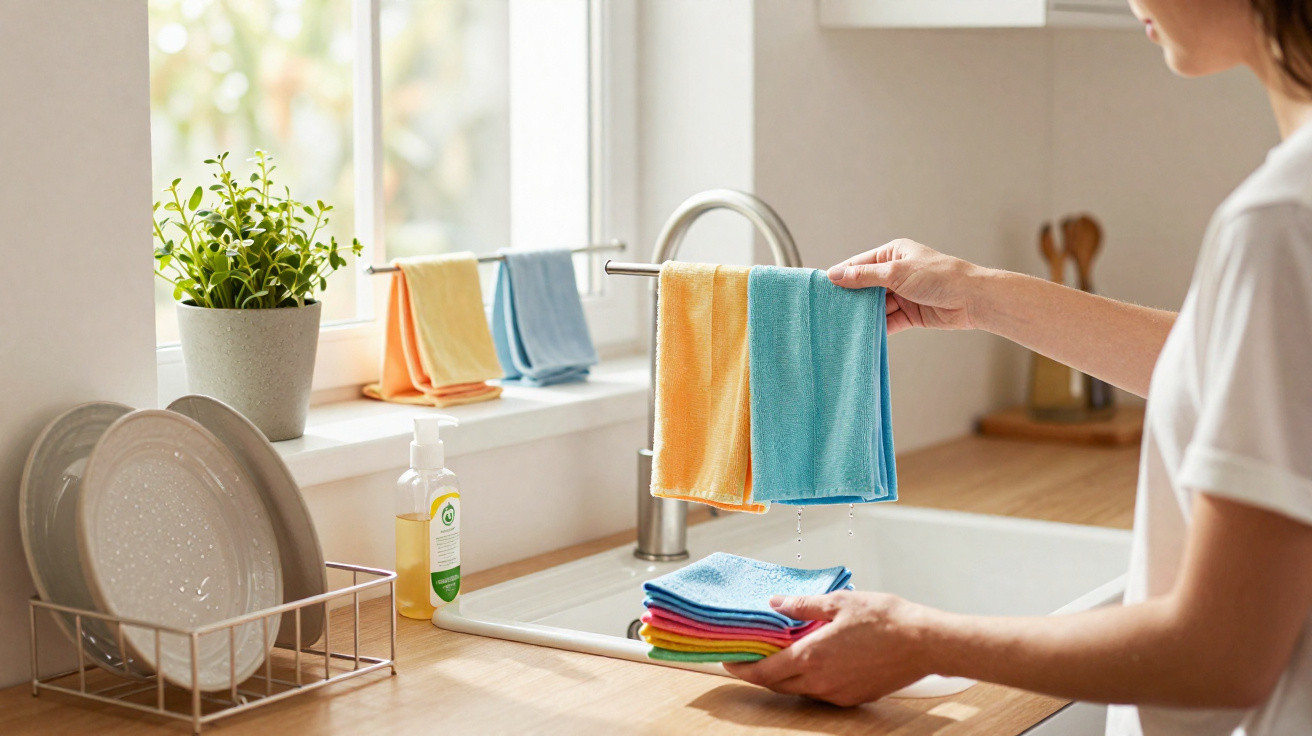
A dirty tea towel is becoming less common in the kitchen because repeated use leaves it holding moisture, odours and residue. The emerging approach combines draining racks, air-drying and microfibre cloths with a daily change.
Why is the traditional tea towel being left behind?
Although a cotton tea towel remains useful, it is often kept in service for longer than it should be. Once it has dried dishes, hands and the worktop, it can stay damp for hours, creating favourable conditions for odour, stains and contamination.
The issue becomes more pronounced when one cloth hangs by the sink all day. It may look clean, yet moisture trapped in its fibres can undermine the hygiene of freshly washed dishes and affect the kitchen routine.
This shift in habits is happening for the following reasons:
- Hygiene: less moisture means fewer unpleasant smells and less residue build-up.
- Natural drying: draining racks allow water to evaporate without rubbing the dishes dry.
- Bamboo: provides a natural look, lightness and effective ventilation.
- Microfibre: dries quickly and should be changed every day.
- Daily change: stops the same cloth from becoming a source of dirt.
How does natural air-drying work?
Natural drying relies on the draining rack itself, allowing plates, glasses and cutlery to shed water without direct contact with a cloth. The key is adequate airflow, spacing items apart and using a base that does not leave standing water on the worktop.
Bamboo draining racks appeal because of their appearance and low weight, while silicone versions are easy to wash, fold and store. In either case, their benefit is that they reduce the continual use of damp cloths on clean dishes.
Where do microfibre cloths fit into this trend?
Microfibre cloths serve as a finishing aid for glasses, pans and items that need to be put away quickly. As they dry faster than many conventional fabrics, they can support the routine, provided they have a separate use and are washed frequently.
Dry dishes with fewer damp cloths
The new rule is to separate purpose from frequency.
A dish cloth should not also be used for the sink, hob or hands.
Changing it daily cuts down on odours, trapped moisture and repeated contact with residue.
Microfibres from clothing are also part of the discussion around microplastics, so these cloths should be washed carefully and unnecessary disposal should be avoided. They should last rather than becoming fast, excessive consumption.
To use them more effectively, follow these guidelines:
- Keep separate cloths for dishes, the worktop and hands.
- Replace the dish cloth every day.
- Wash thoroughly and dry completely before using again.
- Do not use a damp cloth when putting away glasses and cutlery.
Which option costs less and lasts longer?
An ordinary tea towel is usually inexpensive, but it requires several replacements and constant washing. Microfibre may cost slightly more per item, yet it dries quickly and lasts well when given the right washing and a specific use.
Silicone draining racks generally offer good durability and straightforward cleaning, whereas bamboo racks must dry fully to prevent staining or warping. The cost is worthwhile when the product reduces dirty cloths and improves sink organisation.
For a practical comparison, consider:
- Cotton tea towel: low-cost, but needs frequent changing and washing.
- Microfibre: dries quickly, but should have a clearly defined purpose.
- Silicone: easy to clean and store in small kitchens.
- Bamboo: attractive and well ventilated, but requires complete drying after use.
How can you keep the kitchen more hygienic without making it complicated?
The principle is similar to the warning about a washing-up sponge used every day: damp utensils need replacing, cleaning and drying. For dishes, this means reducing repeated contact with saturated cloths.
The most effective habit is to let most dishes air-dry and use a clean cloth only when required. With a sanitised draining rack, separate cloths and a daily change, the kitchen becomes more practical, drier and safe for everyday use.





Comments
No comments yet. Be the first to comment!
Leave a Comment