
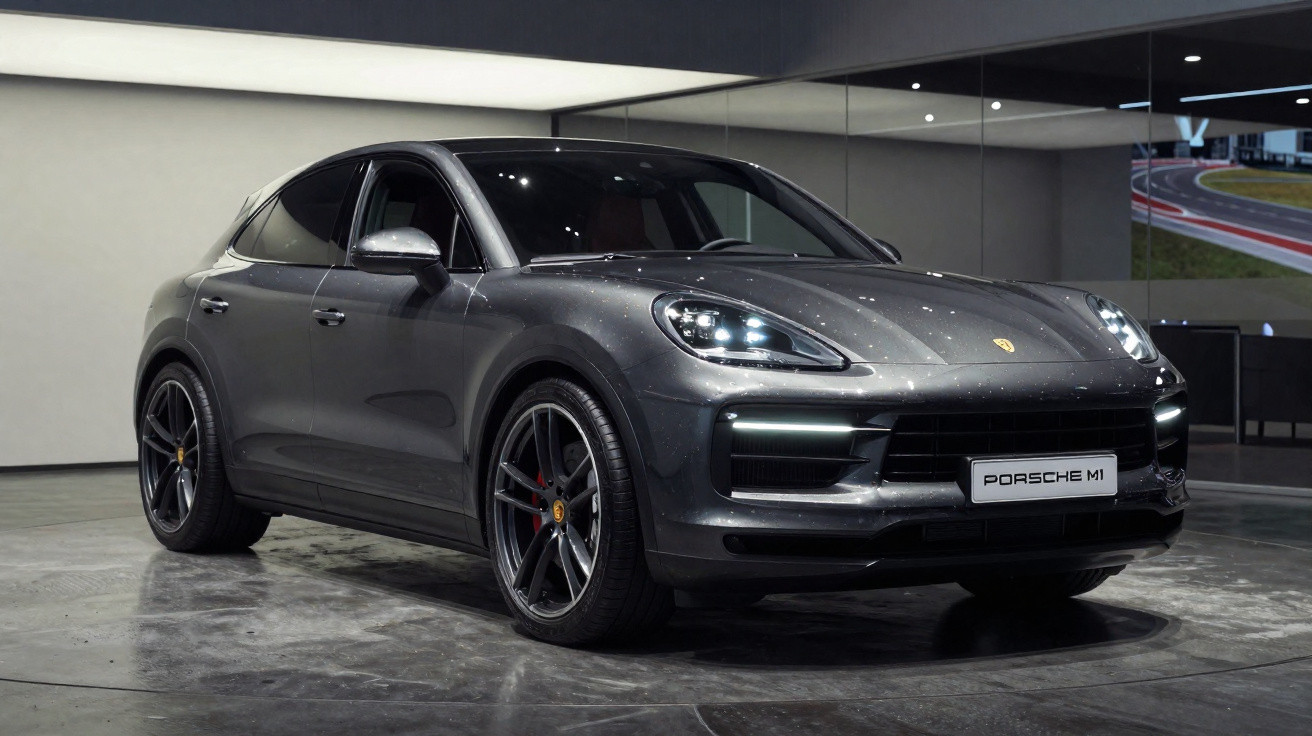
Porsche’s ambition to become predominantly electric by 2030 has fallen behind schedule, forcing it to revise its plans. The combustion-powered Macan, which had been expected to be consigned to the history books, will now receive a successor.
Known internally as M1, the model is expected to arrive in 2028, with development progressing rapidly. All signs suggest it will receive a different name, while the Macan badge will remain exclusive to the electric model.
The first prototypes were spotted in Sweden in February 2025, when they were still almost impossible to distinguish from an Audi Q5. Then, at the start of this year, Q5s with widened wheel arches were seen entering and leaving Porsche facilities.
New Porsche M1 test mule spotted in Spain
A new test mule has now appeared in Spain. It still wears an Audi Q5 body, although it no longer has the front grille used by Audi.
The finished styling remains some way off, but this is another indication that Porsche-specific components are gradually replacing the temporary Audi parts.
The Q5 connection goes far beyond the bodywork
The Audi bodywork is merely there to conceal the hardware underneath, but the relationship between the two models will run deep. Porsche’s future SUV will use the Volkswagen Group’s PPC (Premium Platform Combustion) architecture, which also underpins the current-generation Q5.
It is also expected to share more components with Audi’s model than the first Macan did. According to information reported by Autocar, one of these could be the quattro ultra all-wheel-drive system, which favours the front axle and only sends power to the rear wheels when required.
If confirmed, this would mark a significant change. The previous Macan was also all-wheel drive, but its system prioritised the rear axle to deliver handling closer to what is expected from a Porsche.
Engines and chassis will set the new Porsche apart
As for powertrains, the four-cylinder and V6 engines available on the PPC platform are the obvious candidates, along with a possible plug-in hybrid version.
However, Porsche is not expected simply to replicate Audi’s formula. The current SQ5 offers 367 PS, whereas the last combustion-powered Macan GTS produced 440 PS from its twin-turbo V6. The engines, chassis and calibration are expected to be revised to create some separation between the future Porsche and its Ingolstadt “cousin”.
Will it actually be called Macan?
Probably not. Although this new SUV will fill the space left by the former combustion-powered Macan, Porsche had already stated that the Macan name would be reserved for the electric model.
For that reason, rather than referring to it as a new “combustion-powered Macan”, it is more accurate for now to regard it as the model’s successor. Its final name has yet to be revealed.
This closer technical relationship with Audi has a straightforward purpose: cutting costs and speeding up development.
Porsche endured a very difficult 2025. A combination of factors - lower-than-expected demand for electric vehicles, a sharp fall in sales in China and US-imposed customs tariffs - brought the manufacturer dangerously close to making a loss.
Porsche is now undergoing a major restructuring to restore the generous margins and high profits to which it had become accustomed. This M1 is one of the clearest symbols of that shift, with greater component sharing within the Volkswagen Group and combustion power once again taking a more prominent role.


Comments
No comments yet. Be the first to comment!
Leave a Comment