
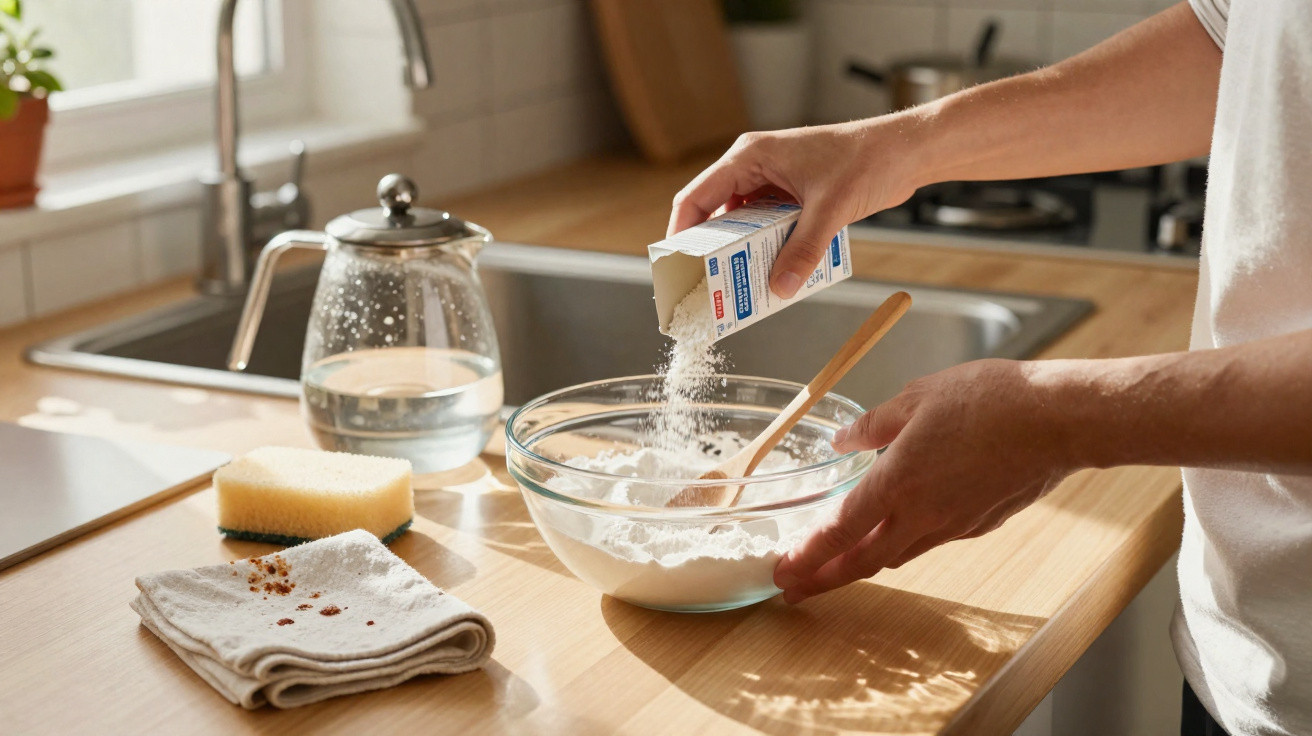
Mixing baking powder with warm water is a straightforward household trick, used mainly for kitchen hygiene and odour control in a range of areas. This homemade solution can help tackle light grease, fresh residue and lingering smells, making it useful for quick maintenance routines without the need for expensive or complicated products.
Why mix baking powder and warm water for household cleaning?
Warm water helps the baking powder dissolve while softening grease and dried-on food remnants. The baking powder acts as a cleaning aid, helping to loosen dirt and making everyday cleaning with a sponge or cloth more effective.
This mixture is generally used in small amounts, which limits waste and makes it a useful first step before using ordinary washing-up liquid or other cleaners. It is therefore considered a complementary option, particularly in kitchens and food-preparation areas where the mess is still fresh.
What is baking powder with warm water used for in practice?
In household routines, this combination is used for light cleaning and reducing odours in places that frequently come into contact with food. It normally works best on recent residue, preventing build-up and making later cleaning with other products easier.
Some everyday uses for this mixture involve quick, targeted jobs and should always be followed by rinsing with clean water to remove any remaining traces:
- Cleaning baking trays and tins with fresh food residue;
- Helping to clean hobs and pan supports with light dirt;
- Reducing odours in kitchen drains after preparing strongly scented food;
- Using it in plastic containers that have retained food smells;
- Maintaining worktops and tables with small marks or unpleasant odours.
How should you prepare and use the baking powder and warm water mixture correctly?
The mixture is quick and easy to make, although keeping to a basic ratio helps produce more predictable results. The water should be warm rather than boiling, so that it does not excessively alter the properties of the baking powder or damage sensitive surfaces.
One practical method for household use is to follow these simple steps, adjusting the quantities to suit the size of the area being cleaned:
- Measure out 1 level tablespoon of baking powder;
- Add it to approximately 200 ml of warm water;
- Stir until the granules have dissolved thoroughly;
- Apply it straight away to the chosen area.
Which surfaces are most suitable, and what precautions should you take?
This combination is generally best suited to standard kitchen surfaces, including sturdy metal baking trays, stainless-steel pans, hobs, metal pan supports, sealed granite or synthetic worktops, and sink drains. In these cases, the mixture supports the mechanical action of a sponge or brush, but it does not replace specialist products when dirt is heavy.
With delicate materials, such as non-stick pans, highly porous stone or natural wood, it is important to test it first on a small, inconspicuous area and avoid combining it with strong chemicals. Always rinse thoroughly after use, do not apply it to hot surfaces, and stop using it if you notice any change in colour or texture, choosing products designed for that particular material instead.


Comments
No comments yet. Be the first to comment!
Leave a Comment