
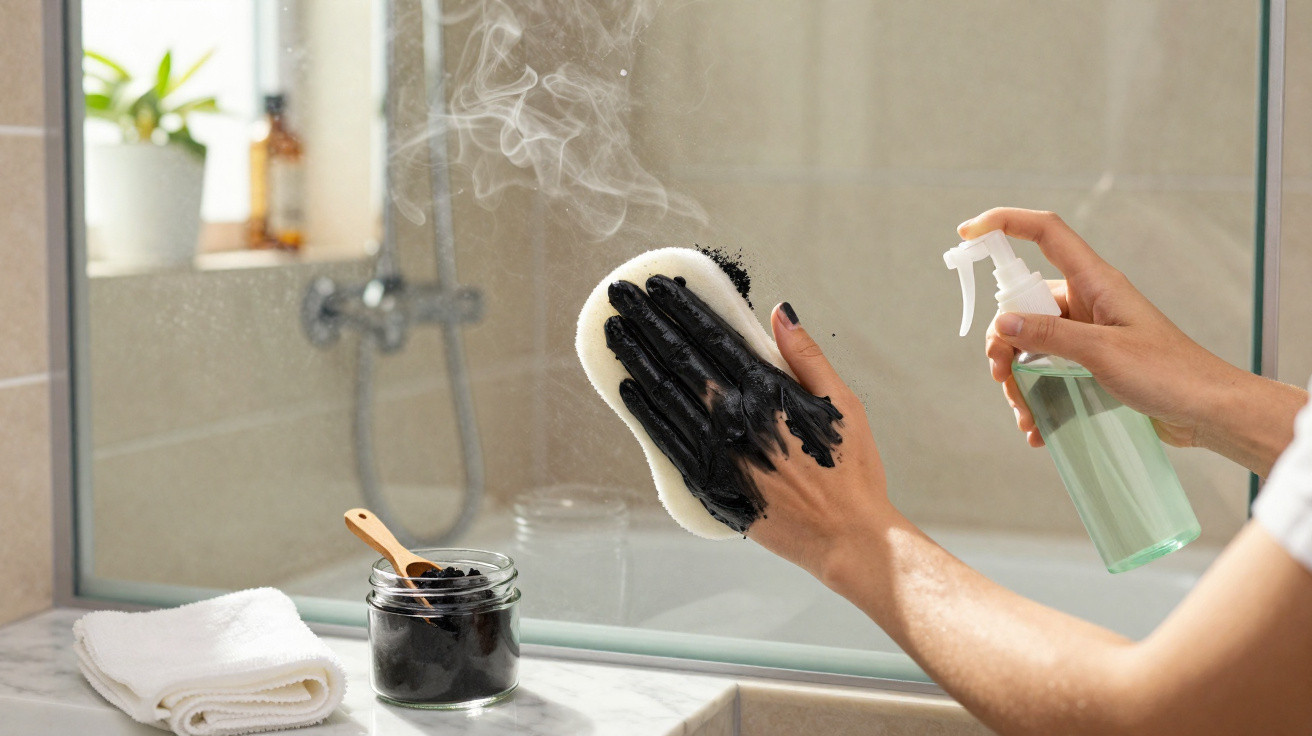
If you clean your shower enclosure regularly yet still struggle with limescale haze, soap residue and cloudy marks, the frustration will be familiar. Expensive specialist cleaners, pungent smells and plenty of scrubbing often produce only average results. A simple activated charcoal trick is said to change that: minimal effort, a modest budget and impressive results.
Why activated charcoal can be so effective in the bathroom
Many people know activated charcoal from water filters, diarrhoea tablets or air purifiers. Its use as a bathroom cleaning aid may initially seem surprising, but it makes sense on closer inspection.
Unlike standard barbecue charcoal, activated charcoal is processed to create an exceptionally high number of tiny pores, cracks and channels. This produces an enormous internal surface area within a very small amount of material.
“Its porous structure acts like a magnet for dirt, grease, odours and even some of the limescale deposits.”
Experts call this adsorption: dirt particles attach themselves to the charcoal’s surface rather than having to be scrubbed away. In practical terms, the charcoal “collects” dirt, grease and certain minerals, which are then simply rinsed away.
This is particularly useful in a shower enclosure, where the following issues commonly arise:
- Greasy soap and shampoo residues
- Limescale haze caused by hard water
- Old, ingrained soap deposits
- Residue from body oils
- Unpleasant odours in grout lines and crevices
Activated charcoal targets precisely this combination of organic matter and minerals. Its fine granules also provide a gentle abrasive action without roughening glass or plastic.
How to use the black powder in a shower enclosure
The method could hardly be simpler, requiring only a very small amount of charcoal. The key is to choose activated charcoal that is as fine and powdery as possible, such as the type available from pharmacies or found in high-quality water filters.
Step-by-step guide
- Place 1 to 2 teaspoons of fine activated charcoal in a small bowl.
- Add water a drop at a time until it forms a thick paste that can be spread easily.
- Dampen a microfibre cloth and pick up a little of the charcoal paste.
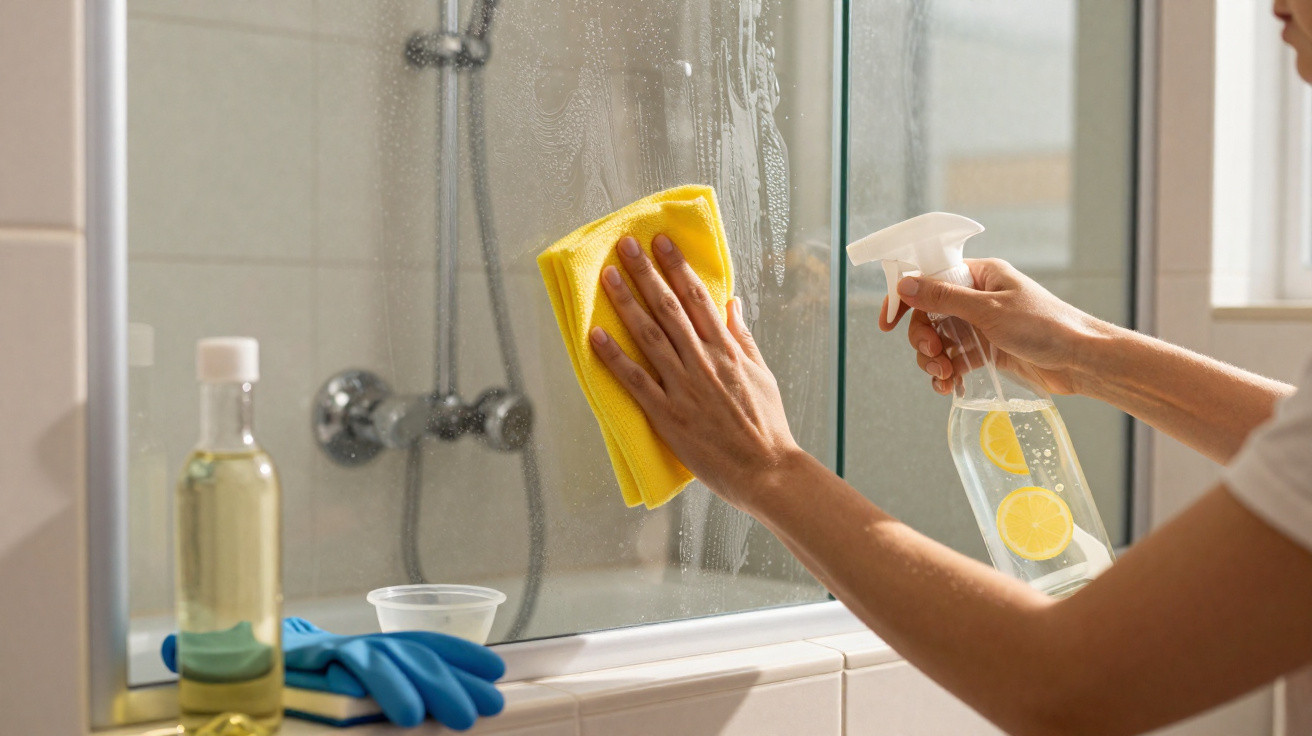
- Wipe the glass surfaces of the shower enclosure using calm, even strokes.
- Rinse thoroughly with warm water, then dry the surfaces.
The tiny charcoal particles cling to soap residue and dirt, lift them from the surface and gently rub them away. The crucial detail is that the grains are rounded and extremely fine. They therefore clean without leaving scratches on the glass, which is a clear advantage over harsh abrasive cleaners.
“A small amount is generally enough to treat an entire shower enclosure, so the method remains affordable too.”
Three tips that make cleaning much more effective
A few simple adjustments can significantly enhance the effect of activated charcoal, especially on older or heavily used enclosures.
1. Warm glass releases dirt more easily
At the start, run hot water in the shower briefly until some steam develops and the panels feel noticeably warm. Heat opens fine pores and microstructures in limescale and soap deposits. This allows the charcoal to get closer to the build-up and draw more dirt towards the surface.
2. A touch of vinegar for hard water
If your tap water is particularly hard, add a tiny splash of household vinegar to the charcoal paste. The mild acid loosens limescale marks, while the charcoal picks up the released particles. Important: vinegar should never be used on sensitive stone surfaces such as marble. In those areas, leave out the addition and use only water and charcoal.
3. Leave it to work on “cloudy” panels
If the shower screen has looked dull for some time, it is worth allowing a short contact time. Spread the charcoal paste over the glass, leave it in place for two to three minutes, then rub over the surface once more. Rinse only afterwards. This gives the charcoal’s active pores more time to reach old deposits.
How does activated charcoal compare with conventional bathroom cleaners?
Many households have relied on standard spray-bottle limescale cleaners for years. These usually contain strong acids and powerful fragrances. Activated charcoal works differently.
- Fewer chemicals: No harsh smell, aggressive acid or stinging fumes.
- Effective on typical shower dirt: Soap residues, body oils and light to moderate limescale haze can be removed well.
- Gentle on surfaces: It does not attack the glass surface, helping to avoid scratches.
The powder has limitations where hard, crystalline limescale crusts have accumulated over years, for example on metal fittings or at the bottom of the shower door. In these cases, a targeted descaler is often the only solution, ideally used only where needed. For regular care of glass surfaces, however, activated charcoal is sufficient in many cases and can substantially reduce the use of chemical cleaners.
Common questions – and what matters in practice
Will the charcoal not make the entire bathroom black?
It is an obvious concern because the powder is deep black. In practice, the mess is limited provided you use finely ground activated charcoal and rinse promptly with warm water. The water will turn dark temporarily, but the surfaces themselves remain clean after being squeegeed. Any residue in the grout can be wiped away easily.
Does it work on plastic shower enclosures too?
Yes, many users report good results on plastic panels. A very soft cloth is important here. If the plastic is already heavily scratched, individual grains can lodge in the grooves, so it is better to test the method first in an inconspicuous corner.
Can activated charcoal help with odours too?
Activated charcoal binds volatile organic substances, which are exactly the compounds often responsible for musty or soapy smells. For example, if an unpleasant odour is coming from the drain, a small quantity of charcoal powder can be used temporarily around the drain area before rinsing well. However, it is not a replacement for a conventional drain cleaner when pipes are blocked.
How often can I clean with charcoal?
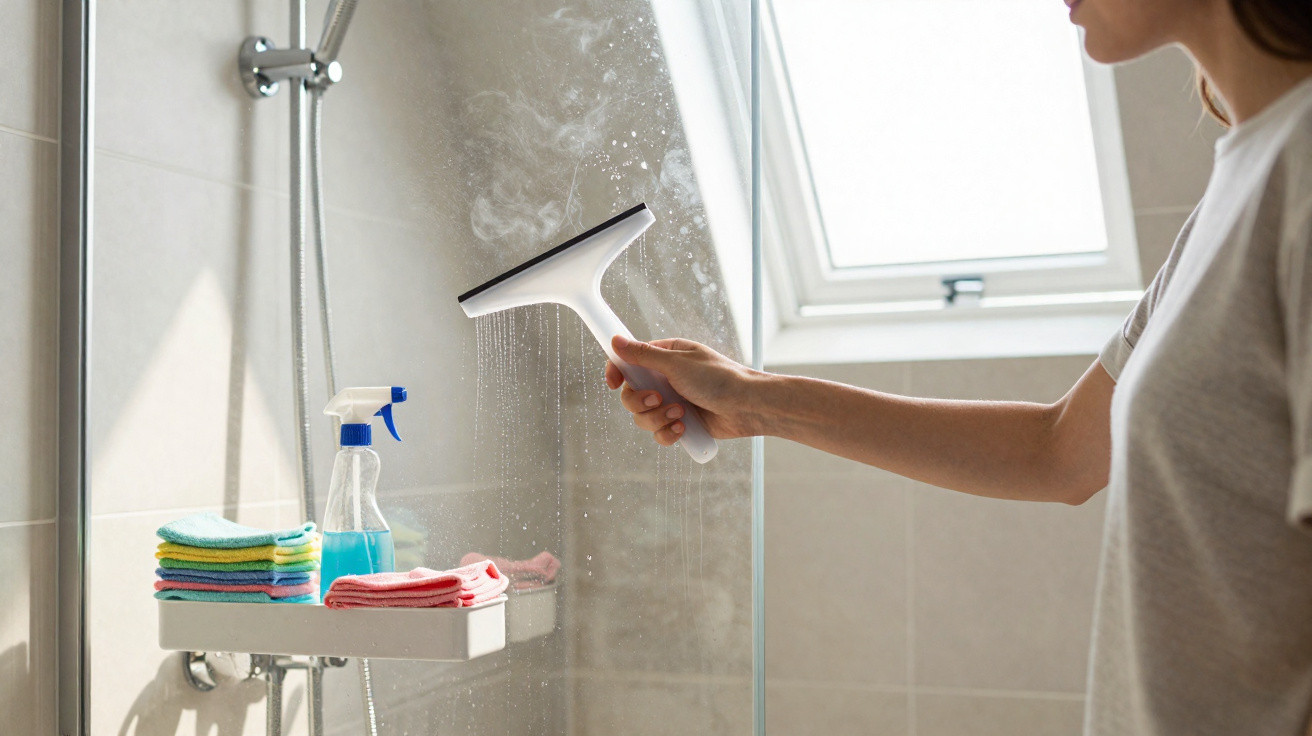
This method is very suitable for a weekly cleaning routine. As it does not damage glass or intact plastic, there is little risk of harming the surface. Anyone who quickly uses a squeegee after showering each day and applies the charcoal paste once a week can usually keep the enclosure clear over time.
Practical tips for buying and using it
Activated charcoal is available in several forms. Very fine powder is the best option for cleaning a shower enclosure.
- Avoid coarse barbecue charcoal or briquettes.
- Look for the description “powdered” or “finely ground”.
- Store the powder somewhere dry, otherwise it will clump together.
Anyone with sensitive hands or who works with water frequently should wear thin household gloves during use. Blackened fingernails are harmless, but can be inconvenient in everyday life. It is best to rinse the cloth separately after cleaning and not put it in the washing machine with white laundry, as slight discolouration may otherwise remain.
Where else activated charcoal can be useful in the bathroom
Once you have a tub at home, the powder can also be tried in other parts of the bathroom. Many people use it, for instance, on:
- Lightly soiled grout around the shower
- Soap rings around the edge of the basin
- Odour absorption in small bathroom cupboards or the laundry basket
On sensitive natural stone surfaces, always test it first on a tiny area and leave vinegar out of the mixture. Activated charcoal itself is mild, but stones can be damaged when it is combined with acid.
In the long term, combining prevention with charcoal cleaning is worthwhile: wiping down the glass after showering and rinsing away shampoo residue gives limescale and soap less chance to build up. Activated charcoal then comes into play when haze and marks eventually appear. This usually keeps the enclosure clear for years, without harsh cleaners or hours of scrubbing.

Comments
No comments yet. Be the first to comment!
Leave a Comment