
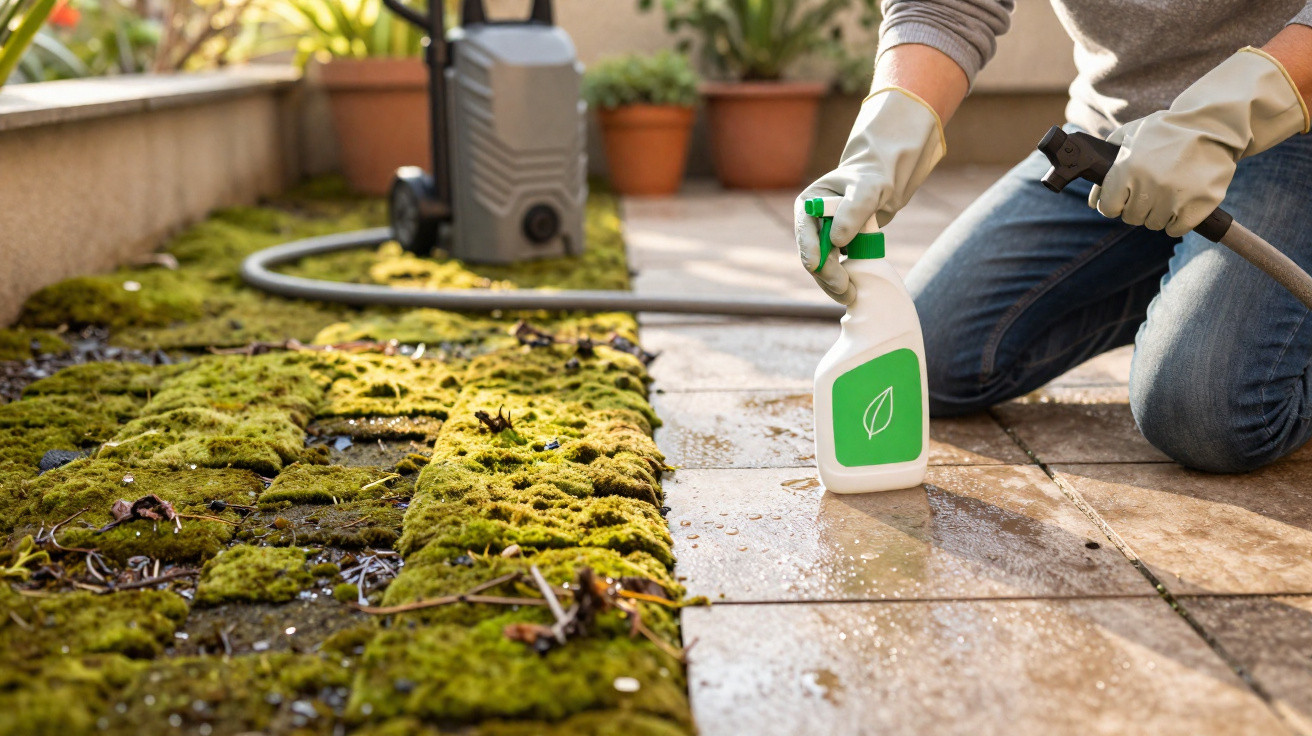
Green staining, slippery paving slabs and blackening joints: when spring arrives, many households discover a moss-covered terrace rather than a pleasant place to sit outdoors.
Throughout Europe, particularly after a long, damp winter, patios can change from sunny retreats into green skating rinks. A budget product available from Action is now drawing interest by claiming to clean terraces without getting out a pressure washer or spending hours kneeling with a hard brush.
Why a terrace becomes a moss trap after winter
Prolonged rainfall, limited sunlight and persistent damp create ideal conditions for moss, algae and lichen. Paving, concrete steps, north-facing walls and timber fencing can all become covered in a dull green coating.
That green veil is not just ugly. It locks in moisture, attacks some materials over time and makes smooth surfaces treacherous underfoot.
On light-coloured stone and smooth concrete, this is more than an appearance issue. The surface may become as slippery as a supermarket floor after a spill. Terrace falls can be a genuine concern for older adults, children and anyone carrying drinks or a barbecue tray.
The usual solution for many homeowners is the familiar combination of a bucket, cleaning product and stiff deck brush. Although effective, it takes time and physical effort. Working across every slab and joint can consume a whole afternoon and result in an aching back.
Why pressure washers are not always the magic solution
Over the last decade, pressure washers have become a popular tool for cleaning outdoor areas. Plug one in, blast away the moss, and within seconds the runoff turns green.
However, the drawbacks are not always obvious immediately. A powerful water jet may remove protective layers from stone or concrete, widen joints, and even wear away parts of the surface. After this protection has been stripped, the terrace is more porous. It absorbs water more readily, allowing moss to return sooner.
Repeated pressure washing can leave paving more fragile and more welcoming to the very moss you are trying to eliminate.
Water consumption and noise are further considerations. In compact gardens, courtyards or built-up neighbourhoods, 30 minutes of high-pitched noise may not be welcomed by neighbours.
Action’s Green Boots anti-green deposit treatment: what it is
Discount chain Action is promoting another option: a ready-to-use biocidal cleaner sold as Green Boots Anti-Green Deposits. The 5-litre container costs €3.99 in continental Europe, or about 80 cents per litre, and is intended for moss and algae on terraces and other outside surfaces.
The manufacturer states that one container will cover up to 50 m². This is approximately enough for a medium-sized family patio, along with steps and a short garden path.
For less than four euros, the product promises to treat up to 50 m² of moss-covered stone, concrete, masonry and wood.
As the liquid is supplied ready for use, there is no need to dilute it. This is useful for occasional users who would rather not work out mixing proportions or keep partly used concentrate in the shed.
Applying Green Boots Anti-Green Deposits
The process requires no heavy machinery and is relatively straightforward. The main steps are:
- Remove leaves, dust and loose material from the terrace with a brush.
- Pick a dry, still day when rain is not expected for several hours.
- Apply the product directly from the container, or use a watering can or sprayer for greater control.
- Treat the whole area evenly, with particular care around joints and shaded sections.
- Leave the product in place without rinsing; the green deposits slowly dry and fade.
In the following days and weeks, wind and rain complete the process by loosening and removing dead algae and moss. It does not normally reveal bare stone instantly as a pressure washer does, but the terrace gradually becomes lighter.
Basic protective equipment is advisable. Gloves, enclosed footwear and preferably protective glasses can limit contact with splashes. As with other biocidal products, the container warns against allowing runoff into lawns, vegetable beds or drains that flow directly towards natural waterways.
What “biocidal” means for a patio
Biocidal products are formulated to destroy living organisms, including bacteria, fungi, algae and insects. Cleaners in this category work on terraces because they target the cellular structure of algae and moss.
Using a biocide does not turn your terrace into a chemical battlefield, but it does demand a bit of discipline and respect for the environment.
When used in modest amounts on hard surfaces with controlled runoff, the environmental impact remains limited. Problems arise when the product is tipped into drains or when substantial quantities are carried into soil, ponds or streams.
Consumers mentioned in French reports about Green Boots frequently point to this trade-off: they want a clean, non-slip terrace without “soaking the garden in aggressive chemicals”, as one grandmother put it.
Bicarbonate of soda versus Action’s Green Boots: two different philosophies
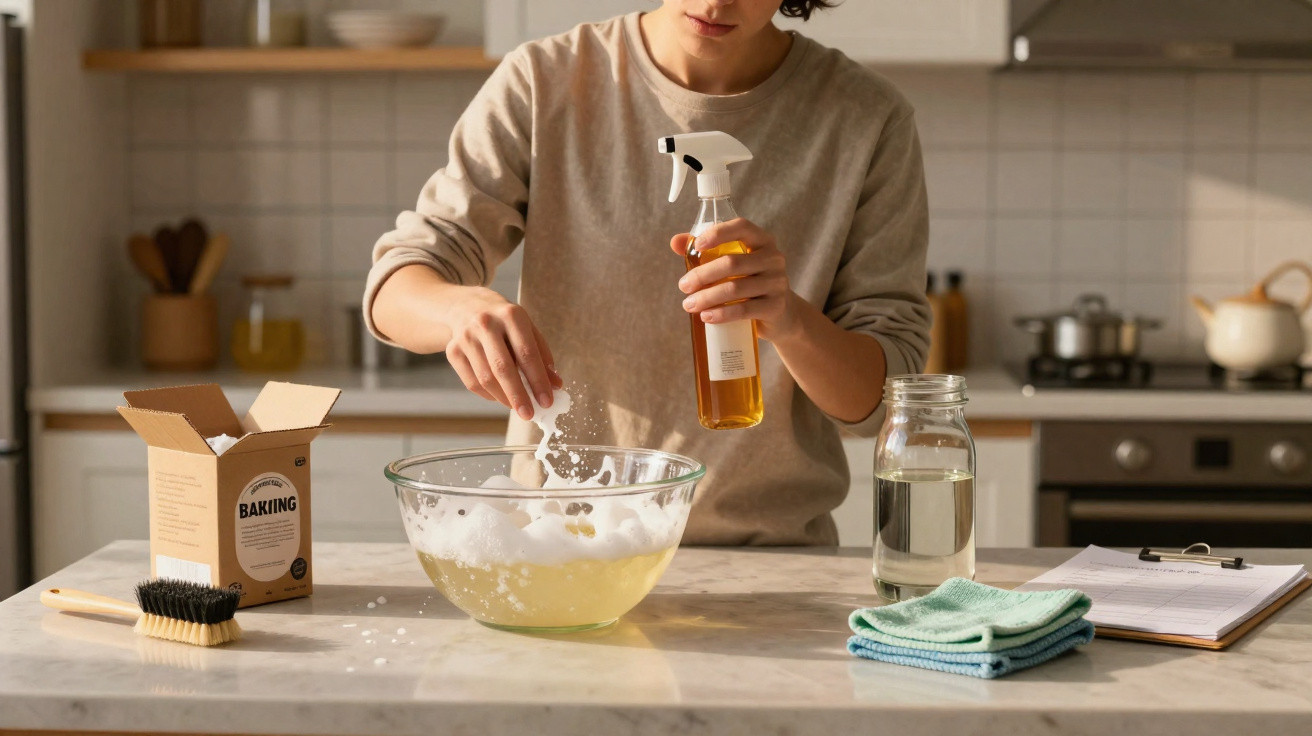
Alongside ready-made terrace cleaners, bicarbonate of soda has quietly returned as a milder option found in many kitchen cupboards. Gardening specialists note its broad usefulness: it can act as a gentle abrasive, a pH adjuster and a drying agent for moss.
For hard outdoor surfaces, bicarbonate is generally sprinkled over damp moss, or mixed with warm water and distributed using a watering can. Once it has been left for a few hours, the dead moss is easier to remove with a brush.
| Aspect | Green Boots (Action) | Bicarbonate of soda |
|---|---|---|
| Type | Commercial biocidal treatment | Multi-use household powder |
| Price level | Low, under €4 for 5 L | Low, varies by brand |
| Ease of use | Ready to pour, no mixing | Needs dosing and mixing for large areas |
| Speed of effect | Gradual, over days to weeks | Often visible within days after brushing |
| Environmental profile | Biocide, requires careful use | Milder, but must still be used with restraint |
Former landscaping professionals often say that their own approach has changed. Many now opt for slower, gentler methods, accepting that a terrace may not appear “showroom new” on the first day while showing greater consideration for garden soil and nearby plants.
Choosing the right method for your terrace
The most suitable option is shaped by several straightforward considerations: the terrace material, how severe the moss growth is, and how comfortable you are with chemicals and manual work.
Think in terms of risk, time and impact, rather than looking for a miracle cure that does everything perfectly at once.
For a large concrete terrace that is heavily overgrown, a ready-to-use treatment such as Green Boots provides predictable coverage with little effort. On a small city balcony or several steps, bicarbonate and a stiff brush could be sufficient, producing less packaging waste and avoiding a specialist cleaner.
Some users combine the two approaches. They may first apply a terrace treatment to deal with thick post-winter moss, then use bicarbonate and a brush on individual marks during the rest of the season to limit regrowth.
Practical scenarios over a full year
Consider a 40 m² north-facing terrace in a wet area. You apply the Action product once at the end of winter. By the start of spring, most of the green layer has gone and the slabs look noticeably drier after rain. In summer, faint algae may return in occasional shady sections; a brief brush and some bicarbonate can then address only these problem spots.
Alternatively, imagine an old stone courtyard in a country village, shaded in part by trees. You choose not to use biocides at all. Twice yearly, you sweep it thoroughly, apply bicarbonate where moss collects, and scrub it with a brush. The stone retains a somewhat weathered appearance, but remains reasonably clean and safe to walk on, while runoff into the ground is kept to a minimum.
Hidden risks and small habits that change everything
A large number of terrace accidents occur not in winter, but during early spring, when temperatures feel mild while algae still cling to wet slabs. Even a thin, almost invisible coating can be as dangerous as a thick green layer. Before children play outside or older relatives walk without assistance, testing the surface with the sole of a shoe is a simple safety measure.
There is a structural issue too. Moisture continually held beneath moss can gradually harm certain stone types, freeze inside tiny cracks and lead to spalling over several winters. Whichever cleaning method is used, keeping the surface reasonably clear helps maintain both its appearance and its lifespan.
Cleaning the terrace is less about chasing perfection than about managing moisture, grip and long-term wear.
For those worried about waterways, an additional precaution can help: block drains temporarily while applying a biocidal treatment, then allow only rain-diluted residues to enter the pipes later. In a garden, guiding runoff towards gravel or a drainage strip instead of directly into a vegetable bed also lowers exposure.
In many homes, terraces now function as an extension of the living room. Looking after them with frequent light maintenance rather than occasional aggressive “deep cleans” can mean less moss, fewer products and fewer unwelcome surprises when the year’s first sunny weekend arrives.

Comments
No comments yet. Be the first to comment!
Leave a Comment