
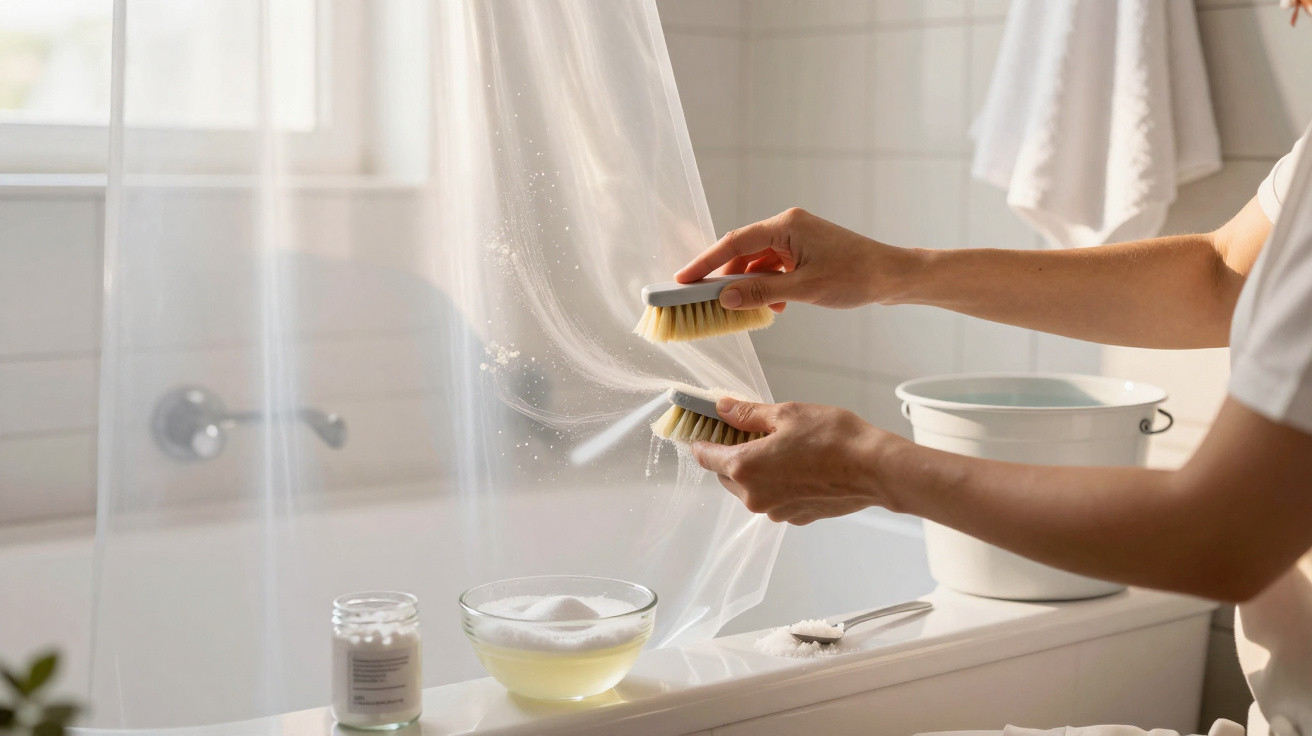
The plastic shower curtain is exposed to moisture, folds and soap residue every day. These conditions encourage dark marks, slime and mould, yet it can be cleaned by soaking it rather than scrubbing harshly.
Why does a shower curtain develop mould so easily?
Mould, sometimes referred to as mildew, is a common term for filamentous fungi that thrive mainly in dark, damp places. A shower curtain provides precisely this environment, as it is often left wet and closed after showers.
As well as moisture, the plastic collects soap residue, body oils and shampoo splashes, which create a slippery film. Once this layer settles in the folds, marks form more readily and the material loses its shine and appearance.
The most frequent causes arise from daily use:
- Moisture: a wet curtain encourages stubborn marks.
- Soap: residue creates a sticky coating on the plastic.
- Folds: closed sections dry slowly and collect slime.
- Ventilation: limited airflow extends the drying time.
- Soaking: helps loosen dirt without wearing down the material.
How do vinegar and bicarbonate of soda help with cleaning?
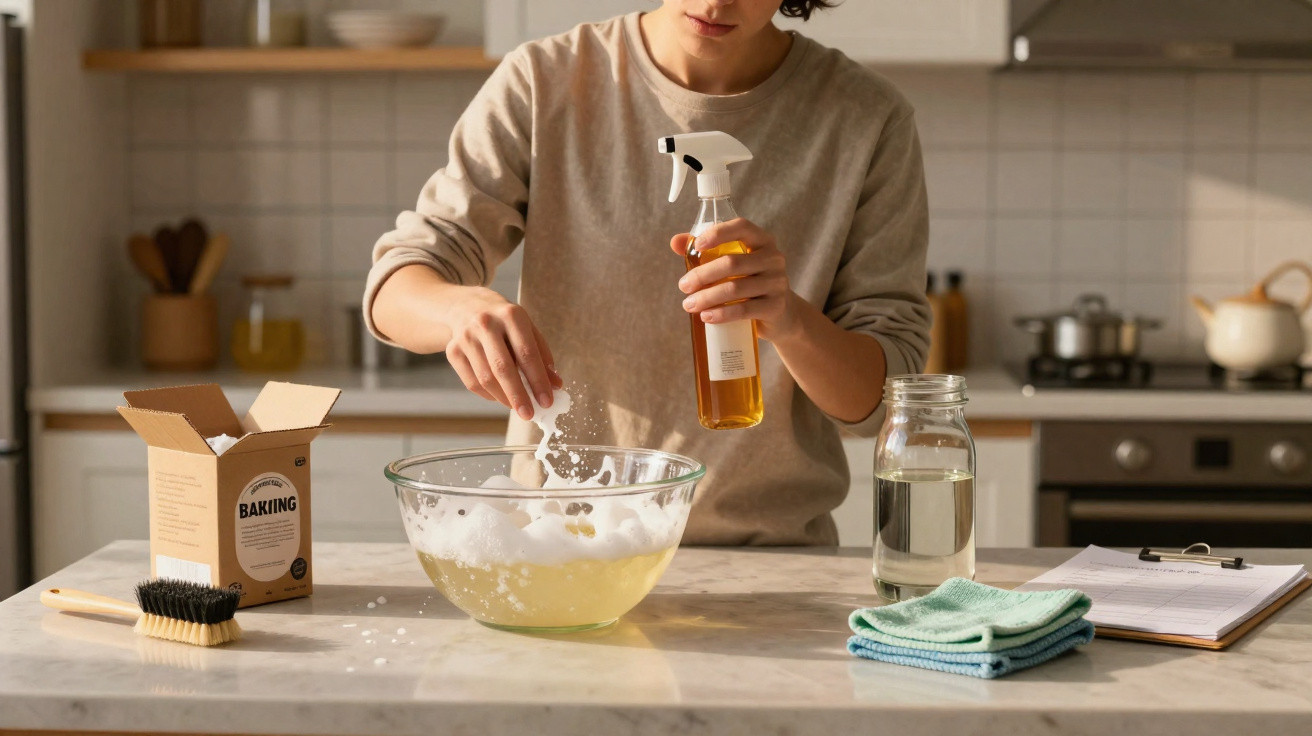
The mixture should work as a cleaning solution rather than relying on brute force. Applying vinegar and bicarbonate of soda to stained areas and allowing it to sit for longer softens the dirt, making it easier to remove with a soft sponge.
Ideally, take the curtain off its hooks, spread the plastic out fully and apply the solution to the marks. Once it has had time to work, rinsing removes loosened residue, reducing excessive friction and better protecting the plastic surface.
Why does soaking in hot salted water help?
Soaking in hot water with salt helps release the film that has built up in the folds, particularly if the curtain is marked with slime. The water should be hot but not boiling, to prevent the flexible plastic from warping.
Effort-free soaking
Time is part of the cleaning process
Leaving the curtain submerged allows marks and residue to lift before washing it by hand.
As a result, the final rubbing can be gentle and only needs to remove what the soak has already softened.
After soaking, lay the curtain flat on a clean surface and wipe it with a non-abrasive sponge. The aim is to remove what has already come loose, not scrape the plastic, as excessive force can leave scratches and marks.
A practical routine can follow these steps:
- Remove the curtain from the hooks and open it out completely.
- Apply vinegar and bicarbonate of soda to the darkest areas.
- Leave the solution to work for an extended period.
- Soak it in hot water with salt before rinsing.
- Finish with a soft sponge and plenty of clean water.
How can you stop mould and slime from returning quickly?
Prevention is easier than restoring a curtain covered in marks. Since mould thrives primarily in damp, dark settings, ventilating the bathroom after a shower reduces lingering moisture and odour.
It also helps to leave the curtain open, without any stuck-together folds, until it is dry. This straightforward habit reduces pockets of water, improves air circulation and stops soap residue from becoming concentrated along the same lower sections.
To make the cleaning results last longer:
- Open the curtain after every shower so it dries more effectively.
- Rinse away built-up soap splashes from the lower section.
- Leave the door or window open whenever possible.
- Repeat the soak before the marks become very dark.
When is it better to replace the curtain rather than persist?
If the plastic has become brittle, torn or deeply stained and the marks do not lighten, replacement may be the more hygienic option. Even so, shower mould cleaning methods help keep the bathroom looking more well-kept.
The key is to act before moisture takes over the material. With soaking, vinegar, bicarbonate of soda, salt and thorough drying, the curtain can stay cleaner without harsh scrubbing, maintaining its durability and appearance for longer.



Comments
No comments yet. Be the first to comment!
Leave a Comment