
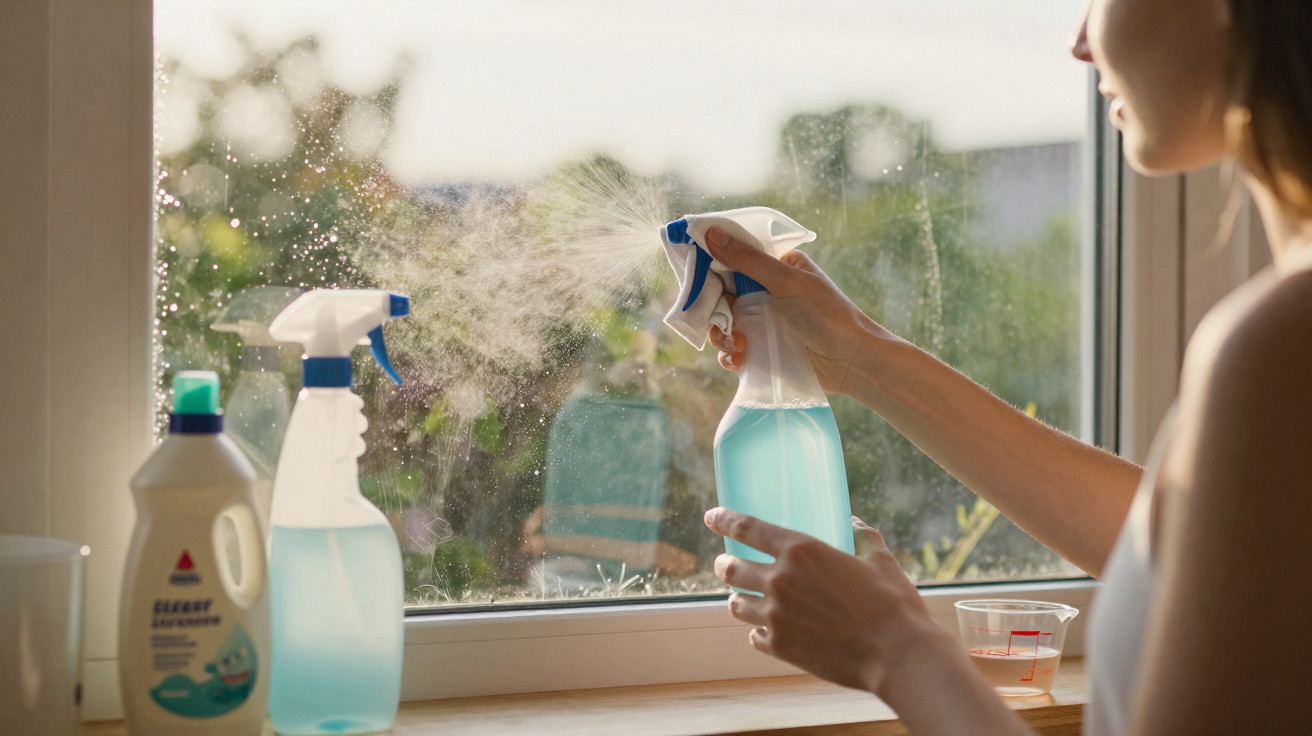
Clean windows are often linked with plenty of effort but results that do not last. In many homes, the same pattern occurs: after a thorough day of cleaning, the glass is gleaming, yet within a few days rain marks, dust and pollution begin to show again, particularly in large cities or areas affected by strong winds and dust.
How does fabric conditioner help keep glass clean?
In recent years, one straightforward tip has become popular: using fabric conditioner diluted in water as the final stage of cleaning. Rather than replacing the usual method, it is used as a finishing treatment after washing with water and washing-up liquid or a standard glass cleaner.
Fabric conditioner, best known for making clothes soft and fragrant, leaves a thin, invisible film on the glass. This coating changes how water and dust behave on the surface, helping the shine last up to twice as long as it would after rinsing with water alone.
How should you prepare and apply a fabric conditioner mixture to windows?
The solution is easy and inexpensive to make: it should contain far more water than product to prevent visible residue. Usually, just a few drops of fabric conditioner in a small bucket of warm water are enough to create a mild mixture without excessive foam.
This quick step-by-step guide shows the full cleaning routine, with the tip used as the final stage:
- Wash the glass as usual: remove heavier dirt with water, washing-up liquid or glass cleaner.
- Rinse: thoroughly remove any remaining foam and residue from the original cleaning product.
- Make the finishing solution: add a few drops of fabric conditioner to a bucket of warm water and stir.
- Apply it to the glass: use this water with a soft cloth, window squeegee or clean polishing cloth.
- Dry and buff: finish with a dry cloth, microfibre cloth or suitable squeegee to remove moisture.
Used this way, the window will not become greasy or sticky. The glass stays smooth, while the layer left by the fabric conditioner helps repel water droplets and limits dust adhesion, extending the freshly cleaned appearance.
Why does the film created on glass work so well?
The key lies in how the glass surface behaves after it comes into contact with the solution. The substances in fabric conditioner form an extremely thin layer that changes the way water runs off: instead of spreading out and drying into marks, it tends to gather into droplets that run down more quickly, leaving fewer streaks.
This film also makes it harder for airborne dirt, including dust and pollen, to cling to the glass. Some people use alternatives containing liquid glycerine too, adding only a few drops to cleaning water for a similar effect, provided the quantity remains small enough not to leave the glass dull.
What precautions matter when using fabric conditioner on windows?
A few precautions can improve the result and prevent the opposite effect. Most importantly, avoid cleaning windows in direct sunlight, as rapid drying encourages streaks even when using the special mixture. Times with indirect sunlight, such as early morning or late afternoon, are generally more suitable.
It is also worth keeping several practical points in mind to make the routine safer and more effective:
- Use only a few drops of fabric conditioner so the glass does not become dull or marked.
- Choose clean cloths, preferably microfibre ones, with no lint or built-up grease.
- Try the technique first on a smaller or less noticeable pane of glass.
- Avoid combining too many different products in the same water, as this can create residue.
By following these simple guidelines, using fabric conditioner as the finishing stage of window cleaning becomes a useful everyday tip: it helps keep glass looking presentable for longer, reduces the need for intensive cleaning sessions and makes household maintenance more practical over the weeks.

Comments
No comments yet. Be the first to comment!
Leave a Comment