
You may well have done it this week without a second thought. You sprayed, scrubbed and wiped, enjoying the oddly satisfying scent of “fresh” chemicals filling the room. Perhaps you even sent a photo to close friends, pleased with your gleaming white trainers, nearly new leather sofa or “reset” bedroom. A few days afterwards, though, you spot the consequences: cracks that were not there before, faded colour, unusual stiffness, or an odd smell that is not quite… clean.
There is an uncomfortable reality tucked away in our homes: most people are gradually damaging one everyday item by cleaning it too frequently. It is not neglect causing the damage, but treating it with a little too much enthusiasm, soap and spray.
You probably have one. You probably touched it today.
And you likely believe you are taking proper care of it.
The household object we are quietly destroying: our mattress
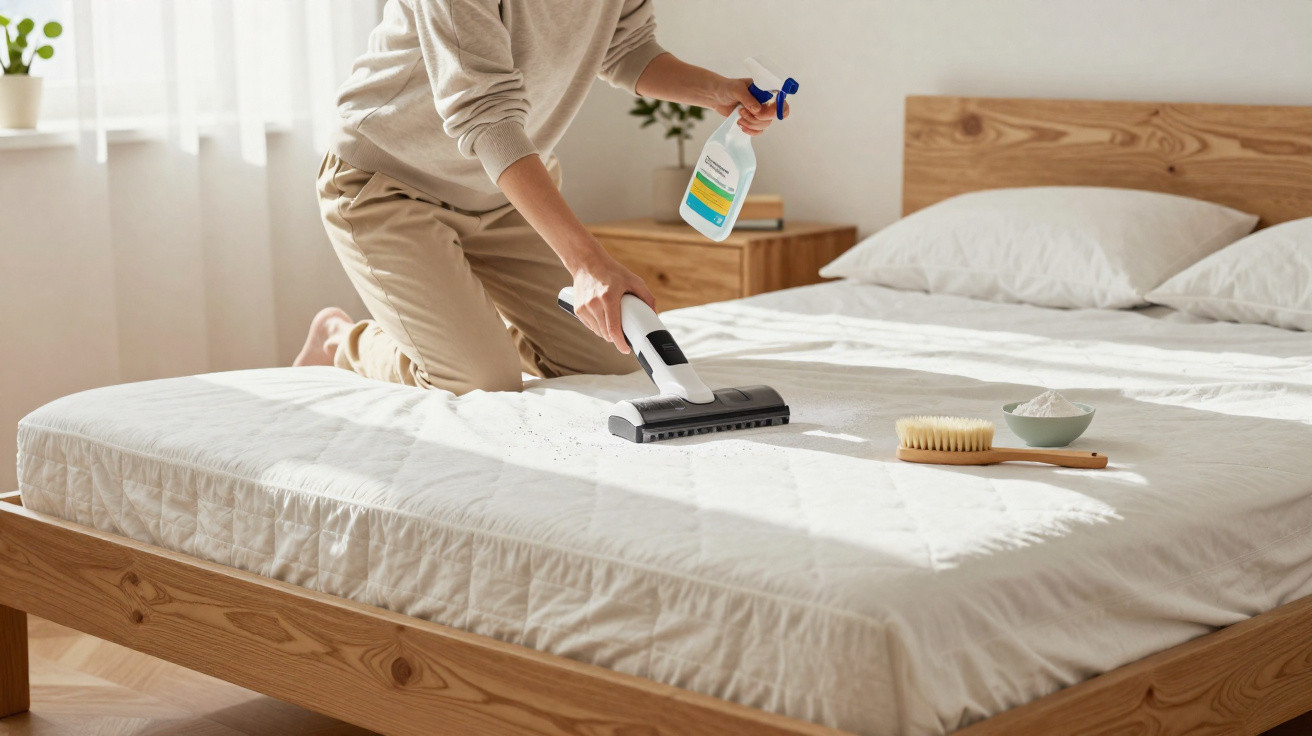
Imagine a Saturday morning: sunlight cuts through partly drawn curtains and you finally decide it is time for a thorough bedroom clean. You remove the bedding, throw open the windows and bring out the vacuum cleaner. Next comes the spray bottle, aimed at the largest item in the room: the mattress. You apply disinfectant liberally, perhaps scatter baking soda over it, and scrub at a stubborn stain that has been irritating you. It seems productive, grown-up and responsible.
Yet every time you soak the mattress, scrub it aggressively or saturate it with “cleaning hacks”, you quietly reduce its lifespan.
A London cleaning company told me it receives the same anxious call every month: “My mattress smells damp and musty after I cleaned it, what did I do wrong?” The account is nearly always the same. Someone has watched a viral TikTok “deep-clean” reel, poured on vinegar, added layers of baking soda and sprayed fabric cleaner. Sometimes they have even steam-cleaned the surface for good measure.
For several days, the mattress looked and smelled brilliant. Then discoloured patches emerged, the foam became uneven and the edges began to droop. In the worst instances, mould slowly developed deep within the layers, beyond the reach of any amount of airing.
Mattresses are not designed to be drenched, scrubbed or “reset” every weekend. That soft rectangle contains foam, padding, springs, adhesives and, in some cases, natural fibres, all of which can react poorly to moisture and harsh cleaning products. Liquid that penetrates it does not simply dry as it would on a tiled floor; it becomes trapped. This retained moisture degrades foam, promotes bacteria and distorts the structure that supports your back while you sleep.
The irony is harsh: the more relentlessly you use sprays and wet cleaning on a mattress, the sooner it will smell, sag and require replacement.
Often, the safest cleaning routine is also the least exciting one.
How you should really clean your mattress (and how often)
Set aside those carefully staged, intensely satisfying cleaning videos for a moment. The most healthy approach to mattress care is almost disappointingly straightforward. Change the sheets weekly or every ten days. Fit a good-quality washable mattress protector, then wash it every few weeks. Once a month, remove everything from the bed, open the window and allow the uncovered mattress to air for a couple of hours. Afterwards, vacuum its surface with an upholstery attachment, paying particular attention to the seams and edges.
That is all that routine care requires. No sprays, no soaking and no foam party on your bed.
When there is a genuine mishap - spilled coffee, a child’s accident or a night of illness - the natural reaction is to go on the offensive. We use every cleaning product available on the stain, continuing until it “feels” clean. Most of us know that half-panicked 2 a.m. moment, scrubbing a mattress as though our reputation depends upon it.
A more measured and effective approach is to blot the liquid using a dry towel. Mix a very small amount of mild soap with water, then dab rather than rub. Press clean towels against the area to lift as much moisture as you can, and leave it to dry for hours with plenty of airflow. Less drama, better outcome.
This is the point at which many people hesitate: “Just vacuum and air it out? That can’t be enough.”
However, professionals who restore hotel and hospital mattresses consistently make the same simple point: over-cleaning with liquids causes more problems than under-cleaning. One sleep specialist I interviewed put it this way:
“Your mattress doesn’t need to smell like a swimming pool to be hygienic. It needs to stay dry, supported, and protected.”
If you prefer straightforward guidance, keep these rules in mind:
- Vacuum: once a month
- Mattress protector wash: every 2–4 weeks
- Spot clean with minimal moisture: only when there’s a visible stain
- Rotate or flip (if possible): every 3–6 months
- Full mattress replacement: roughly every 8–10 years, depending on quality
Why we confuse “more cleaning” with “more safety”
Modern life carries a subtle background pressure to maintain a spotless home with hotel-level cleanliness. Social media serves up slow-motion foam, sparkling before-and-after images and “satisfying” scrubbing videos. A mildly yellowed mattress or the faint shadow of an old stain can suddenly seem like a personal failing. We respond by overcompensating: scrubbing more forcefully, more often and with stronger products, then labelling it self-care.
The mattress bears the consequences in silence beneath the sheets.
Fear plays a role too: dust mites, allergens, bacteria and bed bugs. Headlines and advertising encourage the belief that failing to disinfect constantly is somehow careless. The truth is more complicated. Regular upkeep can indeed benefit people with allergies, and allowing food or moisture to remain on a mattress is certainly unwise. But intensive daily disinfection crosses from sensible hygiene into quiet obsession. Frankly, nobody genuinely does this every day.
Those who attempt it often end up with a mattress that smells of perfume but feels as comfortable as a park bench.
Beneath it all lies a basic human desire for control. Life can feel chaotic, unpredictable and strangely intangible when so much work happens digitally. Cleaning is physical and visible: you can see the dust collected by the vacuum cleaner, watch a stain fade and feel fresh bedding. It can seem like evidence that you are doing something correctly. The issue begins when the emotional reassurance cleaning provides matters more than what our belongings can realistically withstand.
A mattress is made to provide support, not to remain flawless. A small mark or faint patch of discolouration does not automatically mean it is dirty. It simply shows that it has been used, and that is not the same thing.
| Key point | Detail | Value for the reader |
|---|---|---|
| Mattresses hate excess moisture | Liquids penetrate foam and padding, leading to odours, mould and structural damage | Helps prevent expensive errors that reduce a mattress’s lifespan |
| Gentle, regular care beats deep “over-cleaning” | Vacuuming, airing and using a protector are generally sufficient | Cuts down effort while keeping the bed hygienic and comfortable |
| Viral cleaning hacks aren’t made for long-term durability | Many prioritise dramatic results rather than what materials can safely tolerate | Encourages more careful judgement before using extreme cleaning techniques |
FAQ:
- Question 1 How often should I actually clean my mattress?
- Answer 1 Vacuum it once a month, air it when you change the sheets, and wash a mattress protector every few weeks. Deep cleaning with liquids should be uncommon and focused only on an actual spill or particular stain.
- Question 2 Can I use a steam cleaner on my mattress?
- Answer 2 Most experts recommend against it. Steam forces hot moisture deep into the layers, where it may remain trapped, encourage mould or degrade foam. Use minimal moisture for spot cleaning instead.
- Question 3 What if my mattress already smells musty?
- Answer 3 Begin by airing it thoroughly in a well-ventilated room. Vacuum it lightly, then apply a very small amount of diluted fabric-safe cleaner to individual areas. If the odour is strong or worsening, the internal structure may be damaged and replacement could be the healthiest option.
- Question 4 Is baking soda on a mattress safe?
- Answer 4 Yes, when used occasionally and sparingly. Apply a thin layer, leave it for a few hours and vacuum thoroughly afterwards. Problems arise when it is mixed with a large amount of liquid or used too frequently, leaving residue within the fabric.
- Question 5 Do I need a mattress protector if I’m careful?
- Answer 5 A protector is among the simplest low-effort habits to adopt. It absorbs sweat, spills and dust, and can simply be put in the wash. It is a modest, unobtrusive investment that protects your mattress from excessive cleaning and premature damage.



Comments
No comments yet. Be the first to comment!
Leave a Comment