
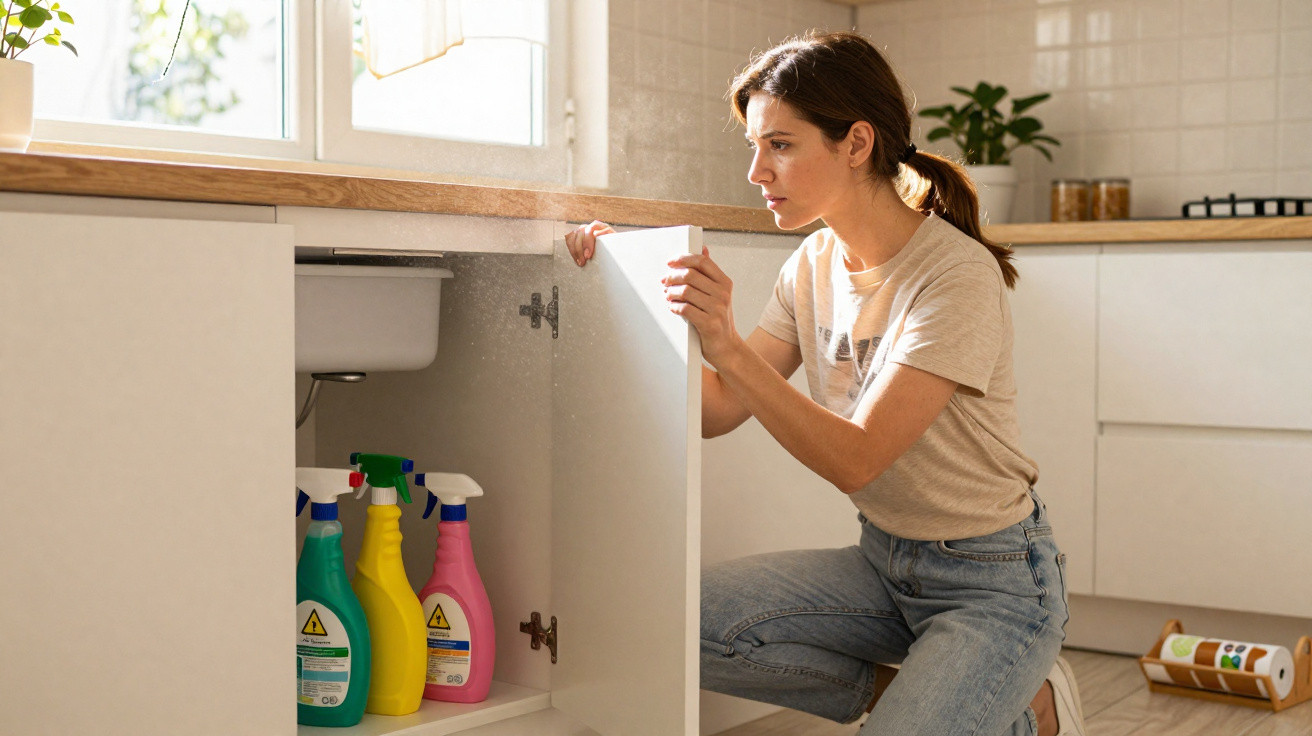
On the top shelf of a spotless, light-filled kitchen in Bristol, a plastic caddy was crammed with sprays labelled lemon, pine and “ocean breeze”. The kitchen appeared immaculate - the sort of room where you would not hesitate to eat from the floor. But the air felt heavy, as though somebody had used air freshener and left the windows closed for hours.
The young father who lived there insisted that he hardly ever cleaned. “Just a couple of spritzes when the kids spill stuff,” he told me with a laugh. Even so, his toddler woke with watery eyes every morning at breakfast, and nobody had been able to explain it.
There was no obvious warning sign. Everything smelled clean. Yet the issue was sitting in plain sight: the way those bottles were kept between cleaning sessions.
When “clean” air is not really clean
Enter almost any supermarket and you are met with a wall of “fresh” scents. Brightly coloured cleaning products promise shine, disinfection and hotel-standard cleanliness. Most of us bring them home, put them beneath the sink or into an overcrowded cupboard, close the door and get on with the day.
We may not open that cupboard again until a major clean is due or pasta sauce lands on the hob. It is easy to forget that cleaning products are not inactive while they are stored. Even with their caps fitted, they can gradually release substances into the air.
A home can look perfectly clean while the unseen air surrounding those bottles tells another story entirely.
Public-health evidence has pointed in this direction for years. In an EU indoor-air survey, researchers found higher concentrations of volatile organic compounds in homes that used many scented cleaners - the small reactive gases more commonly associated with traffic and industrial sites.
Consider the London family who changed to fragrance-free cleaning products after their daughter’s asthma deteriorated. They later realised that the most significant change was not simply the products they used, but where they kept them: they moved the bottles from a warm airing cupboard into a ventilated storage box in the garage.
After three months, her coughing at night gradually eased. There was no dramatic breakthrough, only a slow, almost unremarkable improvement beginning in the most neglected part of their hallway.
The explanation is fairly straightforward. Many cleaning products contain VOCs, including limonene - the source of that “citrus” fragrance - as well as solvents, ammonia and chlorine compounds. These substances can evaporate when you are not spraying, pouring or otherwise using the product.
Inside a sealed cupboard, the vapours accumulate. They do not remain contained there: they pass through small gaps, travel into other rooms and combine with whatever else is in the air, including cooking emissions, perfume and pollution entering through open windows.
In time, this mixture may irritate the lungs, bring on headaches or make allergies worse. It is not as immediately obvious as a chemical burn. Instead, it creates a low-level, ongoing strain on indoor air that you may never link to the way you arrange bottles beneath the sink.
Cleaning product storage changes the air you breathe
A useful first step is to treat cleaning products more like paint or fuel than soap. Gather your sprays, bleach, floor cleaners and oven degreasers in one place on a table. Seeing the whole collection in daylight can be surprisingly revealing.
Next, identify your “daily drivers”: the two or three products you genuinely use every week. Keep those within easy reach. Move everything else farther away, preferably to a cool, ventilated location such as a utility area, porch cupboard or even a sealed box on a balcony.
Where indoor storage is unavoidable, use a secure, child-safe box rather than leaving bottles loosely piled in a warm cupboard beside food or towels. The aim is containment, not simply cramming items into any available space.
Once you have chosen where to keep them, pay attention to the lids. Properly tightened caps and locked spray triggers can reduce leakage and slow evaporation. Leaving a spray nozzle partly open is much like leaving a window ajar in winter: the loss is subtle, but it never stops.
Ventilation is useful as well. A cupboard with a small grille in its door, or even a narrow gap along the top, allows vapours to disperse gradually rather than build up and escape as one concentrated burst whenever the door is opened.
Let’s be honest: nobody truly does this every day. You organise things once, then everyday life takes over. That is fine. The point is not to achieve perfection, but to shift the odds slightly in favour of your lungs.
“People imagine risk comes from dramatic events: spills, mixing bleach with something dangerous, a one-off accident,” says an environmental health nurse in Manchester. “More and more, we’re realising the slow, everyday exposure matters just as much - especially for kids and anyone with asthma.”
Several habits appear repeatedly in British homes:
- Keeping bleach or powerful cleaners in warm airing cupboards alongside towels and bedding.
- Storing sprays beside pet food or children’s snacks because it is convenient.
- Leaving partly used, unlabelled bottles in the bathroom, where steam can make them off-gas more quickly.
None of these habits means you are irresponsible or careless. They simply reflect being human, short on time and making do with the storage space available.
Rethinking “freshness” before you notice the smell
Once you become aware of storage habits, there is often a subtle change in perspective. Rather than asking, “Does my home smell clean?”, you begin to ask, “What is in the air that I cannot smell?”.
That matters especially on a wet Tuesday when the heating is running and the windows remain shut. Air is not being replaced as quickly, so whatever escapes from a cupboard can build up and linger - particularly in compact flats and newer, tightly sealed homes.
There is also an element of control. You may be unable to do much about roadworks beyond the window or a neighbour’s wood burner, but you can take action on the plastic basket of unidentified bottles beneath your own sink.
On a quiet evening, spend five minutes opening that cupboard or cleaning drawer. Look at what is inside, what you actually use, what feels sticky, what has passed its expiry date and what you are slightly reluctant to touch.
It can be oddly reassuring to acknowledge, privately, that having “more products” never really meant having “more control” over your home. It often only meant more vapours, more clutter and more choices to make.
When you reduce the collection, a healthier indoor-air routine may fit into one caddy: a mild all-purpose cleaner, a bathroom product you trust, washing-up liquid and perhaps a specialist product for stubborn grease. Everything else can become background noise.
Your lungs do not care which brand wins the advert break. They care how many bottles are quietly altering the chemistry of the air you breathe each night.
| Key point | Detail | Why it matters to the reader |
|---|---|---|
| Fewer products, stored better | Limit the number of bottles in use and keep them in a cool, ventilated, enclosed place | Reduces daily exposure to chemical vapours without changing your entire routine |
| Avoid warm cupboards | Do not store products near radiators, boilers or warm laundry | Lowers solvent evaporation and the concentration of indoor-air pollutants |
| Choose fragrance-free options | Select fragrance-free or low-VOC cleaners | Helps limit respiratory irritation and headaches associated with artificial “fresh” smells |
FAQ
- Can cleaning products really affect indoor air quality if I barely use them? Yes. Many products emit vapours while simply sitting in a closed bottle, particularly in warm cupboards without ventilation.
- Is it safer to keep all my products in the bathroom? Bathrooms are often small and steamy, which can increase off-gassing. A cooler ventilated area or sealed storage box is generally the better choice.
- Are “eco” cleaners always better for air quality? Not necessarily. Some still include fragrances and VOCs. Look for fragrance-free, low-VOC labels instead of relying solely on “green” branding.
- What should I do with old or half-empty bottles? Consult local guidance on hazardous-waste facilities or recycling points. Do not pour strong chemicals down the drain unless your council specifically confirms that it is safe.
- Is opening the window after cleaning enough? It helps, but it does not address what may be slowly leaking from stored products every day. Better storage and fewer bottles make that open window work much harder for you.


Comments
No comments yet. Be the first to comment!
Leave a Comment