
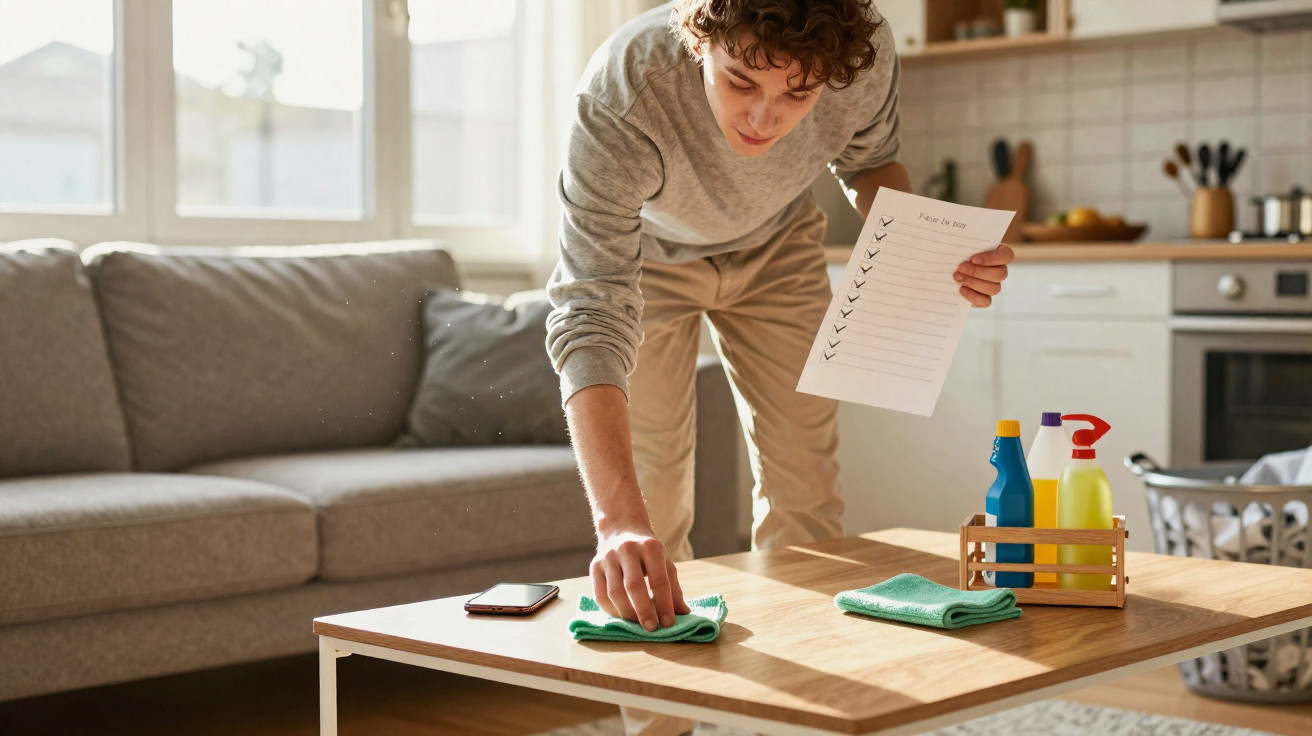
You check the clock. Guests are “dropping by” in twenty minutes, the sink resembles the aftermath of a pottery workshop, and something mysteriously crunchy is underfoot in the living room. You reach for a cloth and multipurpose spray, then suddenly race around the house as though you are trying to complete a video game level.
The legendary “quick clean.”
It begins with the best of intentions and a loose promise of “ten minutes, max.” Forty minutes on, you are hot and flustered, inexplicably rearranging the bookcase, while your guests message to say they are downstairs.
So, how much time should a quick clean really take?
Why the five-minute quick clean is a myth
We have all been sold the fantasy of a five-minute tidy. Influencers drift through immaculate kitchens holding a neatly folded microfibre cloth and a candle, as though mess simply retreats when filming starts. Real life tends to be far stickier.
Even when you work quickly, a proper “quick clean” still takes time. By the time you have found the spray, chosen a playlist and shifted the chair that has sat in the wrong spot since 2022, those five minutes have disappeared. In reality, “I’ll just do a quick clean” often means “I’m about to underestimate this job by at least 50%.”
Imagine the situation. A message arrives saying, “We’re outside your place in 30, cool?” Instantly, your mind launches into panic-cleaning mode.
You begin in the kitchen: dishes go into the dishwasher - or, honestly, the oven - crumbs are swept into your palm, and you attack the sticky wine-glass ring left from last night. Then it is off to the bathroom to wipe the basin, replace the hand towel and pull the shower curtain closed, like a theatre curtain concealing last week’s shampoo bottles.
After a rapid pass through the living room, hiding the laundry heap beneath a blanket and lighting something that smells roughly of vanilla, you look at the time. It has taken twenty to thirty minutes. Every. Single. Time.
There is a reason your “ten-minute clean” almost never lasts ten actual minutes. People usually miscalculate cleaning in two ways: they confuse a “quick clean” with a deep clean, and they work room by room rather than task by task.
A useful quick clean is about what people notice, rather than achieving perfection. You are not transforming the house; you are changing the first things the eye registers: surfaces, scents and clutter hotspots. Once you see it that way, the realistic rule is clearer: a basic, targeted quick clean in an average-sized home takes roughly 20 minutes on an ordinary day, rising to 30 when chaos has paid a visit.
Anything sold as less than that is more about marketing than real life.
The realistic 20-minute quick clean - and what to leave alone
In practice, a quick clean can fit into a 20-minute circuit of short, clear jobs. Treat it as a simple routine rather than a frantic, random attack with a sponge.
A workable approach looks like this:
- 5 minutes in the kitchen: rinse or stack the dishes, wipe the worktops and remove any obvious rubbish.
- 5 minutes in the living room: put visible clutter into a basket, plump the cushions, wipe surfaces and quickly sweep or vacuum the main walking routes.
- 5 minutes in the bathroom: wipe the basin, run over the mirror, clean the toilet seat and flush button, then put out a fresh hand towel.
- 5 minutes of “floating time”: deal with the hallway, leave the bedroom door half-shut, and tackle one persistent area that always irritates you.
That is a quick clean based on real life rather than wishful thinking.
The greatest thief of time is scope creep. You start by cleaning the bathroom basin, then end up sorting the whole cupboard because you have discovered three nearly empty toothpaste tubes and sun cream from 2018.
This is where being kind to yourself helps. You are not lazy; you are simply like every other person who spots one untidy thing and suddenly wants to repair the entire system. During a genuine quick clean, the only goal is to avoid that spiral. Leave cupboard interiors, drawers, under the bed and “projects” such as arranging every item of clothing by colour for another time.
A quick clean is triage, not therapy for your home.
There is an honest truth that many of us need to acknowledge: almost nobody does this every single day. Most people move through cycles - several organised days, followed by tiredness, followed by one guilt-fuelled mega-clean.
To make a quick clean feel less like a punishment, follow one straightforward rule: stop when the timer goes off. Do not stop “when it feels done”, and do not carry on “after I just fix this one more thing.” Set a timer for 20 minutes and treat it as a firm boundary. That is what keeps a quick clean quick. Eventually, your mind learns that the effort has a definite finish, making it easier not to turn the task into a three-hour marathon.
How to make a quick clean feel genuinely quick
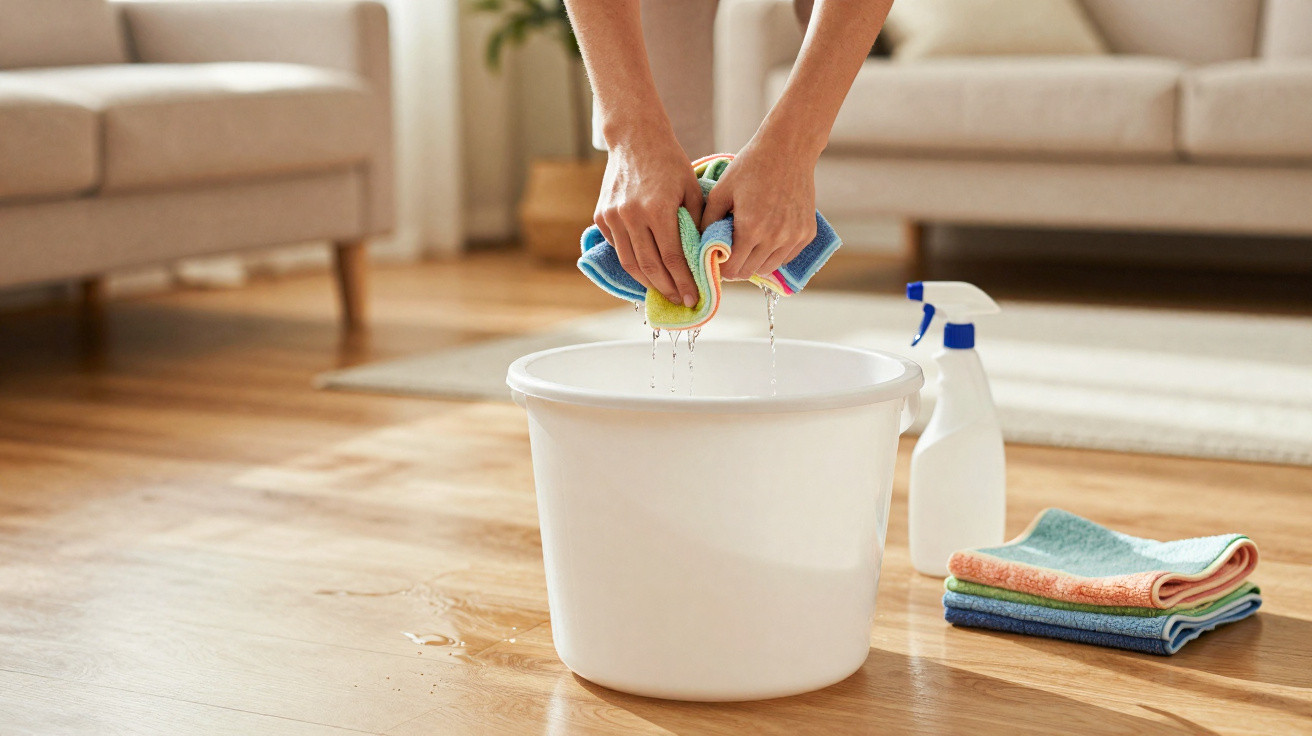
For faster cleaning, preparation does much of the work. Keep a small grab-and-go kit in one permanent place, containing multipurpose spray, a glass cloth, a microfibre cloth, small rubbish bags and disposable wipes if you use them.
With the kit ready, you avoid that wandering stage: the wasted minute spent travelling around the house in search of the decent sponge. Begin each quick clean in the same way: set the timer, put on music or a podcast, and hold one thought in your mind - “I’m only doing what people can see at a glance.”
Focus on kitchen worktops, the coffee table, bathroom basin and entrance hall. Those four spots make a far greater difference to how your home feels than scrubbing a skirting board ever will.
Two familiar errors derail most quick cleans. The first is starting with too much: you look at the entire room and your mind shuts down.
Make the job smaller. Tell yourself, “Right now I’m only clearing surfaces” or “I’m only dealing with the floor.” When that one task is complete, move forward. The second mistake is shame cleaning. You look around and wonder, “How did I let it get this bad?” That thought adds weight and slows everything down. Replace judgement with curiosity: “Okay, this week got heavy, what’s the minimum I can do so tonight feels calmer?”
Quick cleaning works best when it feels like care, not punishment.
Sometimes, the most realistic definition of “clean enough” is this: “I can open the door to someone without apologizing for the state of the place.”
That’s not low standards. That’s a humane one.
- Kitchen zone (6–7 minutes): Stack or soak dishes, wipe worktops and the table, remove visible rubbish, then quickly sweep beneath the table or in front of the worktop.
- Living room zone (5–7 minutes): Put clutter into one basket, straighten cushions and throws, wipe the coffee table and television area, and vacuum the places people walk.
- Bathroom zone (4–5 minutes): Wipe the basin and tap, quickly clean the mirror, clean the toilet seat and handle, replace the towel, and empty an overflowing bin if necessary.
- Entrance zone (2–3 minutes): Arrange shoes, hang up coats, put post out of sight, and swiftly sweep the floor so the first step indoors feels calm.
When “quick” is about permission, not just time
Once you stop pursuing the five-minute fantasy, the question shifts. Rather than asking “How little time can I spend?”, ask “What’s the amount of effort that gives me the most relief for the least energy?”
For plenty of people, the ideal window is 15 to 25 minutes. It is enough time to create a visible improvement, but brief enough that you do not spend an hour bargaining with yourself before you begin. Some days, even ten minutes can feel like climbing uphill in wet socks. On those days, a “quick clean” may mean only clearing the sink and wiping one surface before bed - and it still counts.
The aim is not perfection. It is to regain enough control that your home no longer seems to shout at you when you come through the door. You get to decide what “quick” means for your life at this moment, rather than following a stranger’s aesthetic video.
| Key point | Detail | Value for the reader |
|---|---|---|
| Realistic time frame | A genuine quick clean usually runs 20–30 minutes for an average home | Reduces guilt from unrealistic five-minute expectations |
| Priority zones | Focus on kitchen, living room, bathroom, and entrance only | Max impact on how “clean” your home feels in less time |
| Simple routine | Repeat the same small checklist with a timer and basic kit | Makes cleaning feel faster, lighter, and easier to start |
FAQ:
- How long should a daily quick clean take? For most people, 15–20 minutes is sufficient to reset visible areas when it is done fairly regularly and the mess is not extreme.
- What if my place is really messy - is a quick clean still possible? Yes, but limit it to one or two zones, such as the kitchen and bathroom, for 20–30 minutes, and accept that everything else can wait.
- Is it better to quick clean every day or do one big weekly clean? A combination is most effective: short daily resets stop things from escalating, while a longer weekly session handles deeper tasks.
- Which room should I start with for a fast clean? Begin where the impact matters most to you: usually the kitchen or living room, or the place you see first on entering.
- Do I need special products for speed cleaning? No. A reliable multipurpose spray, one cloth and a rubbish bag will handle 80% of what a quick clean needs.

Comments
No comments yet. Be the first to comment!
Leave a Comment