
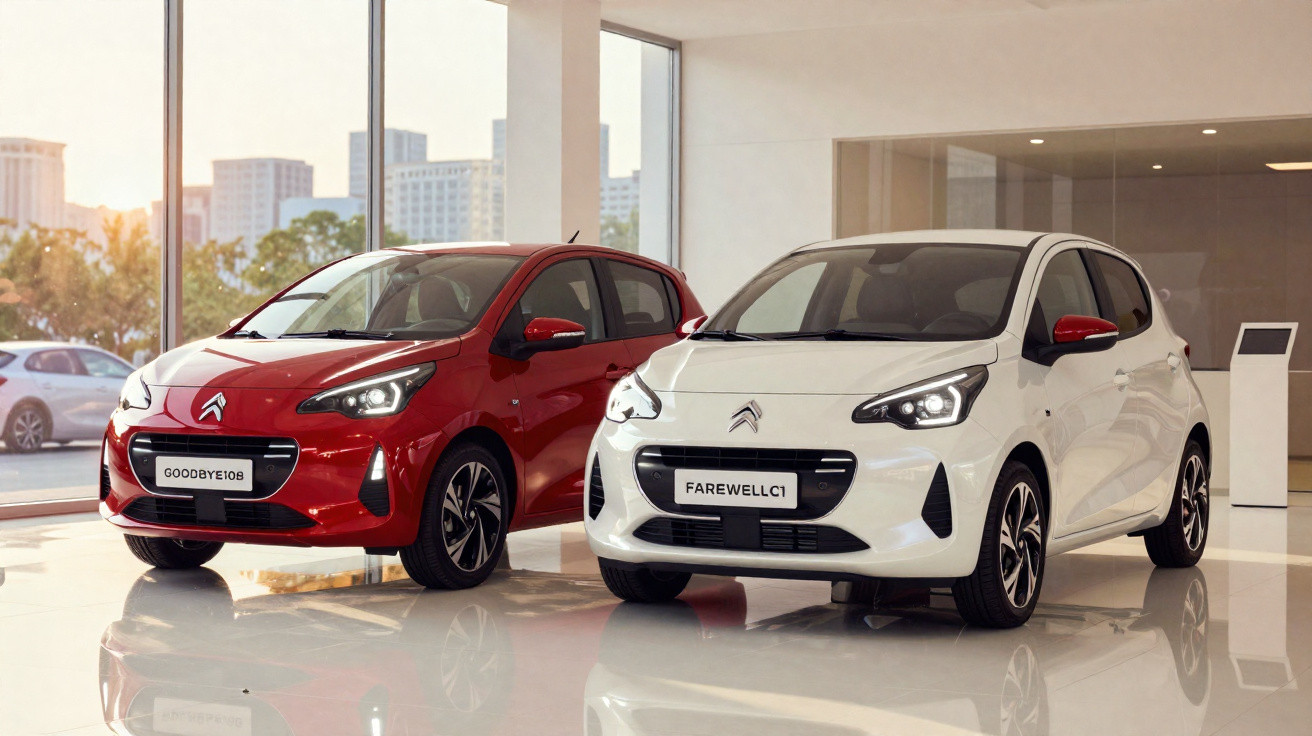
Reports from three separate sources speaking to Reuters suggest that production of the Peugeot 108 and Citroën C1 is likely to end shortly.
The two French city cars were developed through a Groupe PSA and Toyota partnership, which also produced the Aygo. Their expected departure is attributed to the segment’s limited profitability, a problem set to become even more acute as emissions-compliance requirements become stricter.
Peugeot 108 and Citroën C1 production under pressure
The first “warning” over the future of the Peugeot 108 and Citroën C1 came in 2018, when Groupe PSA sold its stake in the Czech factory that builds the three city cars to Toyota.
Introduced in 2014, the models would normally be approaching the point at which replacements were either unveiled or at least discussed. So far, however, there have been no reports of development work on possible successors.
Although the French group has not officially confirmed the decision, it may be explained not only by rising costs and falling profitability, but also by the forthcoming merger with FCA. That deal will create the automotive giant Stellantis and require every existing plan to undergo a strategic review.
If everything proceeds as intended, Peugeot and Citroën will have Fiat as a “colleague” from some point in 2021. Fiat is the undisputed leader in the city-car segment.
While Fiat said some time ago that it also intended to leave the segment, for the same low-profitability reasons, the economies of scale delivered by the merger could offer fresh hope that these brands will continue to sell city cars in the future.
City cars have faced a difficult market
The A-segment has been losing momentum for years. Its market share stood at 10.9% in 2010, but gradually declined to 7.4% in 2019.
The lack of replacement models is also evident. Apart from Korean models, most city cars currently on sale have already spent many years on the market and have no planned successors. With several models already confirmed or expected to disappear, the decline is likely to become sharper in the approaching new decade.
The figures simply do not add up. Engines capable of meeting emissions standards cost more, as do hybrid and electric technologies, while increased safety and connectivity requirements mean that small city cars cost as much to develop and manufacture as models in higher segments.
It is therefore unsurprising that manufacturers are focusing on the B-segment, made up of superminis, where there is greater scope to set more suitable prices and achieve healthier margins.
Alternatives
Reuters also reports that electric versions of the Peugeot 108 and Citroën C1 were considered as a way to extend their lifespan and support Groupe PSA’s efforts to reduce CO₂ emissions. However, this was not certain to deliver the required return, so the option was dropped.
For people seeking an alternative for urban travel, vehicles such as the Citroën Ami could provide an answer. This (very) small electric quadricycle, more commonly known locally as a mobility scooter, stands out for its particularly low purchase price. It cannot, however, offer the same versatility as a city car. Its top speed is just 45 km/h, and it is not permitted on motorways or dual carriageways, for example.
City cars remain a conundrum still awaiting a solution.
Source: Reuters.


Comments
No comments yet. Be the first to comment!
Leave a Comment