
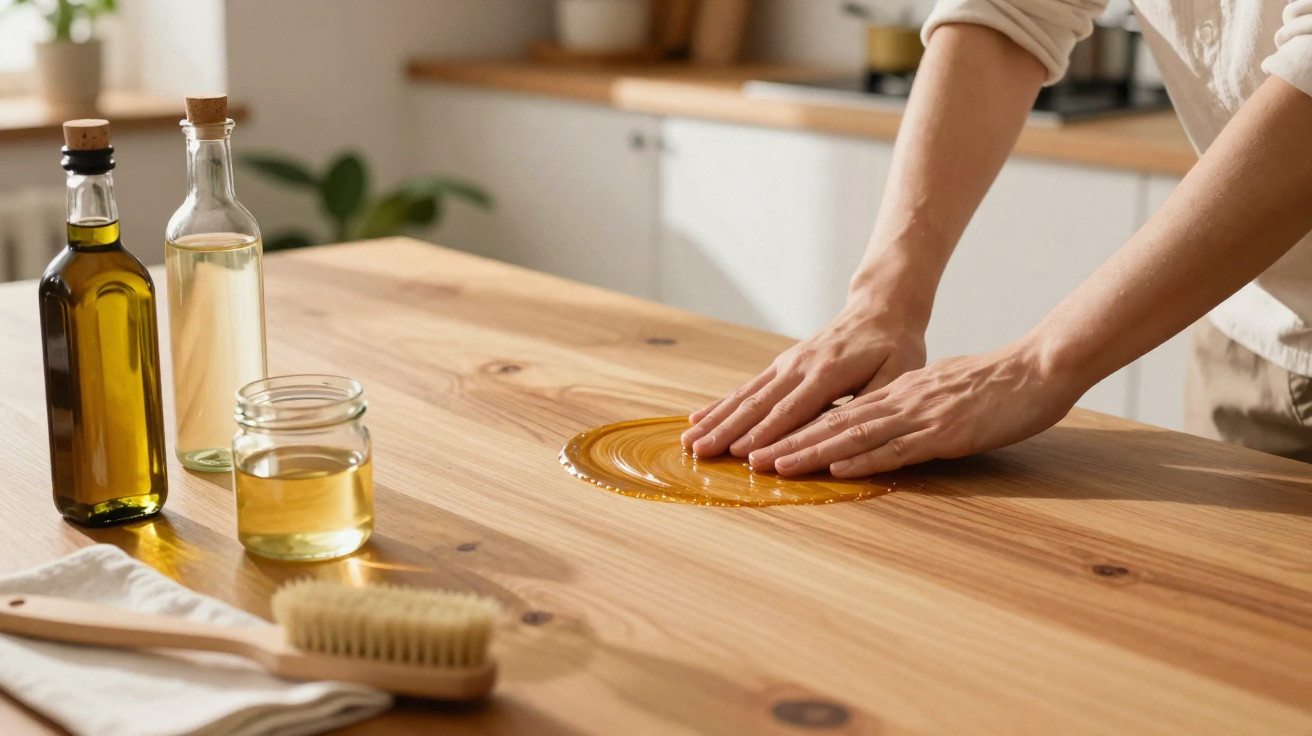
A mixture of vinegar and linseed oil is used in household care to remove light marks, improve the look of wood and reduce dryness in older furniture. Vinegar can lift surface dirt, while linseed oil forms a nourishing layer that restores sheen and a more even appearance.
What is a mixture of vinegar and linseed oil used for?
A mixture of vinegar and linseed oil is mainly intended for maintaining wooden furniture without delicate finishes. It may be useful on tables, chairs, sideboards, internal doors and items that have gradually lost their shine.
The effect tends to be more noticeable on natural, waxed or matt-finished wood. On lacquered, high-gloss varnished or painted furniture, the acidity of vinegar may stain or strip the finish unless a test is carried out first.
What is the ideal ratio for preparing the mixture?
The most common ratio is one part white vinegar to two parts linseed oil. This balance prevents excessive acidity and allows the oil to provide most of the wood’s protection and nourishment.
- 1 tablespoon of white vinegar.
- 2 tablespoons of linseed oil intended for wood.
- A soft, clean, dry cloth.
- A small container for mixing only the amount needed that day.
How can it be applied without staining the wood?
Before using the mixture of vinegar and linseed oil across the whole item, try it on a concealed area. Wait a few minutes, then check whether the wood darkens too much, feels sticky or shows any change to its finish.
- Remove dust from the surface with a dry cloth.
- Put a small amount of the mixture onto the cloth, never directly onto the wood.
- Work along the grain without soaking the surface.
- After a few minutes, wipe away any surplus with another clean cloth.
- Allow the item to dry in a well-ventilated space before using it.
What benefits can this combination provide?
Vinegar can help loosen light grease, fingerprints and ordinary dirt from daily use. Linseed oil, meanwhile, penetrates porous surfaces more effectively and may give the wood a richer tone.
For dry furniture, restrained application can improve the feel of the surface and lessen its dull appearance. This treatment should be occasional, as too much oil can make the surface sticky and attract dust.
What precautions help prevent problems in household use?
The mixture requires care regarding the type of wood, its finish and the quantity used. Items with glossy varnish, paint, laminate or very pale wood may react poorly to vinegar or darken because of the oil, making a test in a hidden area essential.
After use, cloths containing linseed oil should be laid open to dry outdoors, away from heat, or disposed of carefully in accordance with the product instructions. This prevents oil from building up in the fabric and helps keep wood treatment safer in the home.





Comments
No comments yet. Be the first to comment!
Leave a Comment