
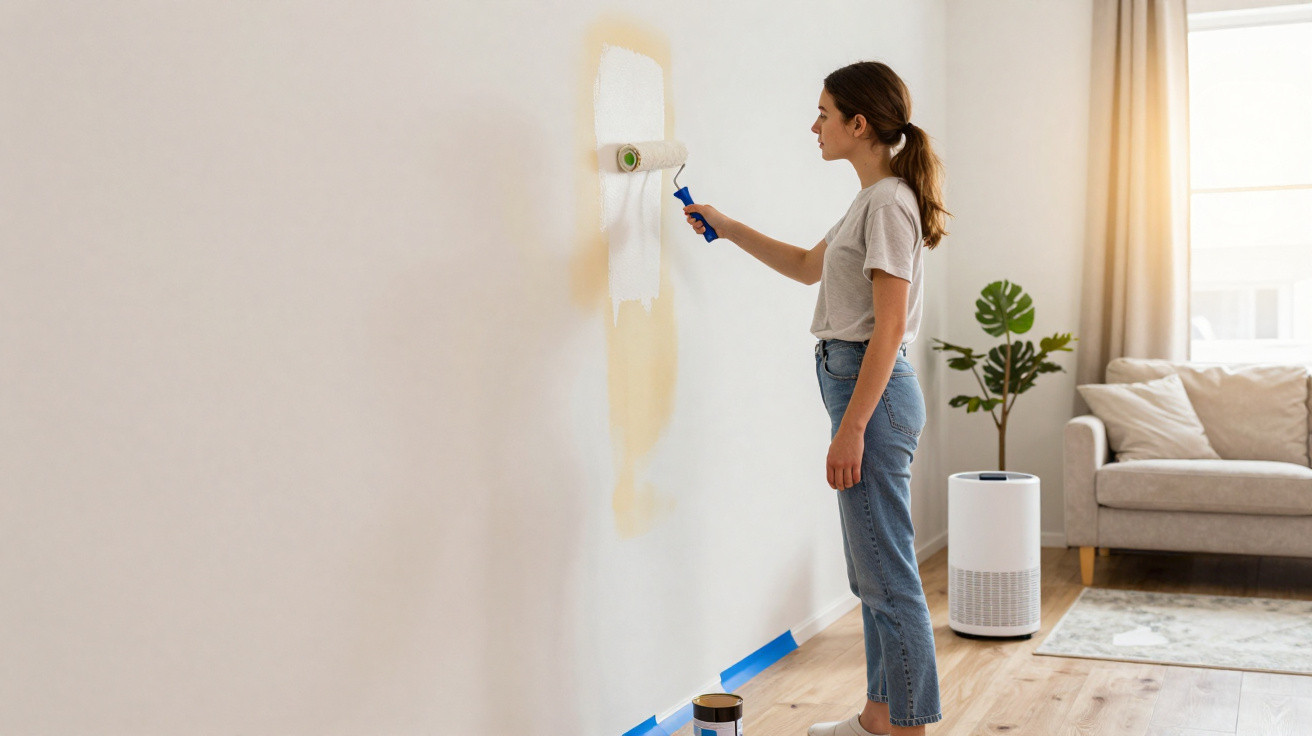
Damp patches on walls often stand out and cause concern in many homes. In many instances, however, these marks can be concealed with straightforward measures, without an immediate need for major building work, provided the source of the damp, room ventilation and some basic surface-preparation steps are considered.
How can you identify the source of a damp patch?
Before considering paint, textured finishes or wallpaper, it is important to establish where the damp is coming from. Sometimes, it is simply caused by condensation or splashes in wet areas, such as bathrooms and kitchens, which are usually easier to manage.
In other circumstances, there may be more serious water ingress from the roof, exterior walls or the ground, requiring closer attention. Checking whether the patch grows during rainy periods, whether there is a strong mould smell, or whether the paint develops blisters can help indicate whether the issue is isolated or structural.
How should you prepare a wall with a damp patch?
Preparing the surface properly is vital for any DIY solution to work more effectively and last longer. The usual first step is to clean the affected area gently, removing dust, grease and loose residue without soaking the wall and making the problem worse.
Where visible mould is present, suitable products or well-diluted bleach can be used with adequate ventilation. If paint is peeling, scrape away any loose material with a filling knife and, where needed, level the area with filler or acrylic filler, always allowing the drying time specified by the manufacturer.
Which practical solutions can help conceal damp patches?
To cover damp patches quickly without carrying out a full refurbishment, several simple options can be used in houses and flats. The right choice depends on the severity of the mark, the type of room and the desired finish, while ensuring that the wall is sound and reasonably dry.
Among the most common options for indoor spaces are solutions that combine a visual improvement with light surface protection:
- Matt touch-up paint for light patches on pale walls that have already been painted.
- Primer or stabilising solution to even out absorption before applying fresh paint.
- Light textured finishes, such as a texture roller or sponge effect, which help disguise uneven areas.
- Vinyl wallpaper in dry rooms, provided the underlying surface is stable.
- Self-adhesive wall coverings in strips or panels for targeted areas.
How can you prevent a damp patch from returning over time?
Lowering the likelihood of a damp patch returning involves improving everyday habits and monitoring how the wall behaves throughout the seasons. Natural airflow, sunlight and managing excess steam in bathrooms and kitchens can make a difference, as can avoiding drying clothes in enclosed rooms.
In older properties, damp often comes from the ground or from defects in roofs and gutters, in which case DIY measures provide only a temporary result. If signs such as swollen plaster, fungi on nearby furniture, cracks or rust on reinforcement bars appear, it is important to seek a professional assessment to protect the building’s structure rather than merely conceal the visible wall mark.


Comments
No comments yet. Be the first to comment!
Leave a Comment