
Sunday evenings were once my source of embarrassment.
There would be hardened toothpaste around the basin, a mirror dotted with the evidence of poor decisions, and the creeping fear that, if someone called unexpectedly, I would claim the bathroom was “under renovation” before steering them towards the kitchen sink. The clutter itself was not really the worst part. It was the sense that I was being controlled by it. I attempted intensive cleans that consumed whole Saturdays, promised myself I would maintain the result, and then failed to do so. The pattern was predictable, mildly despairing and oddly costly, especially once I had panic-bought sprays claiming to deliver miracles. Eventually, one small thing shifted. It was not the bathroom, and it was barely me. It was simply the routine. A straightforward schedule demands almost nothing on most days yet returns a frankly unreasonable level of calm. The clever bit is that it hardly registers as cleaning.
When I stopped waging war on the bathroom
I once approached the bathroom as though it were hostile territory: hair gathering in trenches, limescale covering the battlefield, and the occasional triumph over the toilet whenever visitors were expected. That attitude made me both theatrical and unreliable. I would work myself up for a grand blitz, put on loud music, and then lose momentum halfway through, clutching a damp cloth in one hand and my phone in the other. The bathroom was not judging me, although, honestly, it would have been entitled to.
Eventually, I realised something embarrassingly simple: the room was not at fault; the timetable was. Every orderly home I have ever admired relies on an understated system that nobody gives much thought to. Its owners are not doing more work; they are doing smaller jobs sooner. That seemed manageable, more like stepping on to a travelator than running to catch a train. Tiny repeated actions bring a particular reassurance. It is a quiet agreement with your future self.
The two-minute glide that keeps the day honest
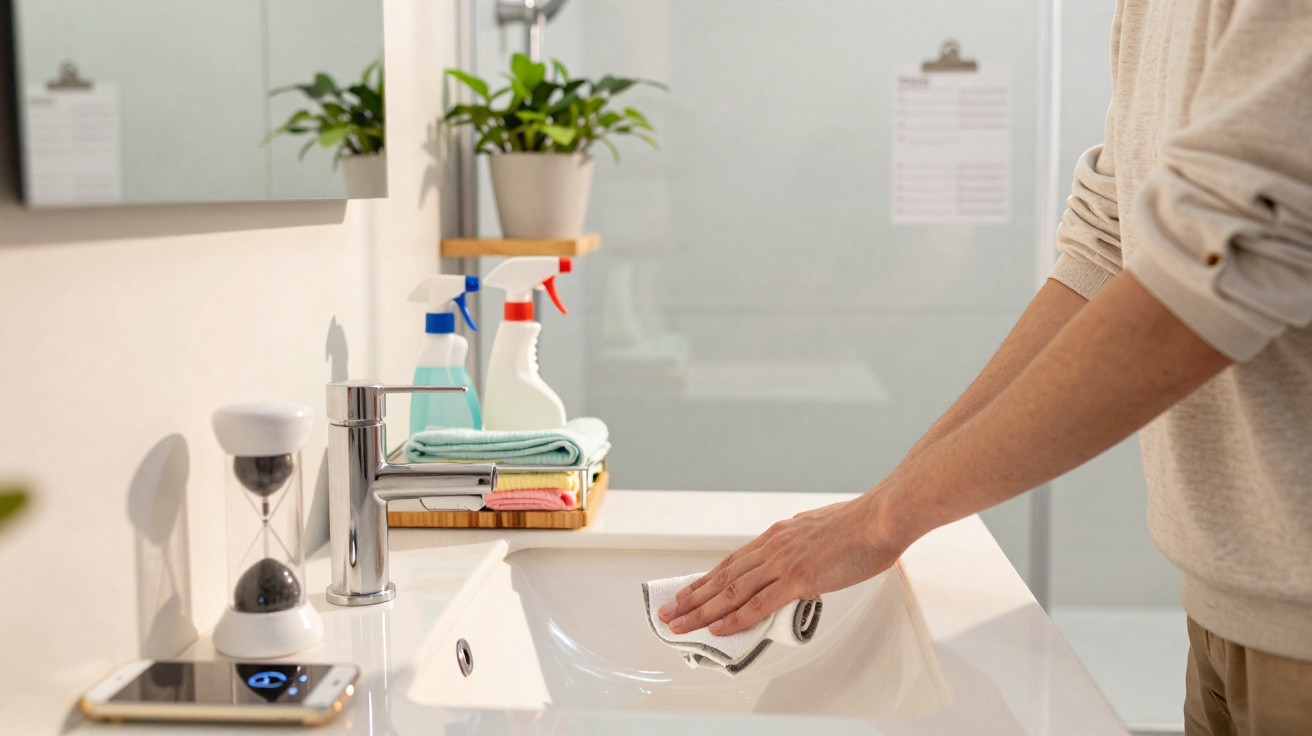
At the centre of the system is a small ritual carried out while shower steam still touches the mirror. Once I have stepped out, I take a microfibre cloth and make an unhurried circuit: a fast pass over the basin, a dab at the tap and, if there is one, a sweep down the glass with a squeegee. The cloth is warm from the room, and the glass gives that pleasing squeak. In two minutes, the bathroom appears cared for. The person doing that caring is future you.
As the room is already damp, dust and splashes give way easily. There is no scrubbing, effort or performance involved. While conditioner is sitting in your hair, you can swish the toilet brush around the bowl with a squirt of washing-up liquid, then let it get on with something useful. Rinse afterwards. There are no heroic bends, buckets or fuss; it is such a minor task that it is difficult to resist. Think of it as the household equivalent of washing your mug as soon as you have finished your tea.
Morning version
The morning glide suits anyone who showers before the day begins. Wipe only the useful parts of the mirror; there is no need to buff it like a hotel bathroom. Leave the extractor fan running while you dress. The room will dry more evenly with fewer streaks, helping to prevent the gradual dampness that produces those grey marks we call “shadows.” If you share with children or housemates, present the squeegee as a game. They tend to enjoy it surprisingly much, perhaps because it resembles a gadget.
Evening version
If evenings are more your style, do the glide after the final bathroom visit. Waking to a clean basin improves the opening five minutes of the day more effectively than any motivational quote could. Whichever time you choose, keep the cloths in the bathroom rather than hidden in a utility room three rooms away. One hook for a microfibre cloth and one small bottle for everything is enough.
The bathroom cleaning kit that makes it almost too easy
Under my basin, I keep a slim caddy with nothing elaborate in it. It holds one spray bottle of diluted multi-purpose cleaner, or water mixed with a teaspoon of washing-up liquid; white vinegar for taps and glass; a tub of citric acid for limescale; two microfibre cloths, one for the toilet and another for everything else; a toilet brush; and a scrubbing pad. That is all. There is no battalion of products or colourful collection of chemicals that feel risky to combine. Fewer decisions mean less faff. If you have natural stone, avoid vinegar and citric acid in favour of a stone-safe cleaner; there is no need for drama, only respect for the material.
A caddy without ten rattling, half-used bottles offers a small pleasure of its own. The scent is more peaceful too: perhaps a trace of lemon, or no scent whatsoever, instead of a false pine blast that stings your eyes. When the equipment stays in the room, the task becomes smaller. You do not set out to clean; you simply clean while you are already there. It is like checking you have your keys as you leave.
The 12-minute weekly reset that looks like hours of work
This is when the bathroom gets proper attention. Put on a 12-minute timer, play some music, leave the door partly open and crack the windows if you have them. Begin with the surfaces: spray, wipe and continue. Move to the toilet next, covering the rim, seat, base and the small area by the foot where dust settles. Empty the bin, fit a fresh liner, then quickly sweep or vacuum around the edges. It is a swift circuit rather than an examination in perfection. The objective is for every part to look looked after, and it will.
Apply descaler or citric acid to the taps before wiping the mirror. Return to rinse it away, then polish with a dry corner of the cloth. Put the bathmat and hand towels into the wash. Where possible, pair this with your regular towel laundry. The habit then settles into place, and the room remains in good form. Later, you will pass by and spot yourself in a satisfyingly clear mirror. That is the prize: consider it housekeeping endorphins.
Water, steam and mould that does not stand a chance
Bathrooms function rather like miniature weather systems: hot and wet, then cool, then damp again. Mould thrives on that kind of drama. Ventilation is the unglamorous hero here. Run the fan for twenty minutes after showering, or open the window slightly. If moisture forms beads on the sill, wipe it away. This is not a telling-off. It is simply a prompt for less grey in the grout, fewer winter coughs and an extractor fan that does not smell like last year.
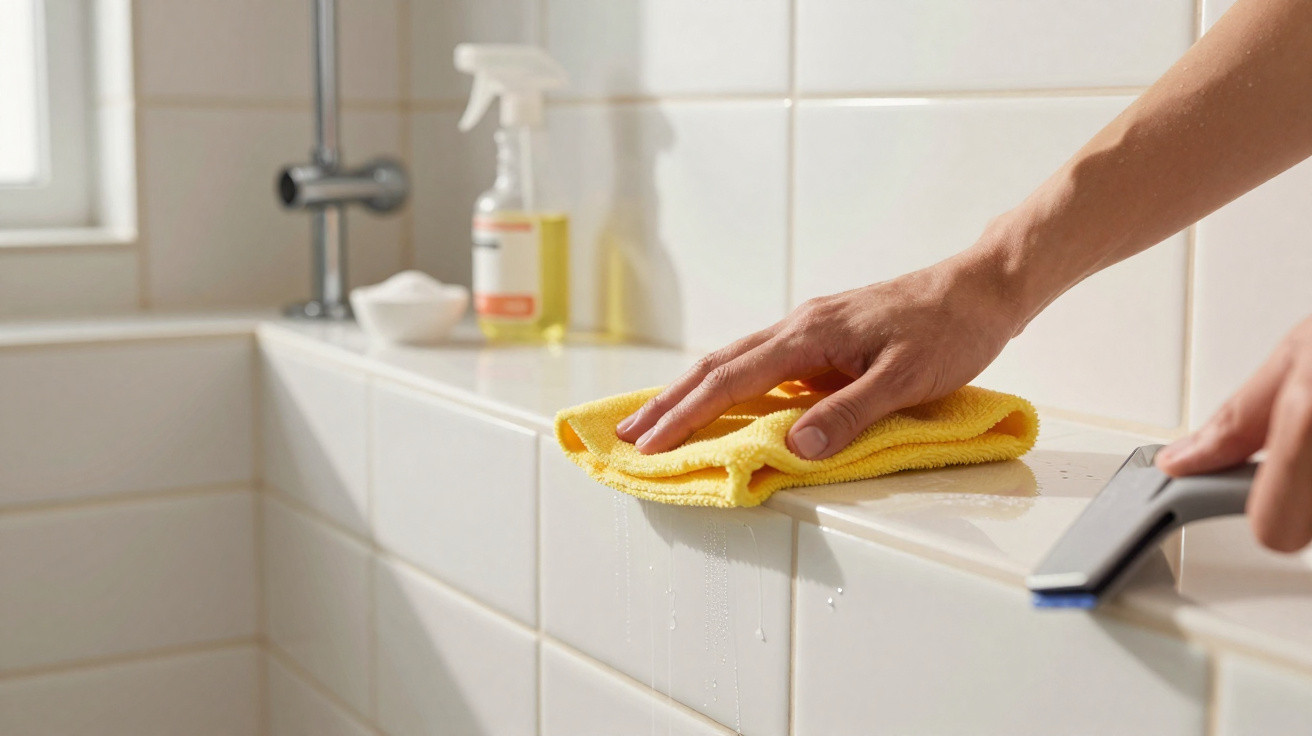
For persistent marks, create a paste from oxygen bleach or a spoonful of bicarbonate with a splash of water. Brush it on to the grout using an old toothbrush, leave it while you scroll, and rinse it off afterwards. The paste does the difficult work while you get on with your day. That is the guiding idea throughout: make time do the cleaning for you, rather than the reverse.
The 30-minute monthly deep-dive with a ridiculous payoff
Choose any weekend and set a 30-minute timer. This is the slightly more focused session that keeps the whole arrangement truthful. Place the showerhead in a bag of warm vinegar, secure it with a rubber band and leave it to soak while you work on everything else. Remove the items beneath the basin and discard bottles containing one sad millilitre. Wipe the shelves, then clean the light switch, door handle and the upper edge of the mirror, where dust rests as if it pays rent.
Inspect the drains too. Lift out the hair guard and remove the hair. If it has a swamp-like smell, add hot water followed by a sprinkle of bicarbonate and a splash of vinegar, then enjoy the fizzing sound of a miniature science fair. Follow with more hot water. Polish the taps with a microfibre cloth until they squeak; that sound becomes oddly addictive. A small drop of washing-up liquid in the toilet-brush holder prevents it from smelling like a boatyard. These are little actions with a substantial effect. This is also the point at which you can truthfully call your bathroom low-maintenance without crossing your fingers behind your back.
Quarterly refresh: the secret upgrade
Once every three months, give the bathroom its own small spa day. Wash the shower curtain or liner, or replace it with a new one if mould has turned it into a Jackson Pollock piece. Repair any damaged grout lines with fresh sealant. Add a water repellent to the glass; later on, it will mean fewer streaks and make water form beads like rain on a new coat. Empty the medicine cabinet, wipe away the invisible toothpaste speckles and return only the items you genuinely use. Anything out of date should go.
Replace the toilet-roll holder that never stays secure, tighten a wobbly toilet seat and change the bulb that makes you resemble a Victorian ghost. Without replacing a single tile, the room will feel refreshed. An organised bathroom has its own scent: not fragrance, not bleach, simply… air. You will notice it when you return after making tea. It is a quiet satisfaction, and that is the real currency.
What the bathroom cleaning schedule looks like in a normal week
Daily, do the two-minute glide after the last shower or final tooth-brushing session of the evening. Give the basin a quick wipe, use the squeegee briefly and swish the toilet brush if necessary. Nothing further is required; the room is owed no more than that. On Tuesday or Wednesday, replace the hand towel if it is looking sulky. On Friday, carry out the 12-minute weekly reset: surfaces, toilet, mirror, floor edges and bin. On Sunday, wash the bathmat and towels, then put out a fresh set. That is the rhythm.
At the end of the month, complete the 30-minute monthly deep-dive: showerhead bag, drains, cupboard, taps, edges and high-level dust. Every quarter, deal with the curtain, sealant, glass treatment and minor repairs. Written down, it appears to be a great deal. In practice, it does not feel that way. Honestly, nobody completes this perfectly every day. You will miss days, forget tasks and do things later than planned. The system still succeeds because the small actions keep restoring the room before it descends into chaos.
Habit hooks that make it automatic
Connect the glide to something already in your day: after your shower, while the kettle boils or during a podcast introduction. Keep an extra microfibre cloth in the laundry basket so that you are never left empty-handed. If timers irritate you, choose three songs instead. You will be finished by the second chorus of the third track. Soon, it becomes useful muscle memory, like checking for your phone before leaving home.
When guests text “We’re ten minutes away”, use the guest sprint: flush the toilet, spray and wipe the basin, draw the shower curtain, put out a clean hand towel, light a candle for six minutes and then blow it out. The bathroom will smell faintly citrusy and quietly smug. We have all experienced that frantic moment of rinsing away toothpaste at speed while pretending visitors were fully expected. This routine gives you back some dignity.
Little cheats people swear by, and the ones that genuinely help
Shaving foam can prevent the mirror from fogging for a short time, although it leaves a residue. I would rather use a minute dot of washing-up liquid, buff it in and wipe it away. Taps respond better to a microfibre cloth than to any chrome polish; what they need is friction rather than chemicals. Pulling a sock over your hand lets you clean the skirting board without bending until something clicks in your spine. For glass doors, applying car windscreen water repellent each quarter keeps water beading like it does on a freshly waxed bonnet.
For limescale around taps, a citric-acid paste works better than elbow grease, although it must not be left on stone. Always rinse it away. A cup of vinegar poured into the toilet overnight once a week can help with hard-water rings. Where the water is especially hard, a softening cartridge in the shower will repay its cost through reduced scrubbing. These are helpful prompts, not strict rules. The less fuss involved, the more likely you are to do them.
The rescue plan for when life explodes
Some weeks will involve deadlines, teething babies, train strikes, break-ups or flu. If necessary, let the weekly reset go. Try to retain the daily glide, even as a reduced version: one wipe across the basin and a quick pass with the toilet brush. Those thirty seconds prevent the room from tipping into disorder. When life calms down, complete one longer reset and resume the routine. There is no guilt charge and no “I’ve failed” nonsense.
Treat it as you would brushing your teeth. If you miss an evening, you do not text your molars an apology; you brush them the following morning. The same approach applies here. This schedule is a friend who continues walking when you fall behind, not a headteacher carrying a clipboard. Join the stroll again whenever you are able.
Why it feels good as well as looking good
A clean bathroom brings an unusual sort of calm. You wake and walk into a room that is not shouting at you through streaks and grit, which sets the mood for the day. You wash your face without the tap spluttering over dried toothpaste. The fan makes its gentle background hum and everything is simply… fine. Ordinary. Peaceful. Small moments reshape the way you see yourself at home: not spotless or flawless, but cared for.
Over time, it saves money too. Reduced limescale helps taps and showerheads last longer. Less mould means fewer cleaning potions. You stop purchasing five forms of the same spray because you know which products are actually used. There is more room below the basin and more mental space above it. The bathroom returns to being a background character, which is exactly where it belongs.
The tiny list on my cupboard door
Inside the bathroom cupboard, I keep a Post-it note that reads: Glide daily. Reset Friday. Deep-dive month-end. Curtain and glass quarterly. That is the entire list. Sometimes I disregard it. At other times, I follow it and feel as though I have mastered adulthood. Most weeks, I end up somewhere between those two points. The room remains pleasant regardless. That is the understated power of small, regular actions.
You do not have to turn into somebody different to own a bathroom that seems permanently bright. You do not need a trolley full of products or to sacrifice an entire Sunday to the bleach gods. What you need is a rhythm so unobtrusive that it becomes part of what you already do. Everything else is merely the satisfying squeak of a clean tap and the quiet click of the fan as you turn off the light, knowing that tomorrow brings a fresh mirror and a basin that is not scowling at you.



Comments
No comments yet. Be the first to comment!
Leave a Comment