
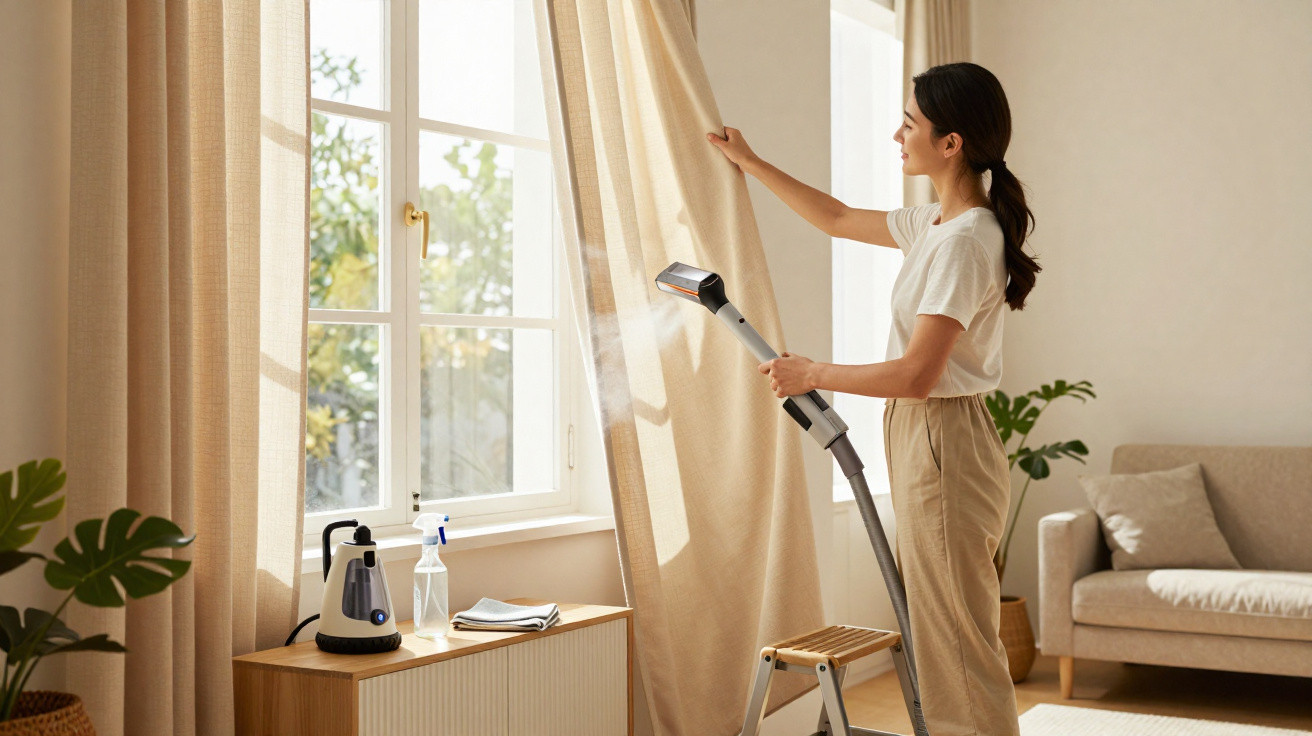
Curtains can look clean at first glance while still holding dust, pollen and odours. Many people put off cleaning them because taking them down, washing them and rehanging them is frustrating and time-consuming. However, with the right approach, curtains can be cleaned thoroughly, quickly and without fuss while they remain on the rail.
Why curtains get dirtier sooner than you might expect
Curtains are usually positioned directly in front of windows and radiators. This means they catch draughts, road dust, pollen, cooking fumes and even cigarette smoke. Although they may look acceptable for a long time, a considerable amount of dirt builds up in their fibres.
- Dust and pet hair settle into the fabric fibres.
- Pollen clings particularly readily to lightweight, sheer materials.
- Grease and cooking smells from the kitchen accumulate without being visible.
- Humid air from bathrooms or kitchens can encourage musty odours.
“Anyone with allergies should judge curtains not just by how they look, but above all by how hygienic they are.”
To stop curtains becoming a hidden trap for dust and smells, regular but uncomplicated care is worthwhile – without having to use the washing machine every time.
First step: vacuum curtains rather than taking them down
Using a vacuum cleaner is the simplest and most effective routine. Many people never do it, yet a quick weekly pass is enough.
How to vacuum curtains properly
A few measures ensure that the fabric is not damaged and that dirt is actually removed:
- Use a soft brush attachment, ideally one with fine, gentle bristles.
- Set the vacuum cleaner to low suction to prevent pulling or stretching.
- Hold the curtain lightly taut with one hand and vacuum from top to bottom with the other.
- Pay particular attention to the edges and lower hem, where most dust collects.
- Remember to vacuum the curtain pole, rings, hooks and tracks as well.
This removes loose particles, lowers allergen levels and postpones the need for a full wash.
Deep-cleaning curtains with steam while they are hanging
Anyone with a steam cleaner or garment steamer already has an effective tool for clean curtains. Steam penetrates deep into the fibres, loosens dirt and kills many germs.
How a steam cleaner works on curtains
Hot water vapour releases grime and can even lessen mild odours. It also smooths the material, so creases disappear almost by themselves.
Proceed as follows:
- Vacuum the curtains first to remove loose dust.
- Hold the steam cleaner vertically over the fabric at a slight distance, usually 10–20 cm depending on the appliance.
- Work from top to bottom, one section at a time, without lingering in one spot for too long.
- Ventilate the room thoroughly afterwards so that moisture can escape.
“Steam cleans gently without detergent and can significantly extend the time between washes.”
Important: delicate textiles, such as genuine silk or untreated linen, can be sensitive to heat. Test an inconspicuous corner first, or avoid steam altogether if in doubt.
Removing stains from curtains without taking them down
A splash of dirt from the windowsill, an insect mark or an old water stain can quickly make an entire curtain look unattractive. Even so, it does not need to go straight into the washing machine.
Spot-cleaning with household products
A simple mixture of household vinegar and water is suitable for many everyday stains. It has a degreasing effect and may lift discolouration.
A practical method:
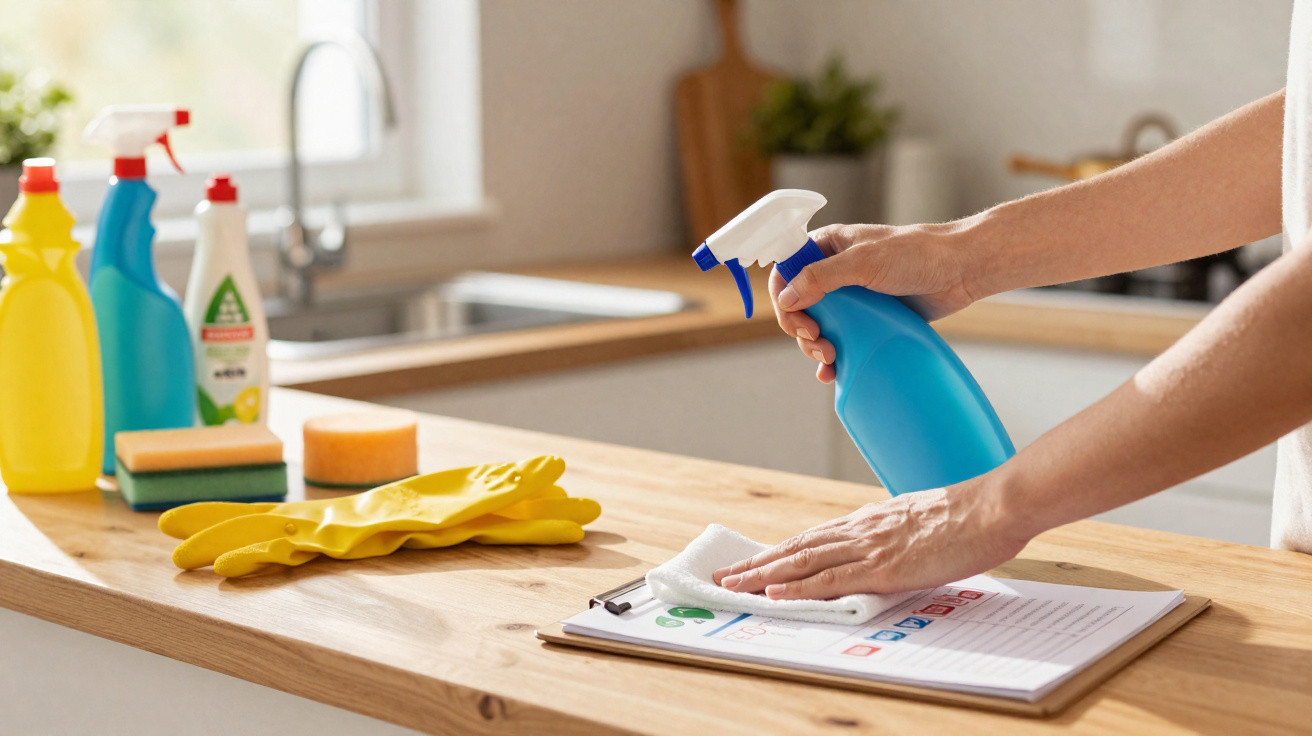
- Pour one part clear vinegar and two parts lukewarm water into a spray bottle.
- Lightly dampen the stained area, then spray the solution directly onto it.
- Leave it to work for a few minutes without scrunching up the curtain.
- Gently blot with a soft, clean cloth rather than rubbing, as rubbing can drive the stain further into the fibre.
- Open the window and allow the area to dry thoroughly.
For colour-sensitive fabrics, first check a concealed area to see whether the colour changes. If it remains stable, the stain can be treated.
Getting rid of unpleasant curtain odours
Even freshly cleaned curtains can retain smoke, cooking fumes or pet smells. If washing is to be avoided, simple measures can leave the fabric pleasantly scented while neutralising odours.
Make your own curtain room spray
A fresh fragrance can be created with only a few ingredients, without soaking the curtains:
- Fill a spray bottle with clean water.
- Add a few drops of essential oil, such as:
- lemon for a fresh, clean scent;
- lavender for a calmer, homely note;
- eucalyptus for a “cool”, freshly cleaned feel in the room.
- Shake the bottle well and mist the curtains lightly from around 30–40 cm away.
“For just a hint of fragrance, spray into the air in front of the curtains rather than directly onto the fabric.”
Small fabric bags containing bicarbonate of soda and dried herbs, such as lavender or rosemary, are another alternative to scented spray. They can be discreetly attached to the curtain pole or window handle, acting as a natural odour filter.
Making curtain care part of the usual cleaning routine
The less often curtains are maintained, the more daunting every cleaning attempt feels. Establishing small, regular routines that take hardly any time makes the task much easier.
A simple schedule for clean curtains
| Interval | Task |
|---|---|
| Daily | Air the room out for several minutes to let humid, polluted air escape. |
| Weekly | Vacuum curtains and wipe down the curtain pole and hooks. |
| As needed | Treat stains locally with a vinegar-and-water solution. |
| Every few weeks | Freshen with steam and remove mild odours. |
| Once or twice a year | Take them down completely and wash them according to the care label. |
When these brief jobs are incorporated into routine housework, there is no longer any need to spend hours washing and rehanging curtains on a Saturday. The major wash day becomes an occasional exception.
What to consider with delicate fabrics
Not every curtain can cope with the same treatment. Heavy cottons, synthetic blends and decorative curtain panels are generally fairly durable, whereas fine materials require greater care.
A few rules of thumb can help:
- Check the care label: symbols for hand washing or low temperatures also indicate that excessive steam heat may be unsuitable.
- With silk, vacuum only very carefully and avoid household remedies containing vinegar or strong fragrances.
- Before applying sprays or moisture, test the colour depth of dark fabrics in a hidden area.
If there is any uncertainty, it is worth making a quick call to a dry cleaner, particularly for very expensive or made-to-measure curtains. Professional services understand the particular challenges of specialist fabrics.
How curtains, indoor air and health affect one another
Clean curtains are not merely about appearance. They work like a filter at the boundary between outdoors and indoors. Pollen, fine particulate matter and dirt become trapped in the fabric, so less of them ends up in the air we breathe.
Anyone living in a city beside a busy road or sharing a home with pets benefits twice over from regular but uncomplicated care. Indoor air quality noticeably improves, the air feels less “heavy”, and many people report fewer sneezing fits or headaches after thoroughly cleaning their curtains.
In practical terms, it helps to consider everyday habits: consistently airing rooms in the morning, vacuuming the curtains once a week and responding to stains immediately can delay the next major wash day by months. Curtains stay attractive for longer, the fabric is protected, and the reluctance to tackle this household task becomes far smaller.



Comments
No comments yet. Be the first to comment!
Leave a Comment