

Walls and ceilings quickly become dirty, yet looking after them can become difficult when someone close to you loses mobility.
In many homes, thoroughly cleaning high-up surfaces becomes a source of concern. Climbing onto a chair, moving a stepladder or keeping your arms raised for too long can lead to falls and aches. However, a straightforward method using a telescopic handle from floor level makes it possible to take control again without disrupting the entire household routine.
Cleaning from floor level to reduce risks
Falls in the home particularly affect older people, as well as carers rushing between appointments. Ceilings, wall corners and the tops of doors are frequently neglected because they seem out of reach.
The approach is practical: use a flat mop with a telescopic handle instead of a stepladder. A lightly dampened microfibre pad picks up dust and light marks without soaking the paintwork. Movements remain manageable, both feet stay on the floor, and each room can be cleaned separately.
A sufficiently long handle and a well-wrung pad prevent raised arms, drips down walls and unsteady climbs onto a step stool.
Allow around half an hour, including preparation, for an average-sized bedroom or living room. This can vary according to the condition of the surfaces, the amount of furniture and ceiling height. The aim is not to scrub until exhausted, but to remove dust, light greasy residue and everyday marks.
Why black soap and vinegar are often used together
Liquid black soap is valued for its gentle degreasing properties. When diluted in warm water, it works well on fingerprints, light splashes and areas near the kitchen. White vinegar mainly helps dissolve certain mineral deposits and neutralise odours on suitable surfaces.
This combination still requires some care. Vinegar is acidic, whereas black soap is soap-based: combining large amounts can reduce the soap's cleaning action and leave a residue. It is preferable to make a very dilute solution, or to apply the products one after the other depending on the type of dirt.
A mixture suited to delicate paintwork
For routine maintenance, a basin of warm water is often enough. Add a small amount of liquid black soap and stir gently. For localised limescale marks, very dilute white vinegar can be applied with a cloth after testing it in an inconspicuous area.
- Use warm water, never hot water.
- Add a small measure of liquid black soap.
- Choose a clean microfibre pad that has been thoroughly wrung out.
- Keep a second, dry microfibre cloth nearby to soak up any excess moisture.
- Always test the solution behind furniture or close to a skirting board.
Matt, old or highly porous paints do not withstand repeated rubbing well. If colour transfers onto the cloth, or the surface becomes shiny or starts to flake, use far less water or simply dust it dry.
Cleaning walls and ceilings in a few simple steps
Before bringing out the basin, remove dust first. This prevents dry particles from turning into grey streaks across the wall. A clean duster, a dry microfibre cloth or the mop's dry pad will all work.
- Clear the way and move fragile items away from the wall.
- Dust skirting boards, frames and corners.
- Dampen the pad, then wring it out until no water drips from it.
- On walls, clean in vertical strips, gradually working upwards.
- On ceilings, use parallel passes and check for marks in the light.
- Air the room after cleaning so the surfaces dry quickly.
Keep the motion smooth. Pressing hard serves no purpose, especially on a painted ceiling. A consistent pass is often more effective than vigorous rubbing. If a mark remains, let it dry, identify its cause and treat only that area with an appropriate product.
Mistakes that leave marks behind
The first mistake is using too much water. A soaked pad can cause tide marks, make delicate paint blister or leave runs down walls. “Barely damp” is the right benchmark.
Another common mistake is trying to remove a greasy stain with vinegar alone. It has little effect on grease. Diluted black soap is more suitable in this situation. Conversely, white marks caused by limescale, often found near a bathroom, may respond to very dilute vinegar if the finish can tolerate it.
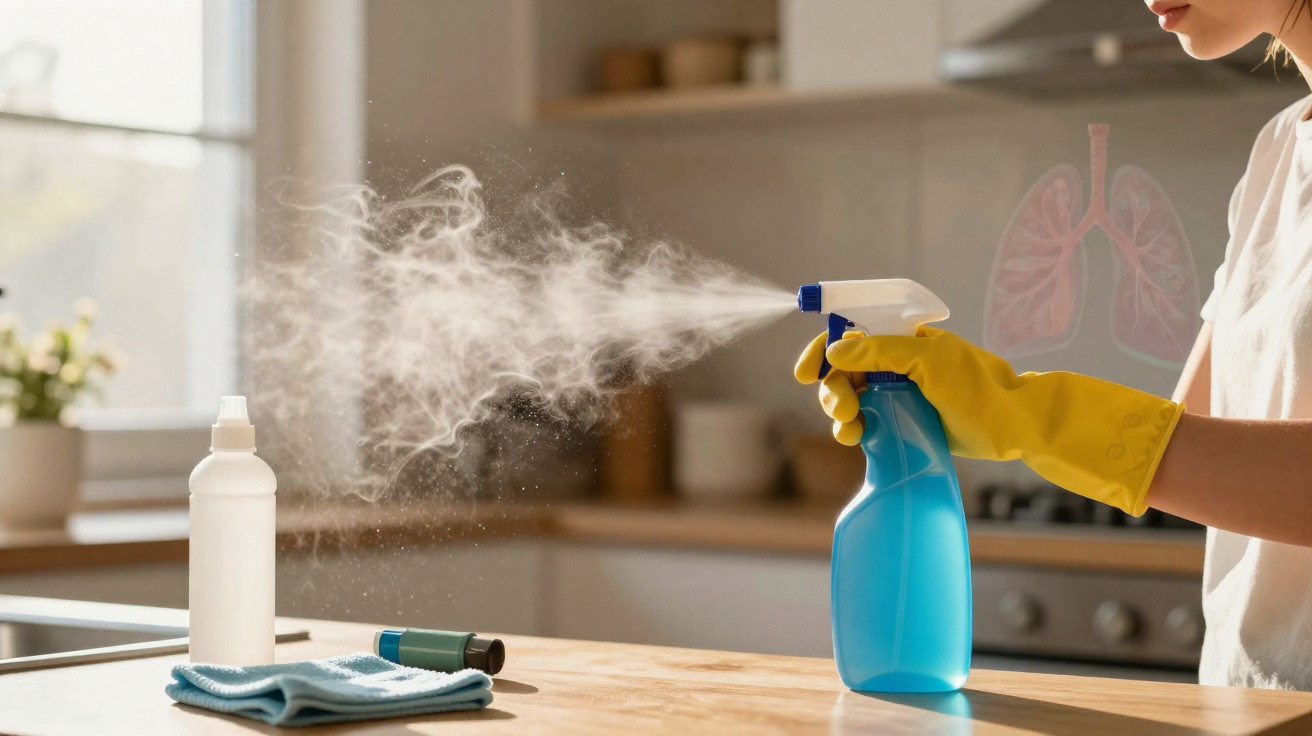
Never mix white vinegar with bleach. This combination can release gases that irritate and endanger the respiratory system.
You should also avoid treating widespread mould as though it were ordinary dirt. Recurring black spots on a wall or ceiling may indicate damp, condensation or poor ventilation. Cleaning improves the appearance but does not resolve the underlying cause. A leak, faulty mechanical ventilation or water ingress needs a more precise assessment.
Greater independence for vulnerable people
For family carers, this routine has a clear benefit: it cuts down the time needed to set up equipment, make climbing safe or supervise a relative. An older person can also take part in certain tasks while in a stable position, such as folding microfibre cloths, preparing the water or guiding the mop over missed areas.
This kind of routine means tasks do not have to be saved for one exhausting day. Clean the hallway walls one week, the bedroom ceiling the next, then tackle doors and light switches. Spreading the work in this way reduces fatigue and makes the home easier to maintain over the months.
When to choose another solution
Non-washable wallpaper, very old ceilings, limewash paint and damaged finishes require a different approach. Gentle dusting is often the better option. For a wall stained by smoke, water damage or significant mould, calling in a professional can prevent further damage to the finish.
After every use, rinse the microfibre pad thoroughly and allow it to air-dry. A dirty pad simply spreads dust again during the next clean. With a telescopic handle stored within easy reach and a few basic products, maintaining high surfaces becomes a less daunting task, without unnecessary acrobatics.

Comments
No comments yet. Be the first to comment!
Leave a Comment