
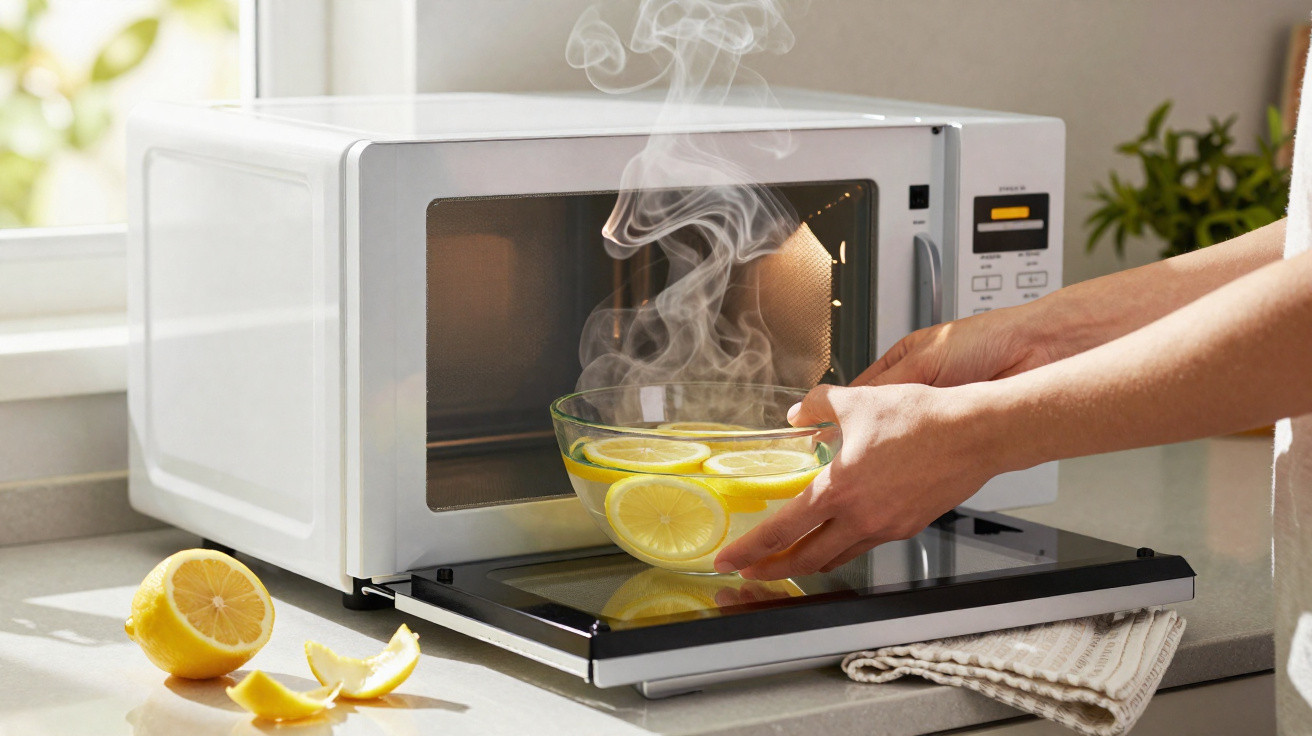
Old food smells in a microwave usually develop when grease splatters and food residue build up and are reheated time after time. Even after wiping it down, the odour can linger because some grime sticks to the interior walls and tiny recesses that are rarely reached during everyday cleaning. It is especially noticeable when the appliance is switched on, as the stale smell mingles with the food currently being prepared.
Why does the smell of old food remain in the microwave?
Wiping the microwave with a damp cloth removes the most visible dirt, but it does not reach every internal corner. Splashed grease forms an almost imperceptible film that is repeatedly heated and releases an odour whenever the appliance is used.
Over time, this coating adheres to the ceiling, side walls and door edge, as well as to small internal gaps. In heavily used settings, such as offices and shared kitchens, the inside is seldom allowed to dry properly, encouraging odours that seem to “live” in the microwave.
How does the lemon steam method work in the microwave?
Using lemon steam helps loosen grime stuck to the interior walls and reduces the smell of old food. Hot steam softens dried splatters and thin layers of grease, while lemon adds a citrus scent and a mild deodorising effect.
To get the most from this simple homemade approach, follow a few basic precautions while preparing the mixture and heating the lemon water.
- Use a microwave-safe glass or ceramic container, with no metal parts.
- Fill it halfway with water, squeeze in half a lemon or a whole lemon, and add the peel as well.
- Heat it until the water begins to boil and produces plenty of steam, without allowing it to boil dry.
- After switching the microwave off, keep the door closed for a few minutes so the steam can work.
Why do the top interior and waveguide cover need extra attention?
The microwave ceiling is one of the most commonly overlooked areas during cleaning, yet it receives plenty of splashes from sauces and oils that rise as food heats. Steam also gathers on the inner ceiling and tends to dry there, creating subtle marks that trap odours.
The waveguide cover, a small panel on the inner side wall, can also collect grease and food residue. Clean this area using a soft, lightly dampened cloth and no abrasive products, helping to prevent damage and reduce the build-up of unpleasant smells.
How can you keep the microwave free from old food smells every day?
To stop the smell of old food from returning, clean regularly and do not allow splatters to build up. Small steps after each use, combined with occasional lemon steam cleaning, keep the interior more neutral and pleasant for preparing different foods.
It is worth removing the turntable for washing, drying the inside thoroughly and leaving the door slightly open for a few minutes after use. With this straightforward routine, the microwave is more likely to remain free from persistent odours and serve as a clean, dependable kitchen appliance.



Comments
No comments yet. Be the first to comment!
Leave a Comment