
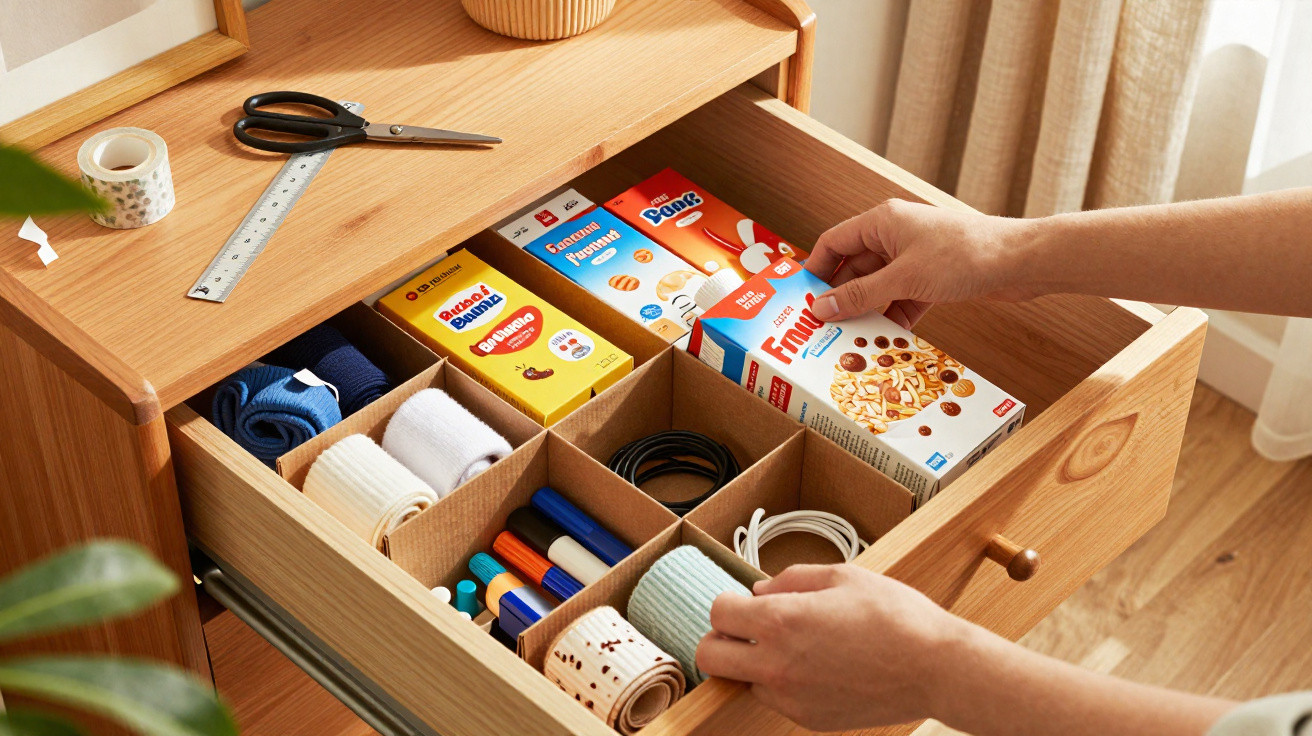
Turning boxes that would otherwise go in the bin into a drawer organiser is an easy way to give a practical purpose to materials you already have at home. With a few cuts, minor tweaks and a bit of imagination, this packaging can become dividers for clothes, accessories, cutlery or office supplies. It doesn’t require crafting experience-just careful attention to your drawer measurements and the type of items you plan to store.
What is a drawer organiser with recycled boxes?
A drawer organiser made with boxes is a set of compartments created from reused packaging to separate items inside a drawer. Rather than buying ready-made dividers, you build made-to-measure sections by cutting and combining boxes of different sizes to suit your routine.
Because boxes come in varied dimensions, you can shape dedicated spaces for each category of item, preventing things from getting mixed up and saving time when you need to find something. The system is low-cost and flexible, and you can rearrange it whenever the drawer contents change or new day-to-day needs appear.
How to make a drawer organiser using recycled boxes?
To put together a drawer organiser from boxes that would otherwise be thrown away, gather sturdy cardboard packaging, scissors or a craft knife, sticky tape, a ruler and a pencil. If you’d like a neater finish, you can cover the pieces with self-adhesive vinyl, leftover wrapping paper or fabric, but this is optional and doesn’t affect how well it works.
You can break the process into straightforward steps that make it easier to tailor the boxes to the available space and the intended use:
- Measure the drawer: note the width, depth and usable height-how tall the boxes can be without stopping the drawer from closing.
- Choose the boxes: set aside packaging that fits those measurements, such as tea, pasta, biscuit, medicine or perfume boxes.
- Test the layout: place the boxes (still uncut) inside the drawer to find the most practical arrangement, mixing different shapes.
- Adjust the height: if they’re too tall, mark a cutting line with a pencil and trim off the excess carefully, keeping the edges straight.
- Secure if needed: for drawers that are used a lot, attach some sections with double-sided tape or sticky tape to reduce shifting.
Which boxes are best for each type of drawer?
The type of packaging you pick affects how effective the drawer organiser will be, as certain shapes work better for specific items. Thinking about what you’ll store before cutting helps avoid waste and makes it easier to fit everything neatly.
Here are practical ideas for different areas of the home to make the most of what would have gone in the bin:
- Underwear and sock drawers: small to medium boxes-such as tea, medicine or toiletries packaging-work well as individual compartments.
- Office drawers: narrow boxes, like toothpaste or pen packaging, keep pencils, highlighters, scissors and rulers lined up.
- Kitchen drawers: cereal, pasta or biscuit boxes can be cut horizontally to create shallow trays for cutlery and utensils.
- Cosmetics and jewellery drawers: small boxes from jewellery, perfumes and electronics create smaller dividers for rings, earrings and lipsticks.
How to keep the drawer organiser functional for longer?
Once it’s in place, a drawer organiser with recycled boxes benefits from occasional checks to stay useful. Every few months, it’s worth seeing whether any pieces are crushed, dirty or no longer suitable for what you’re storing, and swapping them for new packaging that comes into the house through everyday use.
A few simple habits can improve longevity: avoid damp or greasy items, don’t overload the cardboard beyond what it can support, and wipe the drawer with a dry cloth-removing the boxes when necessary. With these periodic adjustments, the system adapts easily as your home changes, keeping everything more organised without extra expense.



Comments
No comments yet. Be the first to comment!
Leave a Comment