

It is 8.12 am, the coffee is going cold on the worktop and a lone sock is still waiting beside the sofa. We all know the moment: we vow to “do everything on Saturday”, then watch the day disappear between errands, children, an unexpected call and tiredness that arrives without asking permission. The big clean then starts to feel like a domestic mountain: we look at it, sigh and put it off. A Japanese method, based on the principle of kaizen, suggests a complete change of pace: fifteen minutes a day, no more. What if Saturday could truly become a day of rest again?
The big Saturday clean is not inevitable
The issue with housework is not always the cleaning itself. It is the quiet build-up: crumbs beneath the table, laundry piling up on a chair and marks on the mirror that we no longer really notice. By the weekend, everything suddenly feels urgent, and the thought of cleaning for three hours makes us want to shut the bathroom door rather than reach for the sponge.
The fifteen-minute method is built on an almost disarming idea: never allow a job to become huge. In Japan, this approach reflects the spirit of kaizen, which favours small, regular improvements over rare, major efforts. An Ifop study of domestic habits has already shown that housework remains a source of tension in many households; splitting tasks into smaller steps makes the workload less obvious, and therefore often less burdensome.
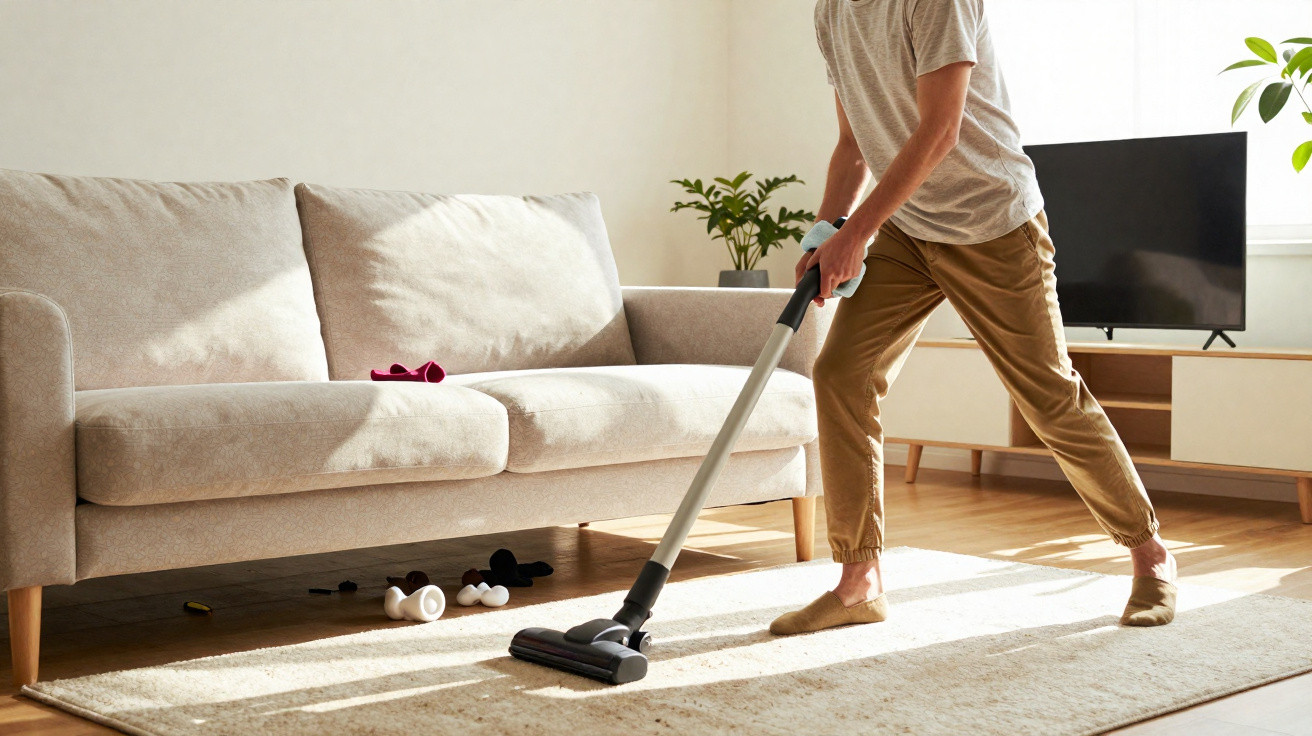
In practical terms, you do not “do the cleaning” every day: you deal with one small part of the home. On Monday, clean the sink and worktop. On Tuesday, tackle the toilet. On Wednesday, spend ten minutes tidying the living room and five minutes vacuuming. This shift in language matters. Fifteen minutes is not a chore that takes over the evening; it is a brief appointment with your home.
The Japanese 15-minute routine: complete one specific task, then stop
The easiest option is to pick the same time slot each day, when you are least likely to bargain with yourself. Straight after dinner, before a shower, when you get home from work or while the pasta is cooking: the exact time matters less than doing it consistently. Set a timer for fifteen minutes, choose just one area, and stop when the alarm goes off, even if there is still a little left to do.
That final rule often comes as a surprise. We have been taught to finish what we start, especially when cleaning; yet regularly going beyond the planned time quickly turns a routine into a punishment. Let us be honest: nobody genuinely does this every day with enthusiasm. The aim is not a show-home, but to avoid that heavy feeling of being overwhelmed as soon as you walk through the door.
A little preparation prevents you from wasting five minutes looking for a clean cloth or a cleaning product at the back of a cupboard. Keeping a lightweight basket with the essentials is enough, provided you do not fill it with ten bottles and unnecessary accessories.
“A home maintained in small touches feels less demanding than one you try to rescue in an emergency every Saturday.”
- a clean microfibre cloth;
- a multi-purpose spray or cleaning vinegar suitable for the surfaces concerned;
- a small brush for the bathroom;
- a bag or basket for items that need putting back in their place.
What this Japanese 15-minute habit really changes at home
After a few weeks, the difference is not measured only by less dust on the shelves. You come back to a space that feels calmer, less cluttered and almost more welcoming. The daily fifteen minutes also create a kind of gentle awareness: you immediately spot post left lying around, a basin that needs a quick wipe, or a stack of clothes threatening to collapse.
The trap would be trying to follow the method with military precision. Some days involve a late meal, an unwell child, a demanding day or simply no energy to spare. That is not failure. A useful routine must be able to survive real life, with its delays, surprises and evenings when you choose the sofa without guilt.
This approach can also ease conversations between partners or within families, because tasks become easier to share. Everyone can take their own quarter of an hour, without waiting for one person to become the household conductor. And Saturday? There may still be some laundry to fold or a floor to wash, of course. But it no longer resembles a whole day swallowed up by the bucket, the vacuum cleaner and unspoken resentments.
| Key point | Detail | Added value for the reader |
|---|---|---|
| 15 minutes on a timer | One area or one task each day | Housework immediately feels more manageable |
| Flexible consistency | A set time slot, with no need to make up for a missed day | Less guilt and a habit that lasts |
| Ready-to-use supplies | A simple basket kept somewhere easy to reach | Less time wasted and a greater chance of getting started |


Comments
No comments yet. Be the first to comment!
Leave a Comment