
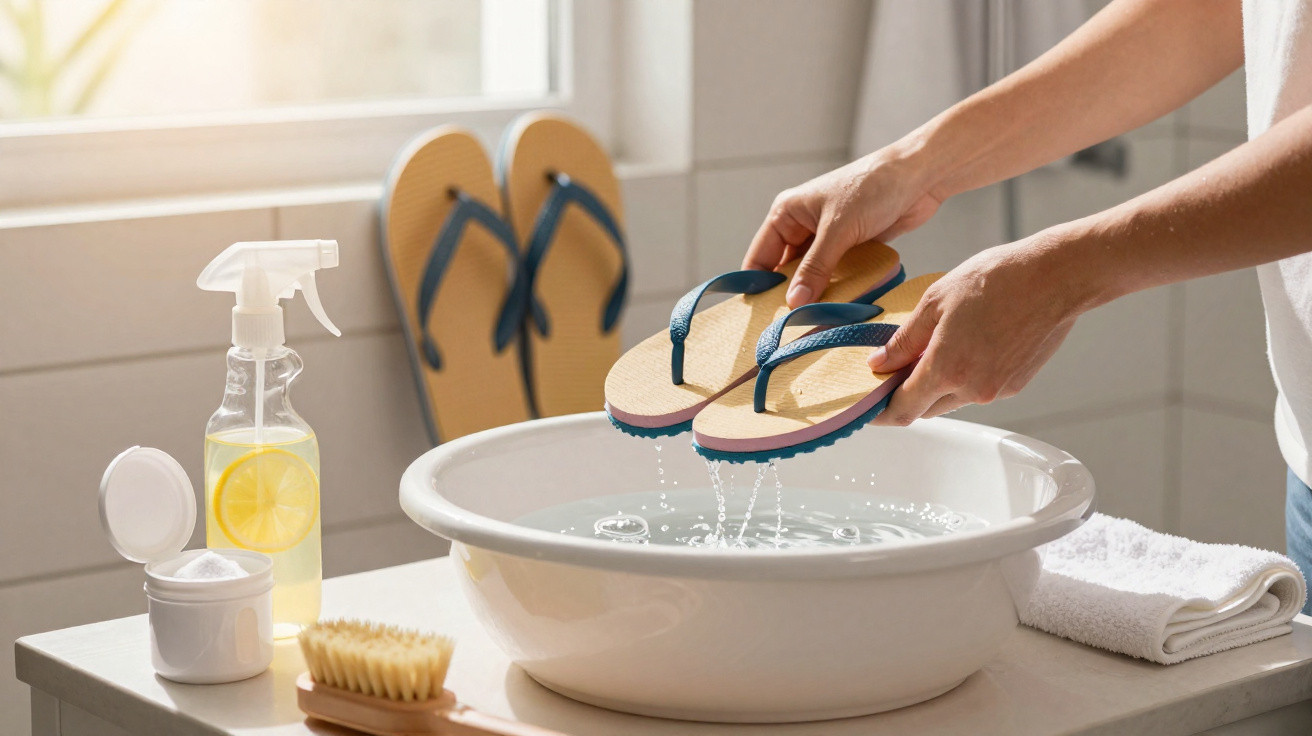
Many people throw away household footwear as soon as they notice dirt building up on the undersides. However, slimy residue on rubber flip-flops can be dealt with easily, restoring a grimy pair without having to replace it.
Why does slime build up on bathroom flip-flops?
The damp conditions inside a shower enclosure encourage body residue and soap remnants to collect continually on the soles. Together, these substances form a sticky layer that lodges in the rubber grooves, making mould more likely in places that are difficult to reach.
Over time, water marks become more established, leaving the footwear looking particularly unpleasant. Failing to sanitise the surface allows micro-organisms to spread, meaning ordinary cleaning may no longer be enough to restore its original appearance.
How to remove slime and mould from bathroom grout without scrubbing?
A simple mixture applied to tiles quickly softens ingrained dirt and removes dark stains without needing to… Read more
How does the initial soak help loosen dirt?
Soaking the footwear for ten minutes softens older deposits that have built up on the rubber. This makes the slime much quicker to remove, as warm water reaches the deep grooves and releases debris without requiring physical effort.
Using a zip-lock bag makes this step more effective because it keeps the flip-flops fully immersed in the cleaning solution. Retaining heat inside the sealed bag improves the action of the cleaning products while reducing waste of the liquid used.
Below is a video from the YouTube channel 청소의정석 demonstrating how to use this method to loosen stains from footwear:
Which products are most effective for sanitising?
The right whitening agent depends on how severe the marks are on the flexible material. Sodium bicarbonate works very well on light stains, whereas sodium percarbonate has greater strength against mould and deeply embedded dirt.
The amount of time the mixture should remain in place is directly determined by the current condition of the grimy rubber. Leaving it to sit for longer ensures darker stains dissolve fully, restoring renewed shine to the item.
Essential Cleaning Kit
Items for sanitising flip-flops
Gather the following items to ensure all slime is removed from the footwear:
- A large zip-lock bag with an airtight seal;
- A mixture of warm water with sodium percarbonate or sodium bicarbonate;
- A soft brush to finish the cleaning after rinsing.
How should the footwear be cleaned and dried?
Once the soaking period has ended, gently scrub the sole to remove any residue left in the lower grooves. This final friction ensures all accumulated slime is cleared away, leaving the surface completely clean and ready for a thorough rinse.
Drying must always be carried out somewhere with good air circulation and away from direct sunlight. This precaution prevents unpleasant odours and helps avoid premature deterioration of the synthetic material while preserving the product.
Follow these essential steps to complete the cleaning of your footwear safely:
- Rinse away all soap completely with clean running water;
- Place the flip-flops in a covered, well-ventilated area;
- Wait until the sole is fully dry before wearing them again.
Why is restoring flip-flops better than throwing them away?
Using simple sanitising methods extends the lifespan of everyday items and supports conscious consumption. Avoiding immediate disposal cuts the amount of plastic waste produced and delivers a highly significant financial saving in day-to-day life.
Restoring yellowed footwear with household products shows that regular maintenance and a ten-minute soak can produce impressive results. Making bathroom cleaning a practical task provides greater comfort and protection for the whole family.
Comments
No comments yet. Be the first to comment!
Leave a Comment