
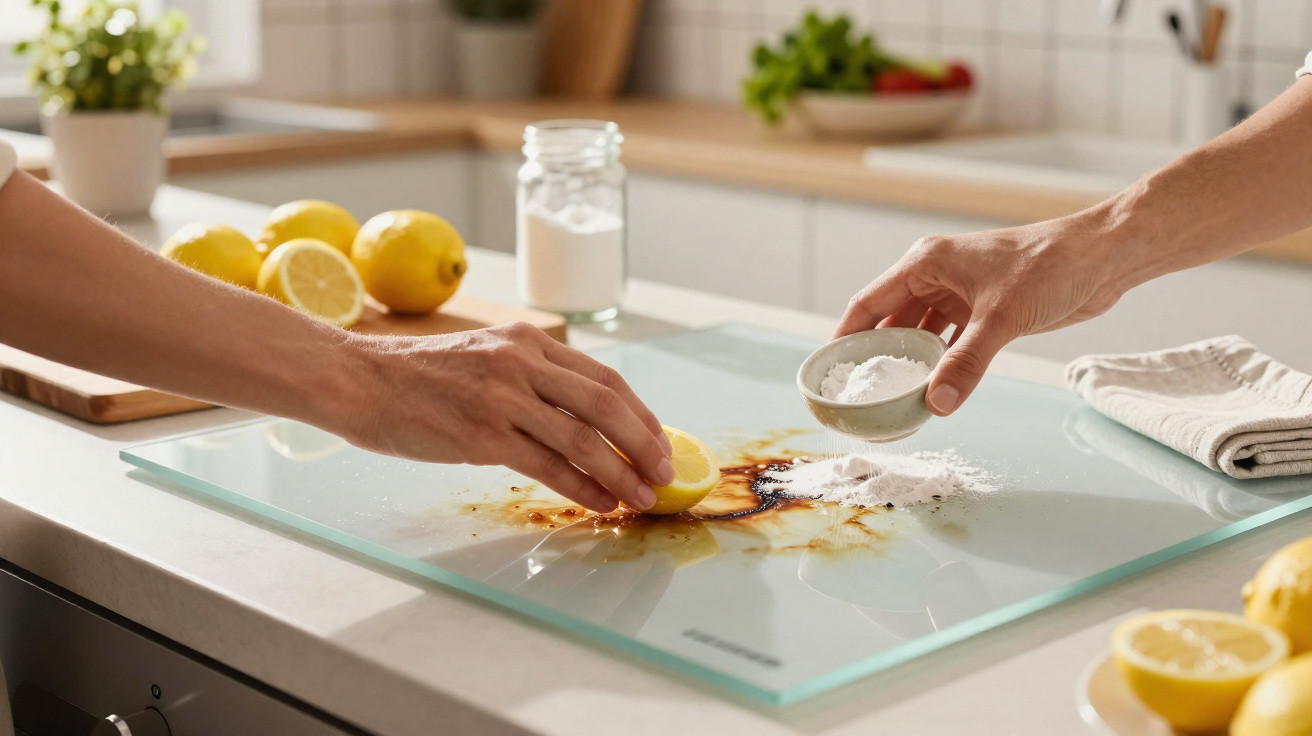
The answer may be closer than you think: in your kitchen.
When grease and burnt-on food have built up on a ceramic, induction or cast-iron hob, many people instinctively reach for harsh cleaning products. Yet a simple natural ingredient that is found in most homes is often enough to restore a clean, glossy surface – with no pungent smell, no harsh fumes and no hours of scrubbing.
Why hob plates become unsightly so quickly
Anyone who cooks every day will recognise the issue: pasta boils over once, tomato sauce splashes, or a few drops of oil escape from the frying pan, and a sticky layer soon forms. If it is not wiped away immediately, it burns on during the next use.
- Grease splatters cling to glass or metal surfaces like a film.
- Sugary foods such as sauces and syrup caramelise and burn.
- Starchy residues, including pasta and potatoes, can rapidly leave stubborn marks.
- Overheated pots and pans can create dark rings.
Over time, this leaves hob plates looking dull, stained and neglected. Many people then try to tackle the problem with abrasive sponges or steel wool – scratching the very surface that is meant to shine.
“A natural kitchen helper can remove grease, limescale and burnt-on residue without roughening the surface – and costs only a few pence.”
The overlooked kitchen staple: lemon instead of harsh chemicals
The key household remedy is an ordinary lemon. Its high citric-acid content cuts through grease and loosens limescale deposits. It also neutralises odours created during frying and cooking.
Lemon is particularly suitable for:
- ceramic-glass and induction hobs
- metal frames around the hob
- cast-iron plates with light soiling
- control panels made of glass or smooth plastic (test on a small area first)
How to clean a hob using only lemon
Step-by-step method
Before you begin, always allow the hob to cool completely. This helps prevent burns and stress cracks in the glass.
- Prepare half a lemon
Cut a lemon in half. Use one half as a “sponge”; the other can later be used in tea or a salad. - Lightly dampen the surface
Add a few drops of water to the dirty areas. This allows the juice to spread more evenly. - Rub with the lemon half
Move the cut side over the hob in small circular motions. Pay particular attention to greasy or stained patches. - Leave it to work
Let the juice sit on the plate for 5–10 minutes, depending on the level of dirt. During this time, the acid starts loosening grease and deposits. - Wipe with a soft cloth
Clean the surface with a damp microfibre cloth or soft sponge. Then dry and buff it to prevent streaks.
“For everyday light soiling, the lemon treatment is usually entirely sufficient – the hob looks fresh again and has a light, clean scent.”
When everything looks burnt on: lemon and bicarbonate of soda
For stubborn, baked-on crusts, lemon acid alone may sometimes not be enough. This is where combining lemon with bicarbonate of soda – or baking powder with a high bicarbonate-of-soda content – comes into its own. The useful part is that the mixture foams slightly, helping to loosen stuck-on residue.
How the lemon and bicarbonate of soda combination works
- Halve the lemon
As before, set aside one lemon half. - Add bicarbonate of soda to the cut side
Sprinkle one teaspoon of bicarbonate of soda directly onto the juicy cut surface. The moisture helps it adhere well. - Treat the dirty areas
Rub the prepared lemon half over the burnt-on marks. A fine foam will form. - Leave briefly to work
Allow it to rest for 5–15 minutes, according to how severe the dirt is. - Wipe away with a wet cloth
Thoroughly remove all residue using a damp sponge, then dry and polish the surface.
The effect relies on two actions: the acid breaks down grease and light limescale residue, while the bicarbonate of soda provides a gentle scouring effect without causing harsh scratches. The carbonic acid produced also helps to “lift” the layer of dirt.
Benefits of natural cleaning compared with chemicals
| Aspect | Natural method (lemon/bicarbonate of soda) | Conventional cleaners |
|---|---|---|
| Smell | Fresh and lemony | Often sharp and chemical |
| Tolerance | Generally kinder to skin and airways | Can irritate skin and airways |
| Cost | A few pence per use | Several pounds per bottle |
| Environmental impact | Biodegradable, with very little residue | Chemical residues enter wastewater |
| Versatility | Also suitable for sinks, taps and chopping boards | Often designed for one purpose only |
“Those who use natural remedies more often not only save money, but also significantly reduce the chemical burden in their own household.”
What to consider with glass and induction hobs
As useful as lemon is, sensitive surfaces still require some care and attention to detail.
- Do not use abrasive sponges: Scouring pads, steel wool and stiff brushes can permanently scratch glass.
- Do not leave it on too long over damaged areas: If the glass already has small cracks or chips, do not allow the acid to sit for an extended period.
- Treat edges carefully: Test first in an inconspicuous area if there are silicone seals or printed decorative markings.
- Finish with a light polish: A dry microfibre cloth quickly gives the hob a streak-free finish.
Keeping your hob clean for longer
Anyone who does not want to spend every weekend on a major clean can build a few small routines into everyday life. These habits help hob plates stay presentable for longer:
- Wipe up splashes straight away while they are still fresh.
- Give the hob a quick wipe after cooking – a damp cloth is often all that is needed.
- Avoid pots boiling over by using slightly less heat or choosing a larger pot.
- Check the bases of pots and pans so that burnt residue is not transferred to the plate.
- Use a lemon treatment once a week to remove fine films of grease.
Other ways to use lemon and bicarbonate of soda in the kitchen
Once people discover natural cleaners, they often begin using them in other areas of the home too:
- Stainless-steel sink: Rub it with lemon, then rinse with water – fingerprints disappear and the steel shines.
- Chopping boards: Lemon neutralises odours from onions, garlic and fish.
- Kettle: Descale it with lemon juice, bring it briefly to the boil, then rinse it out.
- Oven base: Make a bicarbonate-of-soda paste with a little lemon juice, apply it, leave it to work and wipe it away.
Take care with delicate materials such as natural-stone worktops, including marble: acid can make them dull or cause discolouration. In such cases, test first on a very small hidden area or use specialist stone cleaners instead.
Why reaching for lemon is genuinely worthwhile
Many households keep several specialist products in the cleaning cupboard: glass cleaner, degreaser, oven spray and ceramic-hob cleaner. The combination of lemon and bicarbonate of soda can replace a surprising number of them. Another advantage is that children and pets are exposed to far fewer aggressive substances in everyday life.
Anyone who deliberately cleans their hob with this straightforward household remedy next time will quickly notice how effectively it works – and how pleasant it is not to reach into a cloud of chemicals just to wipe down the plate.






Comments
No comments yet. Be the first to comment!
Leave a Comment