
What builds up there over months is not for the faint-hearted.
The drum shines, the detergent smells fresh and everything appears hygienic. But carefully lift the rubber seal around your washing machine door and you will often find a warm, damp area where grime, slimy deposits and dark marks collect. This is more than simply an unsightly issue: a miniature ecosystem develops beneath the seal, producing odours, contaminating laundry and, in the worst cases, potentially affecting health.
What is really lurking beneath the washing machine seal
The folds in the rubber seal gather virtually everything a washing machine takes in during everyday use. The result is a stubborn, sticky film that clings firmly in place.
“What sits beneath the seal is not a ‘mysterious’ problem, but an everyday cocktail of detergent residue, limescale, skin particles and moisture – perfect for mould.”
Typical build-up includes:
- Detergent and fabric conditioner residue
- Fine fluff and fibres from laundry
- Limescale deposits caused by hard water
- Microscopic particles of skin and dirt
As the rubber seal forms a kind of trough, a little water always remains after a wash. It never dries fully, while the inside of the machine stays mildly warm – precisely the conditions that mould and bacteria favour. Over time, a black or greenish layer can form, accompanied by that familiar musty “cellar smell”.
Warning signs you should not overlook
Anyone who looks – and smells – closely can spot the problem early. Common signs include:
- A strong smell when opening the door, despite freshly washed laundry
- Dark spots or streaks on the rubber seal
- Grey-black marks on light-coloured textiles
- A greasy, slightly slick surface on the rubber
The issue does not stay inside the appliance. Spores and deposits can repeatedly end up on clothing. People with allergies or sensitive airways in particular may react more strongly than they realise.
The most effective approach: a thick bicarbonate of soda paste, not a spray frenzy
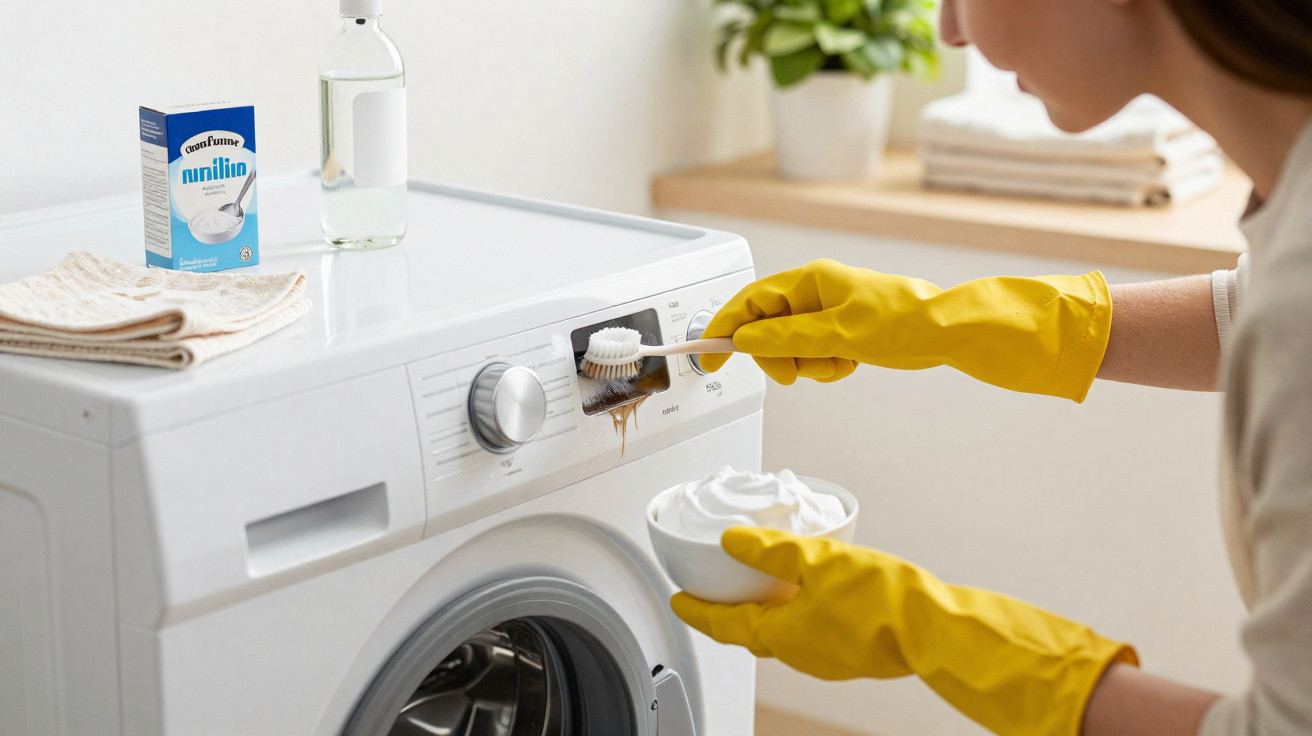
Many people instinctively reach for harsh cleaning products or spray bathroom cleaner into the seal. It may seem effective briefly, but it rarely tackles the issue thoroughly. A thick paste made from bicarbonate of soda (also known as baking soda) and water works far more precisely.
“The trick is not to use a watery mixture that runs away immediately, but an adhesive paste that stays exactly where the dirt is.”
How to make the cleaning paste
- Around 40 grams of bicarbonate of soda
- A few tablespoons of water, enough to make a spreadable paste
- 200 millilitres of clear household vinegar for wiping afterwards
The texture should resemble a sandwich spread: neither dry and crumbly nor runny. It can then be worked beneath the edge easily without immediately dripping into the drum.
Step-by-step cleaning for the washing machine seal
- Switch off the machine and open its door.
- Carefully lift the rubber seal, particularly around the lower section.
- Use a finger, the back of a spoon or a small spatula to press the bicarbonate of soda paste deep into the folds.
- Pay special attention to the underside and inner edge, as this is where most water gathers.
- Leave it to work for a few minutes so that deposits can loosen.
- Scrub firmly but carefully with an old toothbrush.
- Immediately remove the loosened residue using a damp cloth.
A toothbrush reaches even narrow grooves that a sponge can barely get into. The important thing is not to pull or pry so forcefully that the rubber comes out of its channel or becomes damaged.
Vinegar as the finishing step: removes limescale and gets rid of the musty smell
Once the worst dirt has been removed, move on to the second stage: thorough wiping with household vinegar. It reacts with mineral deposits, breaks down limescale residue and neutralises odours.
“Bicarbonate of soda first, then vinegar – do not mix them together, otherwise the cleaning effect disappears in a display of bubbles.”
How to rinse and wipe afterwards
- Soak a clean cloth generously with vinegar.
- Wipe down the entire seal carefully, including every fold.
- Turn or replace the cloth repeatedly so that removed dirt is not transferred back.
- Go over stubborn areas a second time.
The vinegar smell may be sharp at first, but it soon disappears, especially if the washing machine door is left open. Finally, wipe with clean water and dry the rubber thoroughly. If the seal stays damp, the same process will soon begin again.
A hot wash reset: run the machine empty at 90°C
Even when the seal looks clean again, deposits can remain in hoses, around the drum and in hidden corners of the machine. Running an empty boil wash at 90°C can make a major difference.
“An empty high-temperature cycle after cleaning works like a freshness boost for the inside of the machine.”
Use it effectively as follows:
- Add no detergent, or only a very small amount.
- Choose the longest possible programme so the temperature remains stable.
- Keep the door shut while the cycle is running, then open it wide afterwards to let the machine air.
The heat loosens greasy residue and kills a large proportion of the micro-organisms that thrive at 30°C or 40°C. Immediately after this cycle, the machine should ideally smell neutral – not perfumed, but not musty either.
Often-forgotten dirty areas: the detergent drawer and filter
Many people focus solely on the drum. Two parts are almost always overlooked – and can then cause trouble:
| Component | Typical issue | What helps |
|---|---|---|
| Detergent drawer | Caked-on residue from powder, liquid detergent and fabric conditioner | Pull the drawer out completely, soak it in hot water and clean the crevices with a brush |
| Filter | Fluff, hair, small objects and stagnant dirty water | Unscrew it regularly, remove the contents, then clean the area with a cloth and a little vinegar |
A quick wipe over the inside of the door and around the drum completes the washing machine’s “spring clean”. The difference can often be smelled as early as the next wash.
Keep it clean with minimal effort: the monthly routine
Avoiding the need to rescue a washing machine once it already smells saves a great deal of work. A quick monthly check is usually all that is needed.
“One empty hot wash a month and two or three cloths – that is often all it takes to avoid trouble.”
A practical routine that genuinely works
- Once a month: run an empty wash at 90°C.
- When cleaning the home, briefly lift the seal and check for dark areas.
- As soon as the first spots appear: use a little bicarbonate of soda paste and a brush to clean them away immediately.
- After every wash: leave the door slightly ajar and, if needed, quickly dry the seal with a cloth.
- Do not overdose detergent or fabric conditioner – too much leaves a film behind.
Anyone living in an area with very hard water may also wish to consider descaling the machine. Descaling tablets or a dedicated manufacturer programme can help reduce limescale layers, which also give bacteria and mould something to cling to.
Health considerations and common cleaning mistakes
Dark deposits beneath the seal are not a harmless “cosmetic flaw”. In sensitive people, mould spores and bacteria can worsen airway irritation, itchy eyes or skin problems. Children, allergy sufferers and people with weakened immune systems may react more quickly.
Avoidable mistakes are also common during cleaning:
- Metal scourers or abrasive pads scratch the rubber.
- Strong chlorine cleaners attack the material and may even make the smell worse.
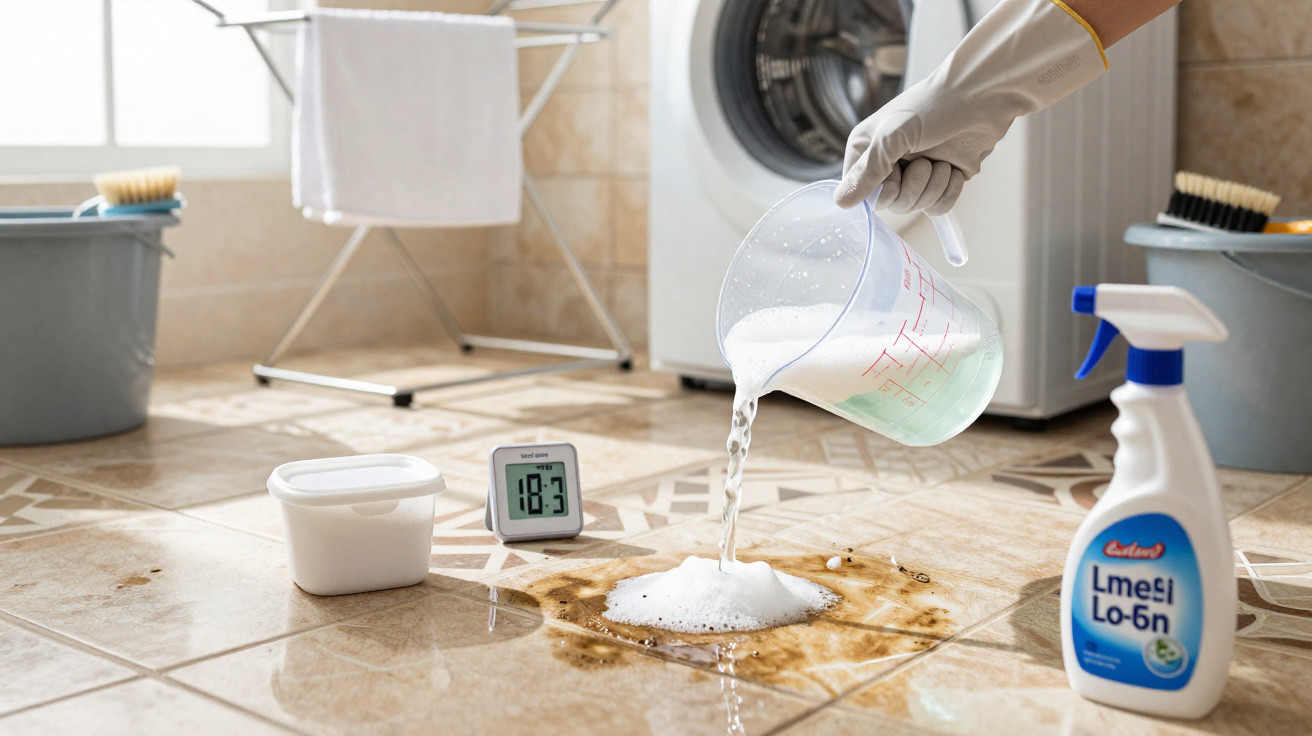
- Mixing bicarbonate of soda and vinegar directly – the foam display looks dramatic but delivers very little cleaning power.
Gentle products such as bicarbonate of soda, vinegar, a toothbrush and a soft cloth are entirely sufficient for everyday cleaning. Used regularly, this simple combination prevents a damp, black miniature ecosystem from developing beneath the seal in the first place.
Checking beneath the rubber ring should therefore be part of a normal household routine. Anyone brave enough to lift it once will quickly understand why a few extra minutes are worthwhile for noticeably fresher, more hygienic laundry.

Comments
No comments yet. Be the first to comment!
Leave a Comment