
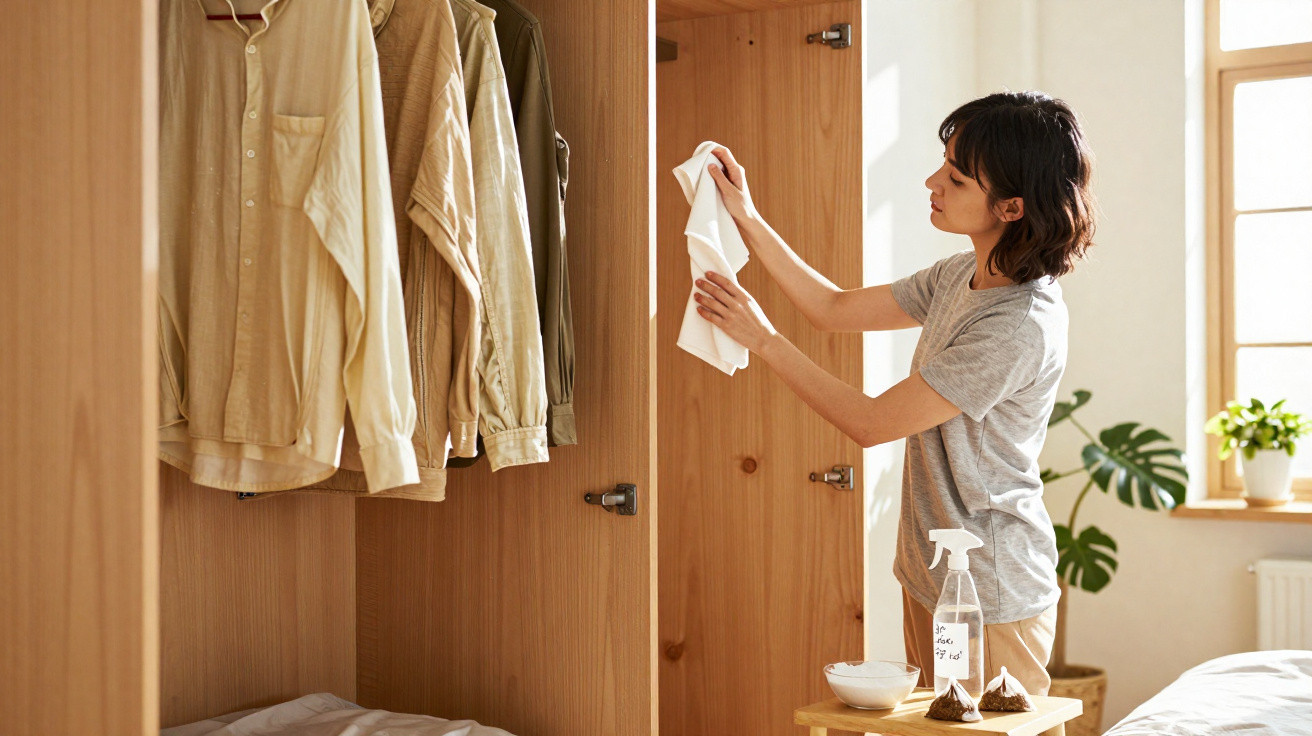
A mould smell in the wardrobe is usually a sign of a straightforward issue, although one that needs attention. The odour generally develops when there is too much moisture, limited airflow and micro-organisms growing in the enclosed space, particularly in poorly ventilated bedrooms or rooms with cold, damp walls.
Mould smell in the wardrobe: what actually causes the problem?
The reasons for a mould smell in the wardrobe are nearly always connected to dampness and inadequate ventilation. Leaking walls, furniture positioned directly against an external wall, and bedrooms without windows or with little sunlight can all encourage fungal growth.
Putting away clothes that are still damp can also make matters worse. Towels, gym wear, coats worn in the rain and heavier fabrics such as denim and sweatshirts hold moisture for longer, creating ideal conditions for unpleasant smells to take hold.
How can you identify where the mould smell in the wardrobe is coming from?
A practical way to trace the source of the odour is to empty the wardrobe gradually and check where the smell is strongest. If it is concentrated at the back or along the bottom, there may be a source of damp in the wall or floor, especially where the wall backs onto a bathroom.
It is also worth checking for whitish, dark or greenish marks on the inside surfaces and on clothing. If the odour becomes less noticeable after the doors have been left open for a few hours, poor air circulation within the furniture may be the main cause.
Which household solutions can help remove a mould smell from the wardrobe?
Several household remedies can lessen a mould smell without immediately using harsh products. Bicarbonate of soda and charcoal, placed in open containers or small bags, can absorb odours and some moisture, acting as small natural filters.
Regular cleaning with white vinegar and the use of scented sachets can also help keep the inside of the wardrobe more pleasant. The following simple options can be used together:
- Bicarbonate of soda: helps absorb odours and light moisture on shelves;
- Charcoal: works as a natural odour filter in more enclosed corners;
- White vinegar: can be applied with a lightly dampened cloth to clean surfaces;
- Scented sachets: leave clothes with a gentle fragrance after cleaning;
- Cloves and dried herbs: help soften the stored-clothes smell without chemical products.
How can you stop mould returning to the wardrobe every day?
To prevent the mould smell from coming back, daily prevention is important. Making sure every item is fully dry before storing it, leaving a small gap between the wardrobe and the wall, and opening doors and drawers regularly can greatly reduce the risk of moisture building up.
Arranging clothes without packing them too tightly, carrying out routine cleaning and using dehumidifiers or fans in particularly enclosed bedrooms all help maintain airflow. With these simple measures, the wardrobe is likely to remain drier, clothes stay ready to wear, and mould no longer becomes a constant visitor in the home routine.






Comments
No comments yet. Be the first to comment!
Leave a Comment