
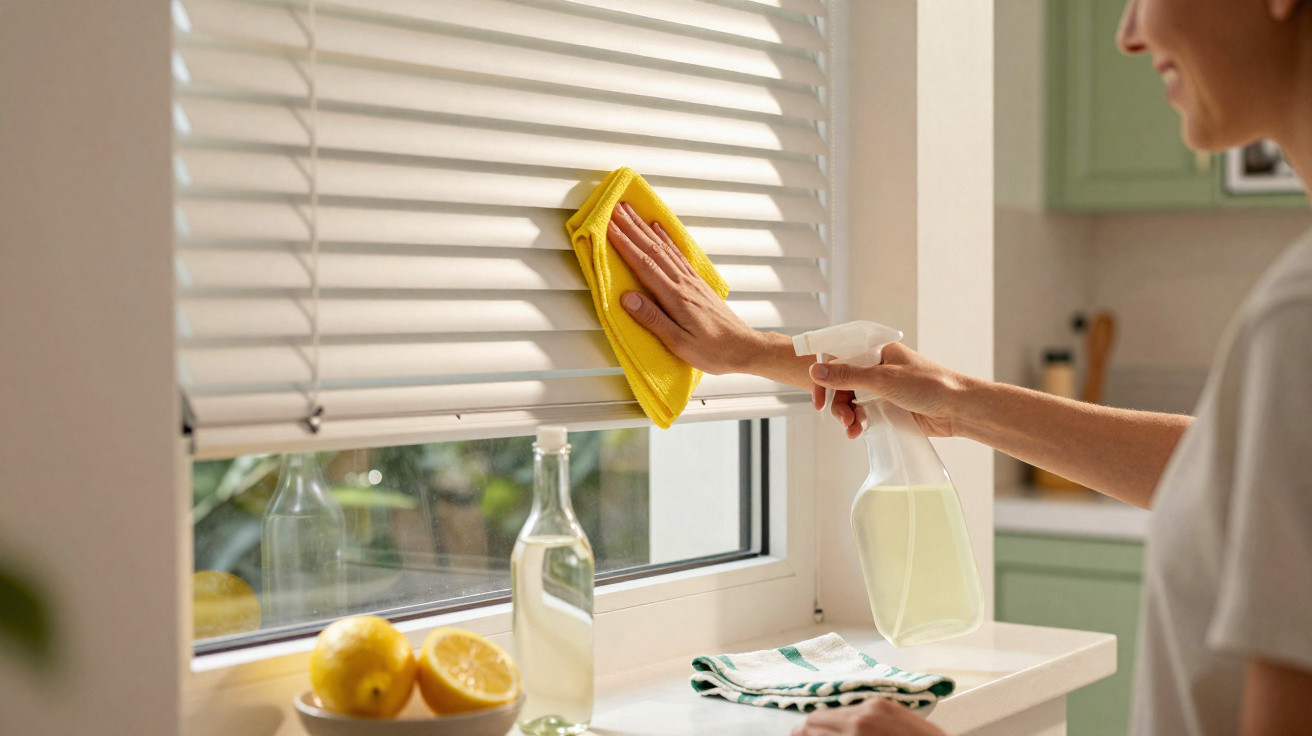
Cleaning PVC or aluminium roller shutters can often feel like a never-ending task. No sooner have they been cleaned than the next shower leaves another black film behind. Rather than reaching for a scrubbing brush or pressure washer every time, there is a remarkably straightforward approach using three household ingredients that can significantly extend the time between cleans.
Why roller shutters quickly look dirty again
Roller shutters are among the parts of a home exposed continuously to the elements. Rain brings limescale and dirt particles, while wind carries fine dust and soot towards the façade; traffic fumes and road residue add to the problem. Layer by layer, these deposits build up on the slats, leaving them looking dull and grey.
Light-coloured or white roller shutters are particularly affected, as black streaks, drip marks and stains show up clearly. However, using overly harsh cleaning products can often make the issue worse without you realising it.
“Powerful cleaners slightly roughen PVC and aluminium – and these micro-scratches act like a magnet for fresh dirt.”
Products containing chlorine, cleaners with ammonia and abrasive scouring pads can harm the material’s top layer. The surface becomes more porous, water no longer runs off as effectively, and dust and dirt can adhere more easily. As a result, the roller shutter becomes dirty more quickly and heavily, even though it is being cleaned more often.
The 3-ingredient method: clean and protect in one go
Instead of scrubbing harder each time, this practical method relies on a gentle mixture that performs two jobs at once: it cleans while creating a fine protective layer. No specialist cleaner is required, and it costs only a few pence.
Basic recipe for roller shutter cleaner
For one bucket of cleaning solution, you need just three ingredients:
- 5 litres of warm water
- 2 tablespoons of liquid black soap (Savon noir)
- 1 glass of clear household vinegar
Each ingredient has a specific role. Black soap removes grease and the dark film formed from exhaust fumes and dust. Vinegar tackles limescale and water marks, while restoring a little shine to dull surfaces. Warm water helps the mixture spread evenly and penetrate the build-up.
“The key benefit is that, once dry, the soap leaves an ultra-thin smoothing film that repels new dirt.”
How to apply the mixture correctly
The process is simple and can be completed easily on a free afternoon:
- Lower the roller shutter fully so that every slat can be reached.
- Remove loose, dry dirt using a soft cloth or hand brush.
- Mix the cleaning solution in a bucket.
- Dip a soft cloth or microfibre cloth into the solution and wring it out well.
- Wipe over the slats from top to bottom without applying heavy pressure.
- Leave the solution to work for a few minutes; this is when it does the main cleaning work.
- Rinse afterwards with clean water, ideally using a gentle stream of water or a damp cloth.
Usually, no extra force is needed. For very old deposits or heavily encrusted dirt, you may wipe the shutters a second time, but one pass is enough in many cases.
How long does the protective film actually last?
Once the shutters have dried, the effect of the mixture is noticeable both visually and practically. The surface feels smoother, water drains away more effectively, and dust does not cling as stubbornly. Many users report that fresh dirt takes noticeably longer to appear.
The difference is especially apparent beside busy roads or in exposed, windy locations: roller shutters retain their fresh appearance for longer, dark streaks form more slowly, and cleaning intervals can be extended considerably.
“With the 3-ingredient method, the cleaning effort for many homes falls to around two short sessions a year.”
A regular schedule works best: once in spring to remove winter grime, and again in autumn before seasonal storms and persistent rain take their toll. This keeps the protective film reasonably consistent without having to stand outside with a bucket all the time.
What to avoid with PVC and aluminium roller shutters
To keep roller shutters looking good for as long as possible, it is worth avoiding several common mistakes:
- Do not aim pressure washers directly at the slats, as the force can damage seals and coatings.
- Avoid scratchy sponges, wire brushes and cream cleaners.
- Do not use chlorine-based or ammonia-based cleaners, which can attack the material.
- Avoid cleaning in strong sunshine, as the mixture may dry too quickly.
Following these points protects not only the appearance of the shutters but also their mechanism. Loose slats, warped profiles and brittle seals are less likely when cleaning is carried out gently.
Practical tips for hard-to-reach roller shutters
For upper floors in particular, the effort involved puts many homeowners off. A few simple measures still make it possible to use this method safely:
- A telescopic pole fitted with a microfibre cloth lets you work from the ground or from a window.
- For internal shutter boxes, combine the cleaning routine with a window-cleaning session.
- If you do not feel secure on a ladder, limit yourself to gentle wiping and ask a service provider to handle the major spring clean.
In all cases, it is important not to neglect roller shutters entirely. More heavily encrusted layers will require more time to remove later on, or a more expensive professional cleaning service.
Why these three ingredients work so well together
Black soap originally comes from traditional household cleaning. It contains plant oils and cleans thoroughly without etching the surface. This makes it suitable for sensitive plastics and coated metals, both of which are commonly used in roller shutters.
Unlike many specialist descalers, household vinegar does not attack most seals, yet it reliably removes limescale edges and rain marks. Combined with warm water, it spreads evenly and can be rinsed away easily.
“The mixture is chemically mild but highly effective – the material stays intact, while the dirt layer does not.”
For households with children or pets, there is another welcome advantage: the air is not filled with pungent chemical fumes, and any splashes on the patio or façade can simply be wiped away.
Benefits beyond clean roller shutters
Maintaining roller shutters with this method offers several advantages at the same time. It noticeably improves the home’s appearance, particularly where façades are pale. Over the longer term, shutters are also less likely to jam or become difficult to operate because less dirt gets into guide rails and gaps.
It also saves water, electricity and cleaning chemicals, as there is no need to run a pressure washer or buy aggressive specialist products. For many property owners, maintenance becomes a manageable routine rather than an unwelcome major task, completed in just under an hour.
There is one further benefit: with care, the same mixture can also be tested on other outdoor surfaces, such as plastic garden furniture or PVC balcony cladding. By checking first in an inconspicuous area that the material tolerates the mixture, you may avoid buying a whole range of specialist cleaners and simplify household cleaning considerably.



Comments
No comments yet. Be the first to comment!
Leave a Comment