
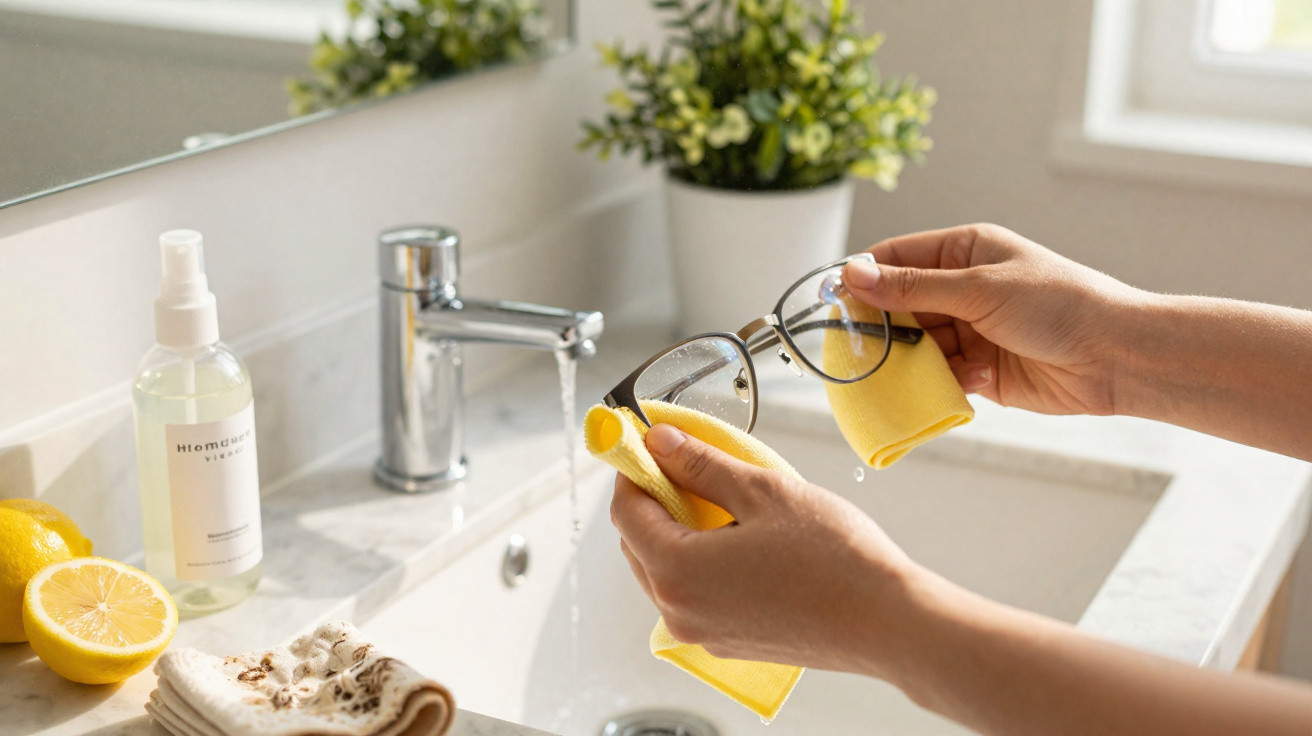
Glasses can easily cost several hundred pounds and are worn every day, yet many people clean them in ways that damage the lenses, coatings and even the frame. This guide focuses on five straightforward, practical methods that genuinely clean lenses without ruining them.
Glasses care: why cleaning them incorrectly can prove expensive
Modern glasses are high-tech items: anti-reflective coatings, blue-light filters, UV protection and hard coatings are all applied as sensitive layers to the lens. Using overly hot water, kitchen roll or a jumper sleeve can harm those coatings.
“What begins as what seems like a minor scratch can ultimately reduce overall visual performance – and make a replacement pair of glasses necessary.”
The same mistakes are common in everyday life:
- Cleaning with hot water from the tap
- A quick rub using kitchen roll or a paper tissue
- Dry polishing with a T-shirt, jumper or scarf
- Cheap all-purpose cleaners or household glass cleaner
The issue is that paper and fabric contain tough fibres and microscopic particles. Combined with dust and grime on the glasses, they act like fine sandpaper.
1. Rely on water and mild soap – the basic clean
Opticians are surprisingly unanimous on this point: cold or lukewarm water and a mild cleaning product are usually enough for daily cleaning. Expensive specialist sprays can be useful, but they are not essential.
Gentle hand-washing for glasses, step by step
- Wash and rinse your hands thoroughly with soap first, so no grease is transferred to the lenses.
- Hold the glasses under cold or, at most, lukewarm water. Hot water may damage coatings.
- Put a tiny drop of mild, non-moisturising liquid soap or gentle washing-up liquid on your fingertips.
- Carefully rub the lenses and frame with your fingers, remembering the bridge and temples.
- Rinse everything thoroughly with water until no soap residue remains on the surface.
- Dry the glasses with a clean, soft cloth, ideally a microfibre cloth.
Using this approach regularly removes more than just dirt: it also gets rid of skin oils and cosmetic residue. Many glasses wearers report that their lenses are less prone to fogging for a while after this type of clean.
2. Why microfibre is indispensable
Almost everyone receives a small cloth from their optician, but its capabilities are often underestimated. Microfibre is woven to lift and trap dirt particles rather than drag them across the lens surface.
“Microfibre absorbs dust and grease without scratching the lens surface – which is exactly what kitchen roll and many items of clothing cannot do.”
Wiping with microfibre correctly
For a quick everyday clean, it is often enough to:
- Lightly dampen the glasses with water or use a spray recommended by your optician.
- Lay the microfibre cloth flat over the lens and move it over both sides in small circular motions.
- Finish by lightly wiping the bridge and temples, where a great deal of sweat collects.
If no microfibre cloth is available, a smooth, lint-free cotton cloth can be used in exceptional circumstances. Coarse fabrics, woollen jumpers and denim should remain off limits, however tempting the quick option may be.
3. The frequently overlooked issue: dirty cleaning cloths
Over time, every cleaning cloth collects grease, dust and tiny particles. If it is never washed, you eventually clean with a dirty tool – and that is precisely when scratches can appear.
How often should the cloth be washed?
| Use | Recommended washing |
|---|---|
| Daily use, several times a day | Once a week |
| Occasional use | Every two to three weeks |
| Heavily soiled, greasy marks | Wash or replace immediately |
Microfibre cloths can safely go in the washing machine. A gentle, low-temperature cycle without fabric conditioner is ideal, as conditioner clogs the fibres. Replacing the cloth after a year at the latest is worthwhile, since its fibres gradually lose their structure.
4. Shine and hygiene with household vinegar
One household staple works remarkably well for glasses: clear household vinegar. When diluted, it dissolves grease, removes streaks and gives lenses a subtle shine.
“A simple blend of water and clear household vinegar can replace expensive specialist cleaners – provided it is mixed in the right proportion.”
A simple vinegar mixture for clear vision
A gentle cleaning solution can be made as follows:
- Pour one part clear household vinegar and one part water into a small spray bottle.
- Shake it gently.
- Apply one or two sprays to the lenses.
- Wipe them with a clean microfibre cloth.
A further rinse with water is generally unnecessary, provided the mixture is not too concentrated. Aggressive glass cleaners, all-purpose cleaners, methylated spirits and acetone are unsuitable for glasses. They can attack coatings and leave dull patches or marks around the edges.
5. The professional method for perfectionists: ultrasonic cleaners
The equipment used behind the scenes at an optician is now available for home use: small ultrasonic devices into which the entire pair of glasses can be placed. Sound waves create tiny bubbles in a water bath, reaching even concealed areas.
What an ultrasonic cleaner does
A compact device generally works like this:
- Fill the small tank with water and, if required, add a specialist cleaning product.
- Place the glasses in the basket, ensuring they do not sit directly on the metal base.
- Start the device; its cycle usually lasts less than a minute.
- Remove the glasses, rinse them briefly in clean water and dry them with a microfibre cloth.
The benefit is that not only the lenses are cleaned thoroughly: hinges, nose pads and tiny gaps where dirt and skin oil accumulate are cleaned too. Many devices are also suitable for jewellery, watch straps or small metal items, making them useful around the home.
What you should consistently avoid doing to your glasses
Some methods are convenient but cause damage in the long run. Anyone wishing to protect their glasses should permanently remove these practices from the list:
- Cleaning with hot water from the tap
- Rubbing with kitchen roll, paper tissues or napkins
- Quickly “wiping them over” with a jumper, scarf or T-shirt
- Using glass cleaners, harsh all-purpose cleaners or solvents
It is also worth taking an extra moment when putting glasses down: always place them with the lenses facing upwards, and carry them in a case rather than loose in a handbag or rucksack.
Why sunglasses and screen glasses need care too
Non-prescription glasses are often overlooked when it comes to cleaning. However, sunglasses and glasses designed solely for screen use have the same sensitive coatings as prescription glasses. Cleaning them carelessly can therefore also lead to scratches and cloudy areas.
Sunglasses in particular are often left in the car, taken to the beach or carried in a rucksack. Sand, sun cream and sweat can then become firmly lodged on them. This makes a full cleaning routine with water, mild cleaning product and a microfibre cloth worthwhile on a regular basis – supplemented with an ultrasonic cycle if in doubt.
When a visit to the optician is worthwhile
Anyone who notices deep scratches or feels that their vision has worsened should not rely on cleaning at home alone. Many opticians offer a free or very low-cost intensive clean, including ultrasonic cleaning and a frame check.
They can also identify the precise coatings on your lenses and advise which products are suitable. Some specialist sealants are more sensitive than others, so a quick question could prevent an expensive replacement purchase.
By consistently changing a few habits, using a good microfibre cloth and showing a little patience, you can considerably extend the lifespan of a pair of glasses. Clean lenses are not merely about appearance; they also contribute to day-to-day safety, whether driving, working at a screen or cycling.




Comments
No comments yet. Be the first to comment!
Leave a Comment