
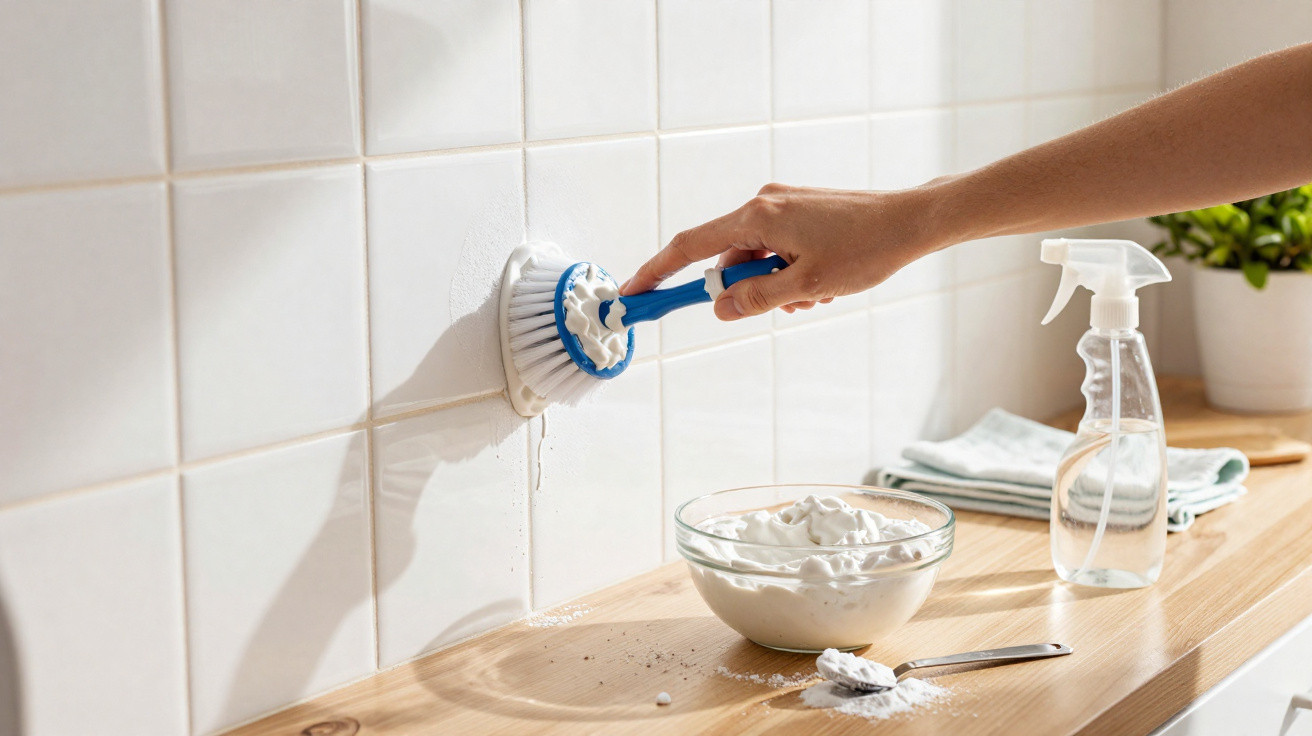
In many homes, kitchen and bathroom tiles gradually build up grease, soap residue and grime, leaving surfaces looking dull and harder to clean. One widely used method is bicarbonate of soda diluted in water: a straightforward, affordable option that can lift deposits without relying on harsher chemical cleaners, provided it is used carefully and at the right concentration.
How does bicarbonate of soda clean tiles?
Bicarbonate of soda is mildly abrasive and helps neutralise odours, making it a familiar household-cleaning aid. Mixed with water, it creates a solution that can loosen light grease and stuck-on dirt without scratching the finish, particularly on ceramic tiles or glazed porcelain tiles.
In effect, this method relies on controlled friction. The bicarbonate helps to “lift” the dirt, while a sponge or cloth finishes the cleaning. It is therefore important to use soft tools, gentle motions and no excessive pressure, especially on delicate areas or finishes with a sensitive shine.
What are the ideal bicarbonate of soda and water ratios for cleaning tiles?
For general cleaning, the most commonly suggested ratio is approximately 1 tablespoon of bicarbonate of soda for every 250 ml (1 glass) of water. This makes an effective but still gentle solution. For targeted areas, such as splashes behind the hob or stubborn marks, make a thicker paste using roughly 2 tablespoons of bicarbonate of soda and 1 tablespoon of water.
For larger surfaces, the liquid mixture can be poured into a spray bottle for easier application. The paste, meanwhile, is better suited to corners and concentrated greasy patches. In either case, make the mixture immediately before use, apply it straight away and avoid storing leftovers, as they may lose effectiveness or form clumps that are difficult to rinse away.
A simple step-by-step method for applying bicarbonate of soda to tiles
To get the most from bicarbonate of soda’s cleaning properties, follow an organised process. This limits waste, helps prevent marks and keeps both tiles and grout in good condition for longer.
- Clear away dust and loose debris: Wipe the surface with a dry or slightly damp cloth to remove dust, hairs and surface residue.
- Make the solution or paste: Combine bicarbonate of soda and water in the required ratio for the area being cleaned.
- Apply it to the tiles: Use a soft sponge, microfibre cloth or spray bottle to cover greasy or stained sections.
- Leave it to work for a few minutes: Wait for 5 to 10 minutes, without allowing the mixture to dry fully on the surface.
- Scrub gently: Use soft circular motions, avoiding steel wool or other highly abrasive materials.
- Rinse and dry: Thoroughly remove the mixture with clean water, then finish with a dry cloth to prevent whitish residue.
Grout care and how often to use bicarbonate of soda
Although it is generally regarded as gentle, bicarbonate of soda has a moderate abrasive action, particularly when used as a thick paste, and excessive use may wear down older grout. Avoid vigorous scrubbing, test it on a small area first, and alternate its use with mild washing-up liquid or products recommended for the fitted wall or floor covering.
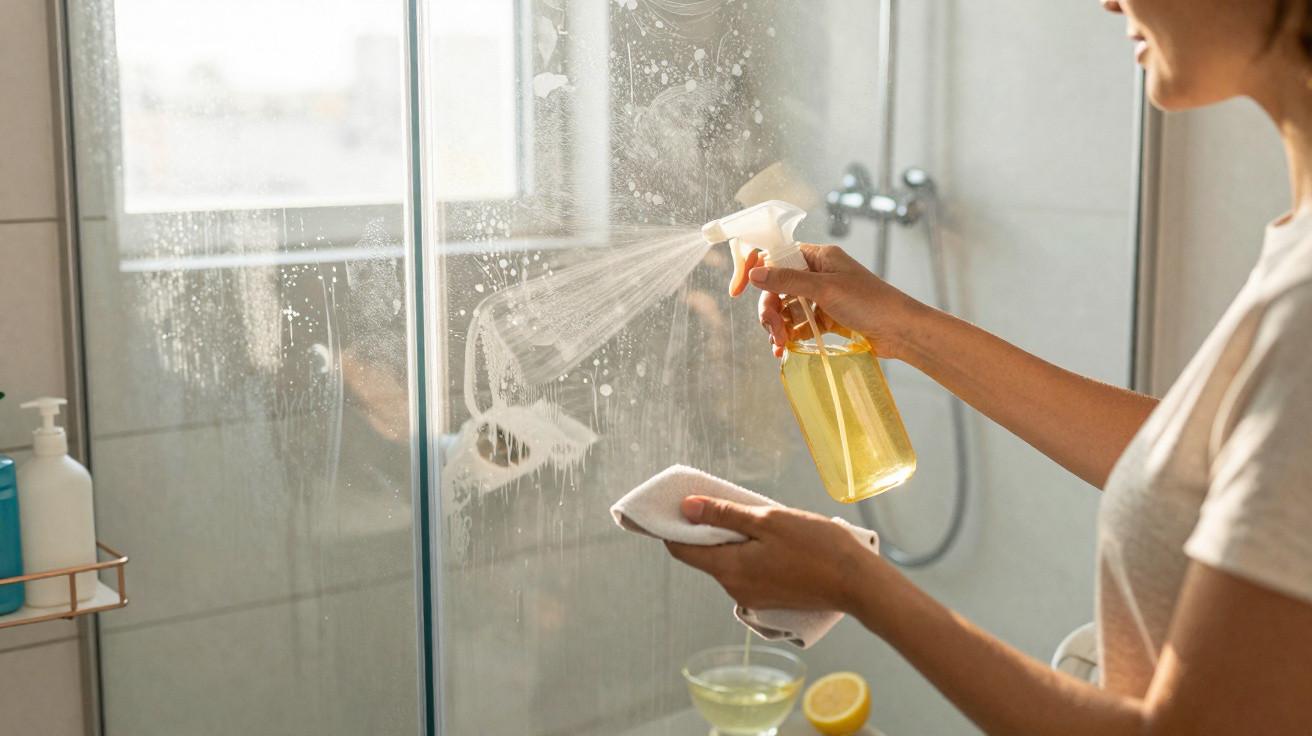
In kitchens where frying is frequent, using it weekly or fortnightly is usually enough for a more thorough clean, while mild washing-up liquid or soap can be used for day-to-day cleaning. In bathrooms, it is useful for deeper cleaning of shower enclosures and walls, helping restore shine and control odours without placing excessive strain on the tiled surface over time.


Comments
No comments yet. Be the first to comment!
Leave a Comment