
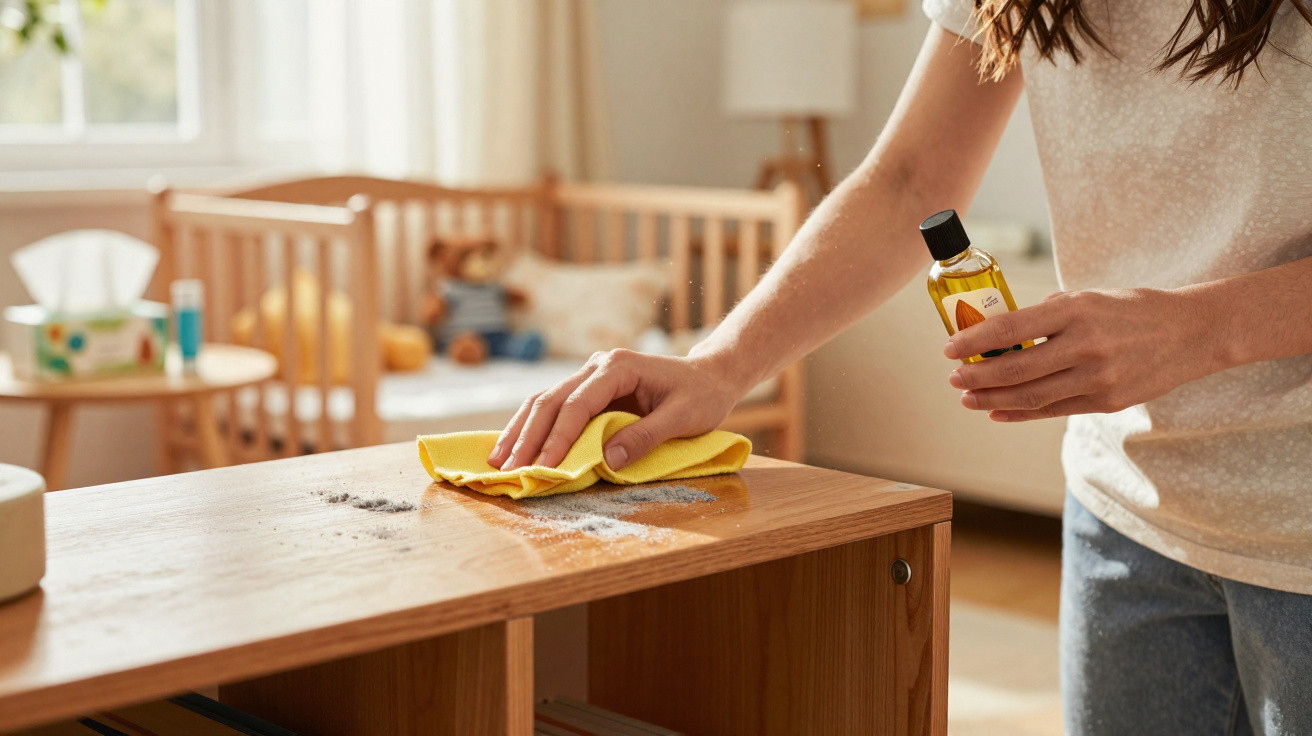
More and more people want to clean their homes “naturally”, choosing household remedies and avoiding harsh cleaners. One growing trend is caring for wooden furniture with plant oil, particularly almond oil. The surface shines and the wood appears nourished – it sounds like a win-win solution. Yet cleaning and indoor-air specialists are now raising concerns: in certain circumstances, this very method can effectively trap dust and allergens, worsening air quality indoors.
Household dust: what is really found in those grey dust bunnies
When people complain about dusty layers on a shelf while cleaning, they generally picture a little dirt and a few textile fibres. Research paints a far less pleasant picture. Typical household dust can contain:
- Fine textile fibres and wear particles from carpets, clothes and upholstery
- Pollen, mould spores and pet hair
- Pesticide residues, including some substances that have long been banned, such as DDT
- Plasticisers, flame retardants and preservatives from furniture, paints and plastics
- Residues from cleaning products and wood-protection treatments
This combination enters every home through draughts, shoes, clothing and open windows – whether the household is cleaned meticulously or rather casually. Household dust therefore acts as a carrier for a wide range of pollutants and irritants.
“Household dust is less a visual problem than a health factor that can place lasting strain on the respiratory system and immune system.”
Children, people with allergies or asthma, and those with sensitive mucous membranes are particularly vulnerable. The more dust remains on surfaces and is stirred up again with every movement, the more of these particles residents breathe in.
Plant oil on furniture: a natural care method with a downside
Many guides recommend plant oils, such as almond oil, as a mild alternative to shop-bought furniture polish. When used correctly, an extremely thin oil coating can genuinely offer benefits:
- Wooden surfaces look cared for and gain a slight sheen
- A damp cloth picks up dust effectively rather than simply spreading it around
- The scent is usually gentler than that of heavily fragranced cleaners
However, there is another side to this. An oily layer can act like a trap, collecting not only dust fluff but also pollen, pet hair and the fine particles contained in dust. If the surface is merely wiped over, this mixture is more likely to be smeared around than properly removed.
“An oil film that is too thick or not properly buffed away can mean that allergens stick to the furniture surface instead of ending up in the cleaning cloth.”
Over time, these surfaces can develop a greasy layer of dust that is harder to clean and may release particles again whenever it is touched. The well-intentioned natural method can therefore keep precisely the substances in the room that many residents want to eliminate.
How to use almond oil on wood without increasing allergy risks
Anyone wishing to use plant oil for furniture care should apply it with close control. Cleaning specialists advise following a clear sequence:
- First remove all dust from the wooden surface using a slightly damp microfibre cloth without oil.
- Put only a few drops of almond oil onto a clean, lightly dampened cloth; do not drip it directly onto the furniture.
- Work in the direction of the wood grain and apply no more than a very light coating.
- Then buff with a second, dry cloth until the surface feels dry and smooth.
Skipping this final step can leave the surface sticky. The issue becomes especially significant when other cleaning products are involved as well.
“Never mix oil with bleach, strong all-purpose cleaners or ammonia-containing products – sticky layers and unattractive discolouration may result.”
For some materials, the oil method is unsuitable from the outset:
- Glass surfaces and mirrors
- Electronic devices, displays and keyboards
- Smooth sealed floors, where there is a risk of slipping
- Very porous, untreated wood that absorbs oil unevenly
Extra caution with nut allergies and in children’s rooms
Almond oil may sound gentle and harmless, but it is clearly a nut-based product. Using it on furniture can be problematic in homes with people who have nut allergies, particularly on items that are frequently touched:
- Desks and children’s chairs
- Wooden toys and building blocks
- Eating areas where children have meals and play
Young children in particular touch many surfaces, put their hands in their mouths and rub their eyes. If an allergen such as almond oil reaches their skin or mucous membranes, it may trigger reactions ranging from redness to serious allergic symptoms.
Anyone who still wants to use almond oil should wash their hands thoroughly after cleaning and choose different care products for play and eating surfaces, such as specialist certified wood oils that are not nut-based.
Everyday measures that genuinely reduce dust and pollutants
Healthier indoor air does not come from one miracle cleaner, but from a combination of small routines. Indoor-hygiene specialists recommend practical measures including:
- Airing rooms regularly with wide-open windows, especially after cooking, showering and vacuuming
- Wiping surfaces damp rather than dry dusting, so fewer particles become airborne
- Using the simplest possible cleaning products, such as neutral all-purpose cleaners
- Using aerosol sprays, including air fresheners and heavily fragranced deodorants, sparingly
- Not storing cardboard boxes from online deliveries indoors, but disposing of them straight away
- Washing new clothes and household textiles before they are used for the first time
Cardboard boxes and new textiles often bring production residues into the home, including dyes, finishing agents and packaging chemicals. At first, these substances can accumulate more heavily in household dust. Establishing routines in these areas can substantially reduce exposure within the home over the long term.
How conscious product choices affect indoor air
Many pollutants in household dust originate from furniture, paints, floor coverings and decorative items. Choosing certified products with tested emissions when shopping reduces the source of this exposure. Apparent bargains with no traceable origin can also prove troublesome – for example, where chipboard releases significant emissions or low-cost textiles have been heavily treated with chemicals.
In some cities, neighbourhood groups are already forming to exchange experiences of suitable products or attend workshops on healthy homes. Their discussions go beyond cleaning schedules, covering questions such as: Which carpets shed few fibres? Which wall paints do not smell for weeks? Which cleaning products are actually sufficient for everyday use?
When plant oil is useful – and when it is better avoided
Plant oil does not need to disappear from the cleaning cupboard altogether. Applied correctly, it can be one element of a “gentle” household routine, especially for oiled wooden furniture that cannot tolerate harsh cleaners. The key factors are dosage, buffing afterwards and who lives in the home.
Households with allergies, asthma or very young children will generally be better off restricting its use to a small number of low-risk surfaces and choosing clearly labelled furniture-care products instead. Combined with regular airing, damp dusting and considered choices of furniture and textiles, this can significantly reduce exposure to dust, allergens and chemicals.





Comments
No comments yet. Be the first to comment!
Leave a Comment