
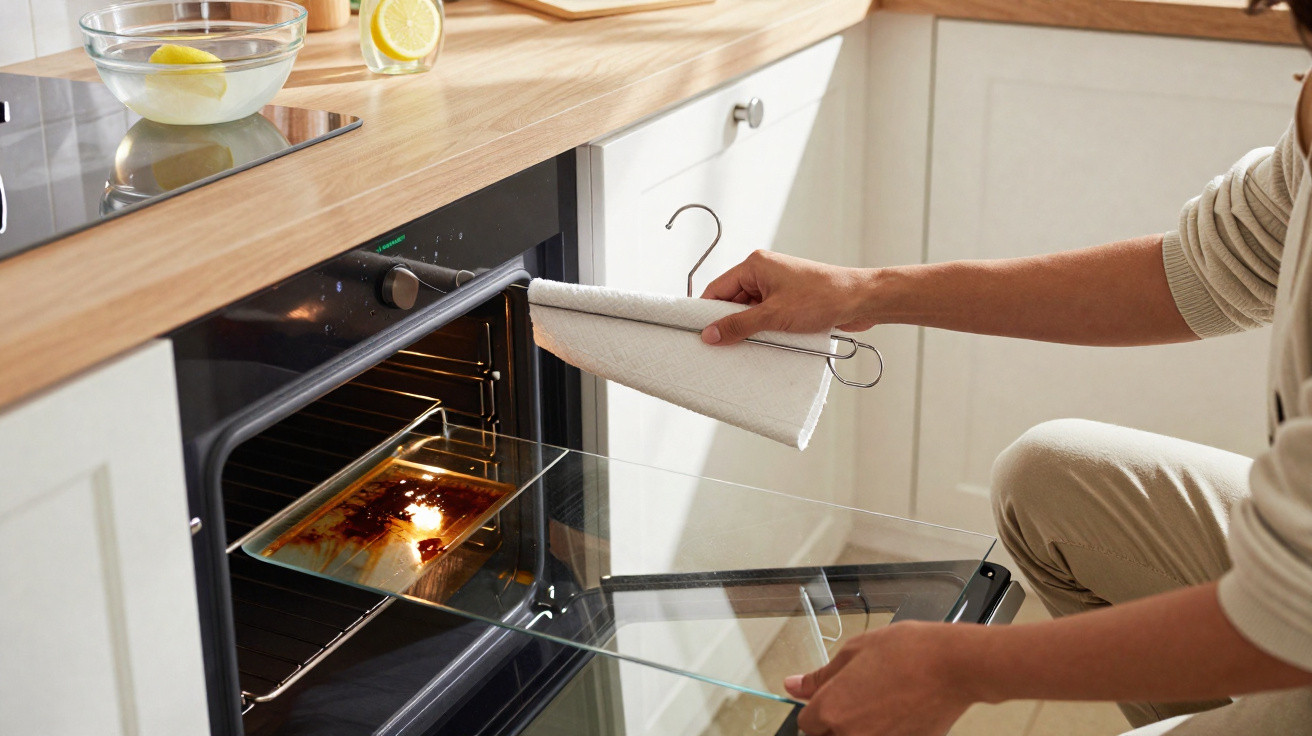
A kitchen professional has revealed a surprisingly straightforward method.
Grease build-up, crumbs and brown streaks: anyone who bakes or makes oven-baked dishes regularly will know the issue. Wiping the outside is quick, while the inside can be scrubbed with oven cleaner if necessary. Yet grime caught between an oven door’s glass panes usually remains stubbornly stuck there – clearly visible but almost impossible to reach. This is precisely where a simple professional trick comes in, requiring neither specialist tools nor expensive chemicals.
Why dirt between oven door panes is so frustrating
Most modern ovens have doors made up of two or more glass panes. The gap between them acts as insulation, helping to prevent the outer surface from becoming too hot. Useful in everyday use – but not when it comes to cleaning.
Every time the door is opened or closed, crumbs and dust can drop into this gap from below. During cooking, grease splashes and steam rise upwards, condense on the glass and gradually leave unsightly marks. They are easy to see from the outside, but very difficult to reach by hand.
Although many appliances allow the entire door to be removed or individual panes to be taken out, many people are reluctant to attempt this in practice. The concern about damaging something or making mistakes when reassembling it is simply too great. So the dirt stays put – and becomes irritating whenever the oven light is switched on.
A kitchen professional’s trick solves this exact issue: the gap can be cleaned without having to dismantle the oven door.
The simple cleaning solution: water and vinegar instead of harsh chemicals
Before tackling the inaccessible areas, you need a suitable cleaning liquid. One professional recommends a mixture that almost every household already has: water and clear household vinegar.
How to prepare the cleaning solution
- 1 spray bottle or empty bottle with a spray nozzle
- 1 part water
- 1 part clear household vinegar
- 1 microfibre cloth or another highly absorbent cloth
Pour equal quantities of water and vinegar into the spray bottle, then give it a brief shake. The vinegar works as a natural degreaser, loosens baked-on splashes and neutralises odours. This mixture is considerably gentler than conventional oven cleaners and will not damage the glass.
If your oven has glass panes that can be removed easily, spray the solution directly onto them, leave it to work briefly and wipe with a damp cloth. This quickly removes visible grime. The real challenge is posed by ovens not designed for the panes to be removed – and that is where the clothes hanger trick comes in.
Reaching the narrow gap with a clothes hanger and cloth
The main idea is simple: turn an ordinary metal clothes hanger from the wardrobe into a slim cleaning rod that can be guided directly into the gap between the panes.
Step-by-step guide to the clothes hanger trick
- Pull out the storage drawer beneath the oven completely. On many models, this reveals small openings on the underside of the door.
- Take a thin metal clothes hanger and straighten it as much as possible until it forms a long rod.
- Wrap a small microfibre cloth securely around one end of the rod.
- Fasten the cloth firmly with a strong elastic band or durable adhesive tape so that it cannot shift while being moved back and forth.
- Soak the cloth with the prepared vinegar-and-water mixture. It should be thoroughly damp, but not dripping wet.
- Carefully guide the rod through the openings beneath the door and into the space between the glass panes.
The improvised tool can now be used like a long cleaning finger. Move it slowly from left to right, then from top to bottom, and diagonally if needed. As soon as the cloth becomes visibly dirty, pull the hanger out, rinse the cloth, soak it again and repeat the process.
With a little patience, even old, firmly baked-on marks can disappear. Looking into the oven feels noticeably fresher again – almost like it did on the first day.
How often should you clean oven door panes?
Anyone who bakes, grills dishes with a topping or prepares roasts frequently should inspect the outer pane and the space inside the door regularly. The longer grease and food residues are allowed to bake on, the more work will be required to remove them.
As a rough guide:
- heavy use (several times a week): check every 4–6 weeks
- normal use (1–2 times a week): check every 2–3 months
- infrequent use: at least twice a year
A quick visual inspection is enough. As soon as streaks or dark marks appear in the gap, it is worth reaching for the metal hanger and vinegar solution. Dealing with it before dirt has built up over several months will ultimately save a great deal of time.
What to keep in mind when using this trick
Although the method seems simple, a few points need attention to ensure neither the appliance nor the glass is damaged.
| Aspect | What to consider |
|---|---|
| Temperature | The oven must be completely cold before cleaning begins. |
| Amount of liquid | Only dampen the cloth; do not soak it, so that no liquid runs into technical components. |
| Pressure | Do not use force; clean the glass with only light pressure. |
| Securing the cloth | Tighten the elastic band or adhesive tape very firmly so that the cloth does not become stuck in the gap. |
| Metal edge | Ensure that only the cloth touches the glass, never the bare wire. |
If you are unsure, check the appliance instruction manual first. Some manufacturers caution against using sharp objects on the door, while others provide their own instructions for removing the panes. The hanger trick is particularly suitable when the manufacturer has not provided an easy dismantling option.
Alternative household remedies and what should not go into the gap
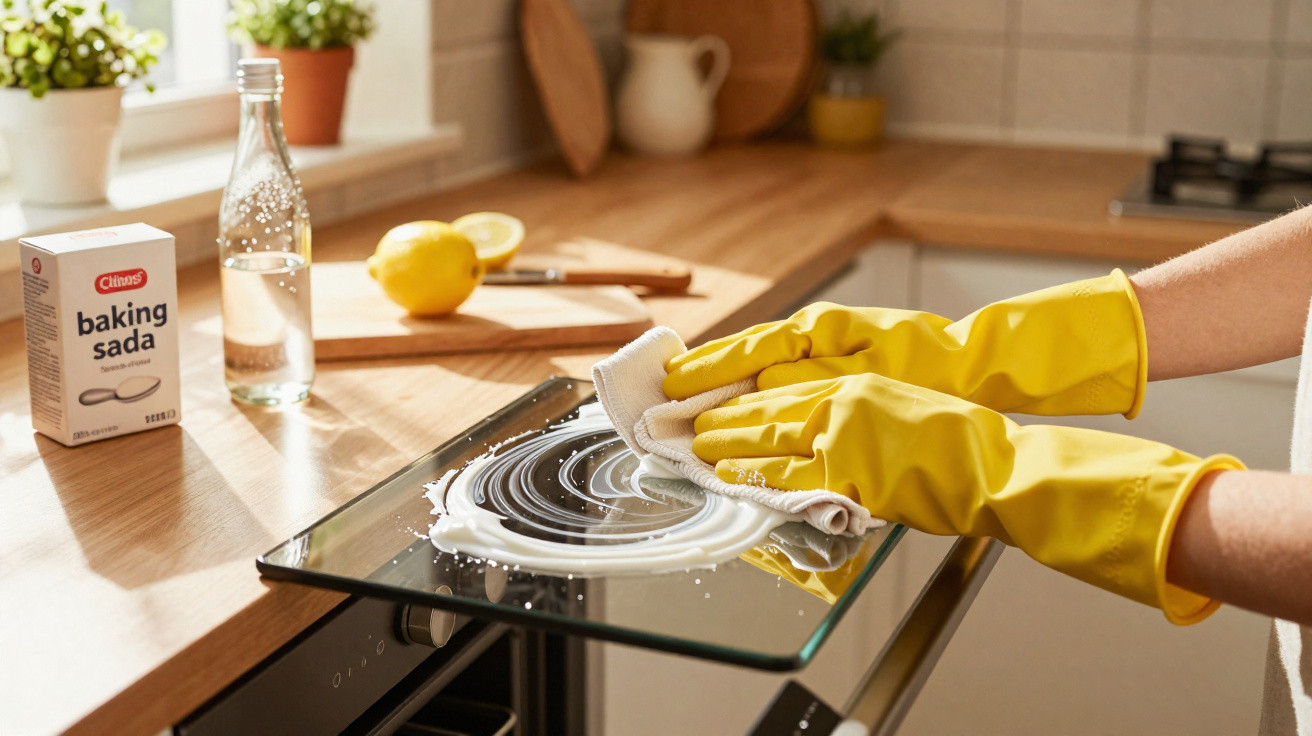
Vinegar and water will be sufficient in many situations. For particularly stubborn grease deposits, some people use bicarbonate of soda or baking powder. A thin paste made from bicarbonate of soda and a little water, applied to the cloth, can help loosen stuck-on areas further. It is worth testing it first in an inconspicuous spot to make sure the glass is not scratched.
Less suitable options include:
- aggressive spray oven cleaners applied directly into the gap
- steel wool or hard scouring pads
- knives, scrapers or other metal edges without a cloth
All of these can damage coatings, leave streaks or, in the worst case, cause scratches and stress cracks. The appeal of this professional trick lies precisely in its use of gentle materials without interfering with the oven’s mechanics.
How professionals keep their ovens cleaner for longer
Chefs in professional kitchens rarely have time to spend hours cleaning. They therefore place greater emphasis on prevention. Several of these habits can easily be adopted at home:
- Never fill a baking tray or oven dish right to the edge, to prevent spills.
- For especially fatty foods, such as goose or roast pork, place a deep baking tray beneath the shelf.
- Once the door has cooled, quickly wipe away splashes with a damp cloth before they bake on.
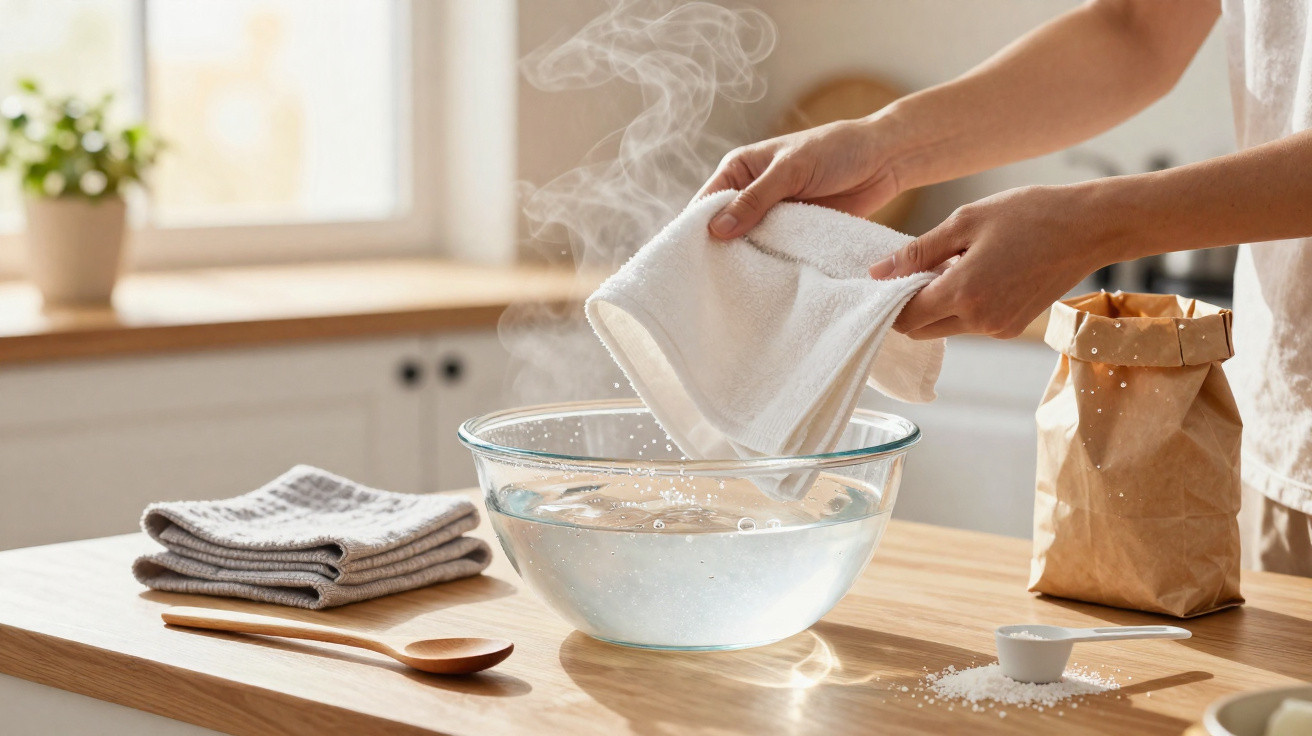
- Occasionally use steam alone: place a heatproof bowl of water in the hot oven, then wipe it out afterwards.
Following these straightforward steps means you will need to take the clothes hanger out of the wardrobe less often and avoid lengthy cleaning sessions.
When the trick does not work – and its limits
With very old appliances or badly damaged doors, the gap may be so dirty that even this improvised cleaning rod is no longer enough. In that case, professional servicing or replacing the door is often the only option. You should also avoid experimenting if you notice cracks, chips or loose hinges.
Even so, this kitchen tip shows just how effectively many supposedly troublesome areas in the home can be cleaned with a little ingenuity, an everyday item and a simple household remedy. At a time of high energy prices, it is particularly worthwhile to check the condition of the oven: clean panes and a well-maintained interior not only improve hygiene, but also make it easier to keep an eye on cooking times.

Comments
No comments yet. Be the first to comment!
Leave a Comment