
In many kitchens, dull, greyed kitchen towels pile up and still fail to look truly clean, even after using heavy-duty detergent and laundry sanitiser. What many people do not realise is that a nearly forgotten laundry powder from the pre-limescale-detergent era can make these towels look as bright as if they had just come from the shop – without chlorine, harsh odours or aggressive chemicals.
The powder that makes old kitchen towels look new
The understated star of the laundry room is sodium percarbonate, often sold simply as “percarbonate”. It looks unremarkable: a white granular powder with no distinctive smell and no brightly coloured packaging making extravagant promises. Yet its effect is impressive.
From a chemical perspective, it is a solid form of hydrogen peroxide. Only when the powder is added to warm water does it release what is known as active oxygen. This oxygen breaks down colour pigments from coffee, tea, red wine, curry and tomato sauce directly within the fibres. That is what distinguishes it from many modern detergents, which tend to mask dirt with fragrance and optical brighteners.
Active oxygen removes the cause of discolouration – rather than merely covering up the visible stain.
At the same time, percarbonate is considered comparatively environmentally friendly. It breaks down into water, oxygen and sodium carbonate – substances that place far less strain on groundwater and waterways than chlorine-based bleaches.
Why hot water is the crucial factor
Many consumers buy the powder, add it to a 30°C wash and are then disappointed. The explanation is straightforward: in cold or only lukewarm water, almost nothing happens.
It becomes properly effective from 40°C
The powder starts to decompose and release oxygen only from around 40°C. It really becomes effective at temperatures of roughly 60°C. This is ideal for sturdy cotton kitchen towels because:
- heat helps dissolve grease;
- oxygen targets colourants and tannins;
- heat and oxygen together also provide thorough hygiene.
This combination is particularly useful in the kitchen. Kitchen towels regularly come into contact with meat juices, raw vegetables, eggs and dishcloths, making them real collectors of germs. A hot wash with active oxygen removes not only the grey film but germs as well.
Anyone adding percarbonate to a 20°C or 30°C wash is losing almost all of its effectiveness.
The “miracle soak”: how the oxygen bath works
The strongest results come from a warm pre-soak before the towels go into the washing machine. Old, dried-on stains in particular need time, allowing the oxygen to break them down layer by layer.
Step by step: turning greyed towels bright white again
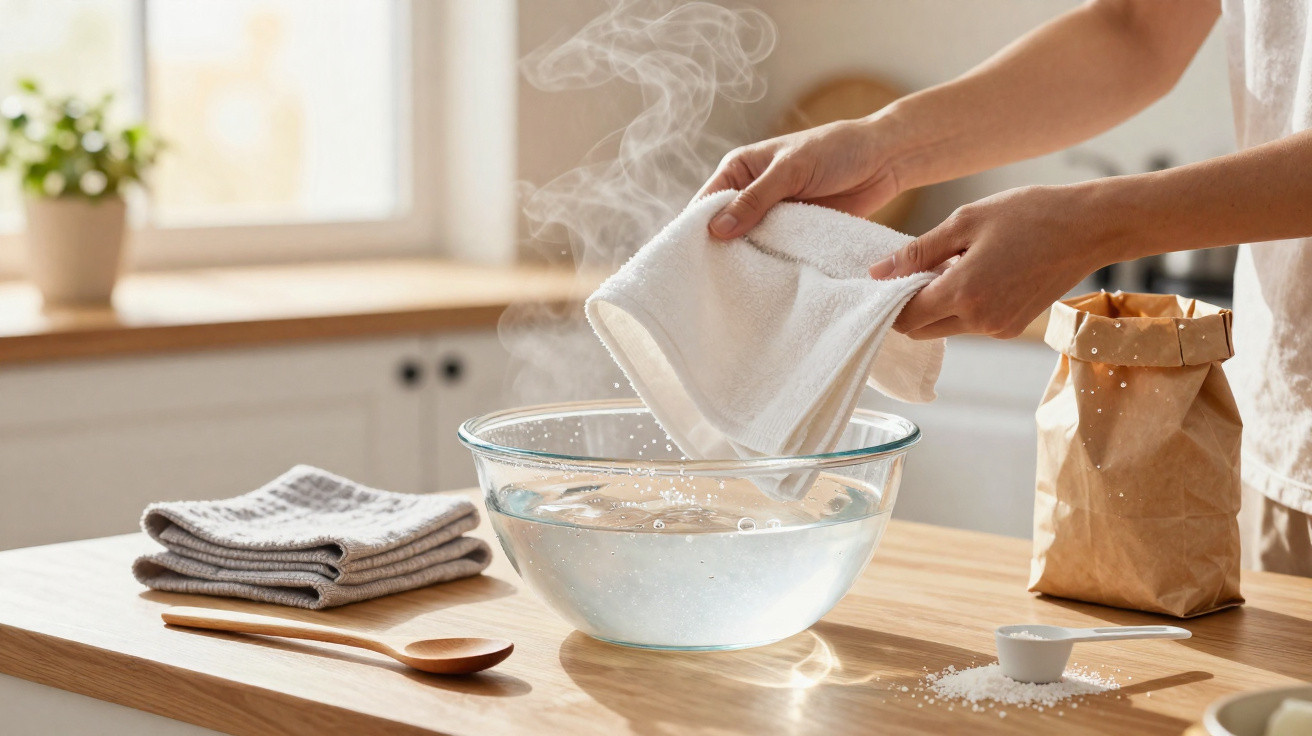
A simple bowl or bucket is enough for an effective oxygen soak. The correct proportions are important:
- water at least 40°C, or preferably 60°C for white cotton;
- one to two tablespoons of percarbonate per litre of water, depending on how soiled the items are;
- stir thoroughly with a wooden spoon until the powder has dissolved.
Then place the kitchen towels straight into the water. Do not leave it sitting for ages first, as the activated oxygen is strongest at the beginning.
For heavily stained towels:
- fully submerge the towels and weigh them down if they float to the surface;
- leave them to soak for at least two hours; for old grease and tomato sauce stains, leave them for up to six hours or overnight;
- briefly wring out the towels after soaking;
- then wash them as normal in the machine, ideally at 60°C with a heavy-duty detergent.
Many people report a visible “before-and-after effect” deep into the fibres after the first intensive soaking treatment.
The grey layer created by limescale, detergent residue and old colour pigments gradually lifts away. The towels not only look brighter but also smell fresher, as dried-in odours disappear too.
Limits of sodium percarbonate – and fabrics to avoid
While percarbonate is highly effective on cotton, it needs careful handling with delicate fibres. Active oxygen and the alkaline solution can damage certain materials.
| Suitable for | Not suitable for |
|---|---|
| Cotton (white) | Wool |
| Cotton (colourfast) | Silk |
| Linen | Delicate blends containing animal fibres |
| Kitchen towels, bed linen, tablecloths | Delicate lingerie, silk scarves |
Animal fibres such as wool and silk are made from protein structures that react extremely sensitively to strong alkaline substances and oxidising agents. The fibres may felt, become brittle or lose their sheen. Gentle detergents and specialist care products are better suited to these materials.
With coloured fabrics, it depends on the quality of the dye. High-quality dyed cotton (“colourfast”) will usually tolerate a moderate dose. Cheap dyes or colours that have not been properly fixed may fade. If in doubt, test an inconspicuous area, such as the inside of a hem.
Kitchen safety: storing and using the powder correctly
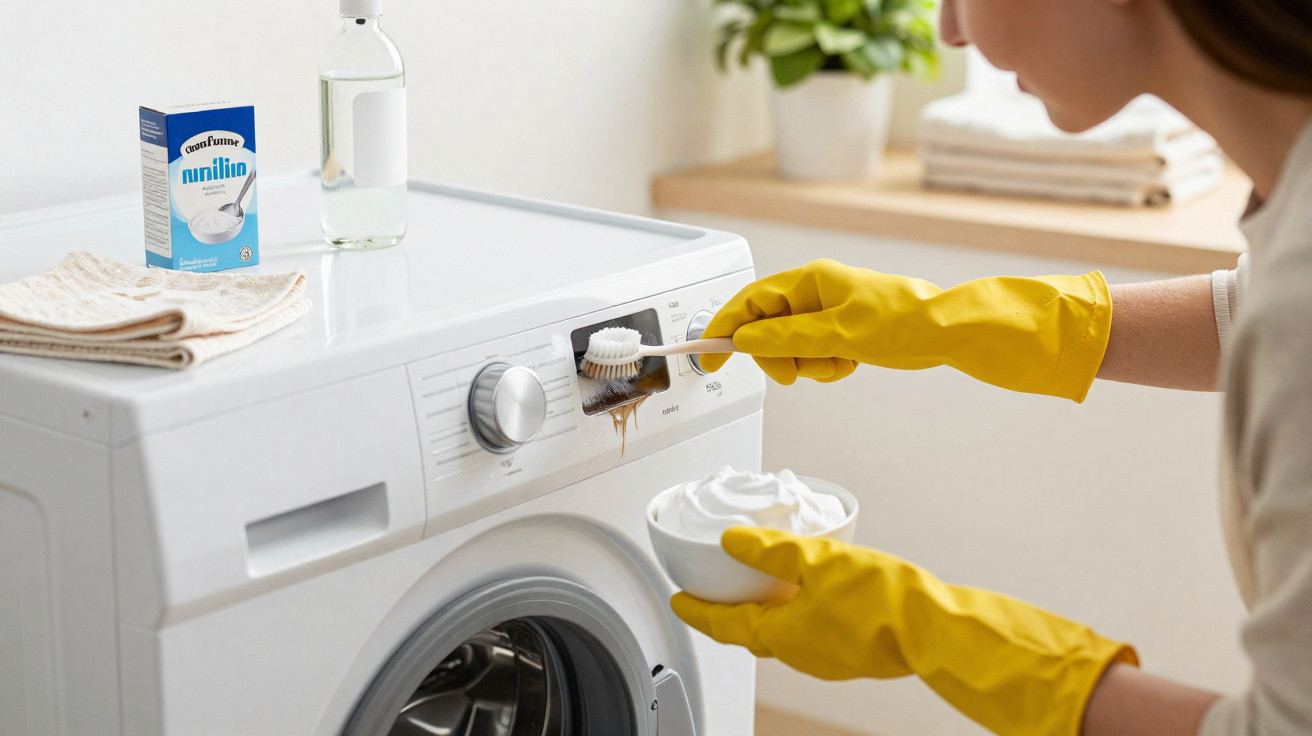
Like many concentrated laundry products, powdered percarbonate can irritate skin and eyes. Following a few simple precautions keeps its use safe:
- wear household gloves when handling it where possible;
- do not hold it close to your face and avoid inhaling the dust;
- store it somewhere dry and tightly sealed, out of reach of curious children;
- never mix it with vinegar or lemon juice in sealed containers, as pressure can build up.
This is not a concern in an open bucket containing water and powder, as the gases produced can escape. In a sealed bottle or box, however, pressure could build up and, in extreme cases, cause the container to burst.
Why choosing percarbonate benefits the environment
Many households routinely use strongly fragranced heavy-duty detergents, stain sprays and laundry sanitisers. This sends an entire cocktail of chemicals into wastewater. Percarbonate works differently: its effect comes from oxygen activated directly in the water.
As its residues largely break down into harmless components, the burden on treatment plants and waterways is reduced. It can also reduce the need for other products:
- fewer bleach additives in detergent;
- no separate laundry sanitiser required;
- less need for aggressive stain sprays.
Anyone who uses an oxygen soak regularly often needs only a reliable basic detergent instead of a whole shelf full of specialist cleaners.
Everyday uses: where else the powder helps
Kitchen towels are not the only everyday items that benefit from an occasional oxygen soak. Typical examples include:
- white cloth napkins with red wine or curry stains;
- dishcloths and cleaning cloths that smell musty;
- white tablecloths greyed by everyday use;
- cotton bed linen carrying deposits of sweat and skin oils.
The same principle applies to all these textiles: a properly measured hot soak with percarbonate followed by a normal wash restores visible freshness and extends the life of the fabric. Those who make it a monthly routine need to replace such items far less often.
Especially at a time of high prices and growing piles of waste, this old-fashioned white powder can become a modern household helper: it saves money, reduces the use of aggressive chemicals and turns old, unattractive kitchen towels back into dependable everyday essentials – almost as good as on their first day.

Comments
No comments yet. Be the first to comment!
Leave a Comment