
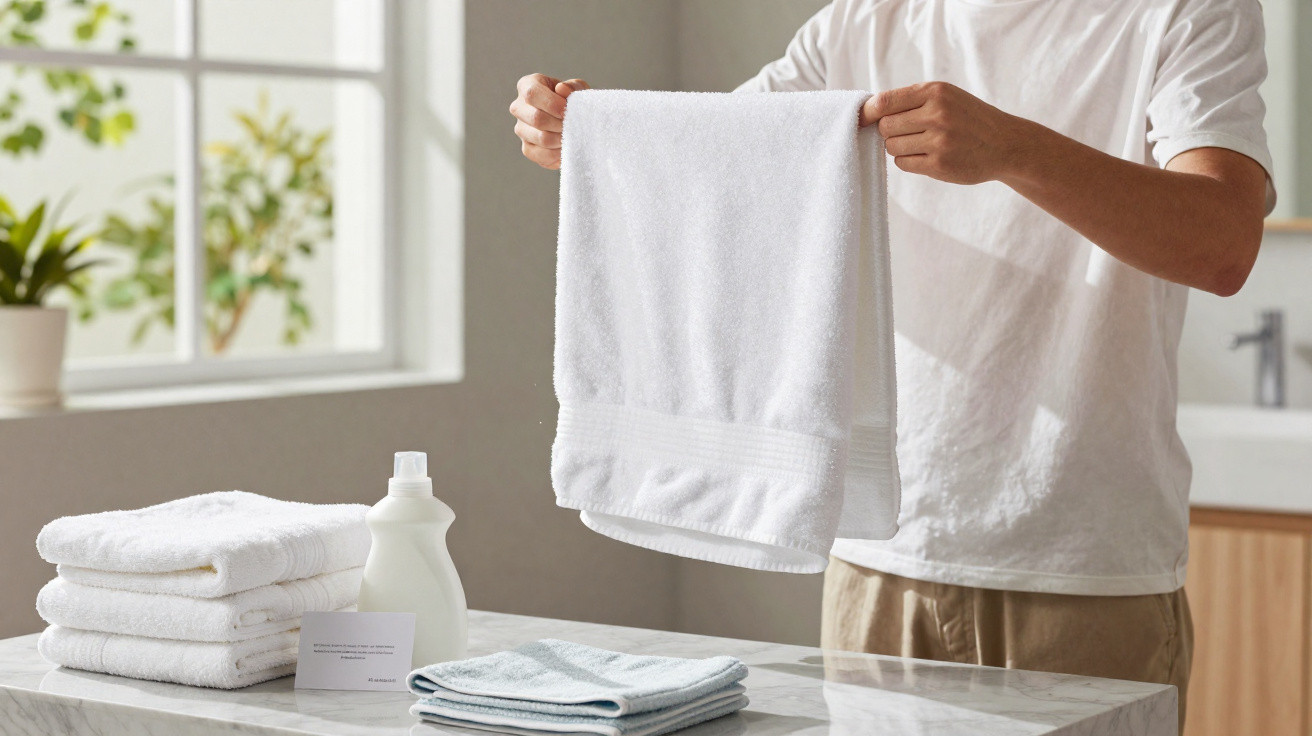
Many people assume that towels only need washing once a week, or even less often. However, current assessments from hygiene experts suggest otherwise: far more builds up in the fibres than we would like to think, and this can place a noticeable strain on both skin and health.
Why towels become contaminated faster than we think
After a shower, the body feels clean and a towel appears to do nothing more than absorb water. Yet each use transfers a combination of moisture, flakes of skin and body oils into its fibres. Traces of shower gel, shampoo and body lotion also remain behind.
- dead skin cells
- body oils and sweat
- residues from personal-care products
This combination provides an ideal nutrient source for microorganisms. If the towel is then left hanging in a warm, damp bathroom, bacteria and fungi find particularly favourable conditions. Poor ventilation makes hygiene deteriorate more quickly than many people realise.
After just two or three uses, a towel can accumulate so many germs that it can no longer be described as “fresh”.
A microbiologist specialising in hygiene at New York University warns that towels used for too long without washing can trigger skin complaints, inflammation and infections, particularly where there are minor cuts or irritated skin.
Who should pay particular attention to their towels
People with sensitive skin can react much more strongly to contaminated fabrics. This applies especially to:
- people with acne or other skin conditions
- people with allergies
- children with sensitive or dry skin
- people with weakened immune systems
Anyone using inhaled medication or nasal sprays regularly may introduce additional germs to the facial area. Combined with old towels that are washed infrequently, this can increase the likelihood of skin irritation or inflamed pores.
How often towels really need washing
The widespread habit of believing that “once a week is enough” does not match microbiological findings. Experts advise washing them at considerably shorter intervals.
As a rule of thumb, bath towels should go into the wash after no more than three to four uses, or preferably after two to three days.
The appropriate washing frequency also depends on how a towel is used and which type it is. The following guidelines offer a useful reference:
| Type of towel | Recommended washing frequency |
|---|---|
| Bath towels (shower/bath) | after 3–4 uses |
| Hand towels by the sink | every 1–2 days |
| Sports and sauna towels | after every use |
| Face towels or flannels | daily |
During warm summer months or in particularly damp bathrooms, an even stricter routine is worthwhile. People who sweat heavily, have young children at home or are often unwell should put their textiles in the washing machine sooner rather than later.
How germs can multiply rapidly on towels
Bathrooms can often resemble a small incubator: warm, humid and with little air circulation. This precise combination speeds up the growth of microorganisms.
Research published in a clinical microbiology journal indicates that the number of bacteria on a damp towel can double in around 20 minutes. When a towel remains clammy in the bathroom for hours, a genuine multiplication process is taking place out of sight.
That familiar musty smell is therefore more than simply unpleasant. It signals that microbes have spread extensively. By the time a textile smells this way, it urgently needs to be washed – strictly speaking, it is already overdue.
The most important rules for hygienic towels
Drying towels properly does half the job
To make it harder for bacteria to spread, towels should dry as quickly as possible after every use:
- spread towels out completely instead of leaving them scrunched up on a radiator
- where possible, hang them outdoors or beside an open window
- use a dehumidifier or fan if necessary in very damp bathrooms
- never hang several wet towels close together or on top of one another
The faster the fabric dries, the less favourable the conditions are for bacteria and mould spores.
Choose the right washing temperature
Many modern washing programmes save energy by using lower temperatures. This is not always ideal for towels. Experts recommend:
- 60 °C for bath towels, hand towels and tea towels, provided the care label permits it
- a heavy-duty detergent containing bleach for white towels
- colour detergent for coloured towels, combined with an occasional 60 °C wash
Washing only at 30 or 40 °C may remove visible dirt, but it does not reliably eliminate many microorganisms. For strongly smelling or noticeably discoloured textiles, a laundry sanitiser can occasionally be useful – especially in winter, when washing dries more slowly.
Fabric conditioner: soft but problematic
Fabric conditioner may leave towels feeling fluffy, but it coats the fibres like a film. This makes them less absorbent. Some residues can also irritate the skin, especially for babies and people with eczema.
A splash of white household vinegar in the fabric-conditioner drawer is an alternative. It can reduce odours and loosen soap deposits from the fibres without ruining their absorbency.
Do not share: towels are personal items
It may seem convenient to use a partner’s or child’s towel quickly, but it is not a hygienic choice. Skin bacteria, possible pathogens and fungi can pass from one person to another via the fabric.
Every person in the household should have their own bath towel and their own hand towel by the sink – clearly marked so that nobody mixes them up.
This can significantly reduce the risk of infection, particularly during colds, gastrointestinal infections or fungal conditions.
When towels should be replaced
Even with good care, towels do not last for ever. Over time, their fibres break down, the fabric becomes thinner and it absorbs water less effectively. They should be replaced or repurposed as cleaning cloths at the latest when:
- towels quickly become musty again despite washing
- visible fraying or holes appear
- their absorbency has noticeably declined
For heavily used towels, around two years is a useful guide. High-quality, thick terry towels can last longer when cared for properly.
How many towels per person are sensible
A modest supply makes it easier to maintain hygienic washing intervals without constantly having to do laundry. For each adult, it is practical to have around:
- 3–4 large bath towels
- 3–4 hand towels for the sink
- 2–3 separate towels reserved for the face
People who are active in sport should also have another 2–3 towels for the gym or sports club. This makes rotation straightforward without creating everyday stress.
What often really lies behind skin problems
Many people complain of “unexplained” spots on their back, irritated skin on their shoulders or small pustules on their legs. Quite often, the real cause is simply an old towel that is rarely washed. Tiny skin injuries after shaving or exfoliating provide ideal entry points for bacteria.
A simple test is to make your towel routine much stricter for four weeks: change bath towels more frequently, replace face towels daily, and watch your skin. In many cases, the condition of the skin improves noticeably without the need for new creams or medication.
Why towel hygiene means more than simple cleanliness
Towels touch the skin several times a day, and sometimes the mucous membranes around the face as well. Taking proper care here not only protects your own skin, but also reduces the overall germ load in the household. This is particularly noticeable in families with children or for people who regularly bring infections home.
A considered washing schedule, enough textiles in the cupboard, and a watchful eye on the smell and condition of towels require little effort but offer a genuine health benefit. Some routines from childhood – such as using one large bath towel “for the whole week” – are simply no longer up to date.
Comments
No comments yet. Be the first to comment!
Leave a Comment