
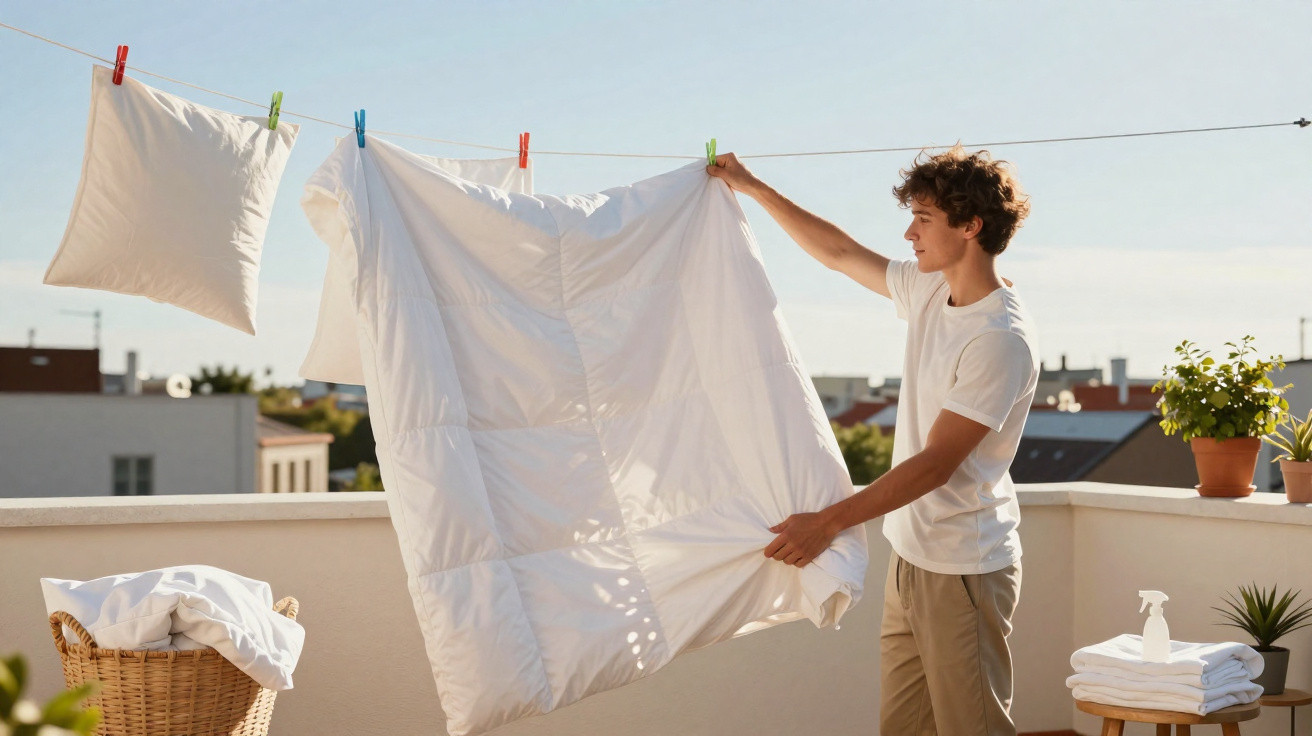
Keeping duvets and pillows clean often involves lengthy wash cycles, substantial water use and slow drying times. For this reason, many household hygiene specialists highlight a straightforward alternative: using sunlight to refresh these bulky items. This can reduce how often they need washing, help fabrics last longer and support the control of dust mites and unwanted smells.
Why do duvets and pillows need such careful hygiene?
Because duvets and pillows are in direct contact with skin and hair every day, they gradually collect sweat, natural oils, dead skin cells and dust. Over time, these conditions can encourage dust mites and other microorganisms, as well as causing unpleasant odours, particularly in damp environments.
For people with respiratory allergies, rhinitis or asthma, poor duvet and pillow hygiene may lead to morning sneezing, a blocked nose and irritated eyes. Even without a history of allergies, dust and moisture building up in bedding can reduce comfort and affect sleep quality.
How does sun-based duvet and pillow hygiene work?
Controlled exposure to sunlight is a supplementary cleaning measure that brings together light, gentle warmth and airflow. Sunlight can help reduce certain microorganisms on the fabric surface, while mild heat aids the evaporation of moisture trapped in the fibres, leaving the items drier and fresher.
Sleep and bedding-care specialists advise putting these items outdoors for a few hours on dry days, ideally when the sun is less intense. Used this way, sun-based duvet and pillow hygiene becomes useful between more thorough washes and can also help preserve the filling.
- Helps lessen odours that build up through use.
- Helps keep the filling looser and better aired.
- Reduces the feeling of dampness in the fabric and inner lining.
- Supports a conventional washing routine, rather than replacing it.
Watch a video on the Dicas da Kel YouTube channel about sanitising pillows and heavy blankets, removing stains and eliminating odours with dry-cleaning methods:
https://www.youtube.com/watch?v=bFw0vN-G3oI
How should duvets and pillows be hung to make the most of sunlight?
Before taking any item outside, prepare it so sunlight and air can move freely through the fibres. Shaking a duvet or pillow removes loose surface debris, redistributes the filling and prevents internal clumps that can hinder proper drying and ventilation.
Once it has been shaken, gently pat the surface with your hands to spread the inner material. Then choose a clothesline, raised frame or clean railing for hanging. Keep the duvet as flat as possible, and rest pillows on their sides, always ensuring they do not touch rust, dust or residue that could leave stains.
How often should duvet and pillow hygiene be refreshed?
The best frequency for sun exposure depends on how often the items are used, the climate and the filling material. In warmer or more humid places, where perspiration is greater, this can be done weekly or every fortnight. In cold, dry regions, once a month is usually enough.
Combining regular washing, protective covers and sun exposure on suitable days creates a simple, effective care routine. It helps retain volume, extend the lifespan of the items and keep the bedroom tidier, making duvet and pillow maintenance an easy part of everyday household care.


Comments
No comments yet. Be the first to comment!
Leave a Comment