
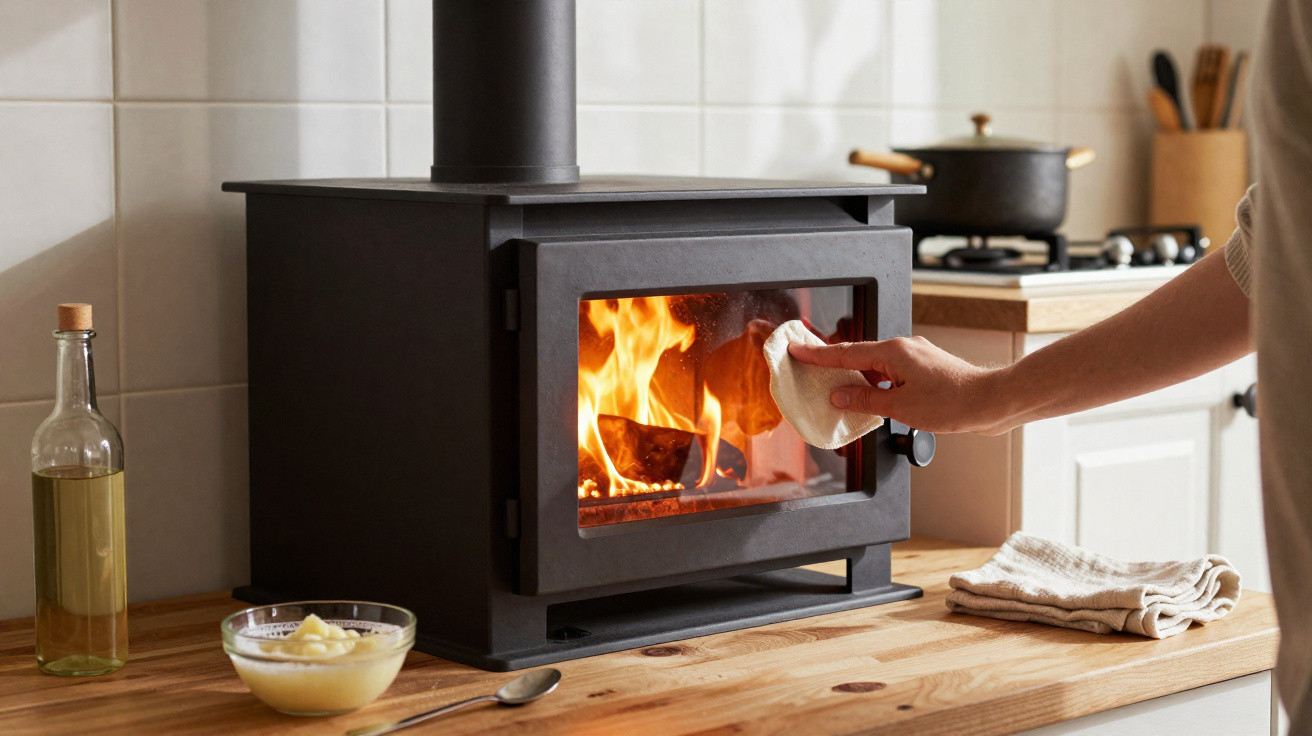
If you light your wood-burning stove in winter, you will know the issue: after only a few evenings, the view of the flames can look as though it has been smeared over. Many people instinctively reach for ash from the firebox. Although it works, it is messy and often leaves streaks behind. There is a much easier solution using two household staples that most people already keep in a cupboard.
Why wood-burning stove glass turns black so quickly
Before picking up a cloth, it is worth considering what causes the problem. Once you know why stove glass becomes sooty, it is far easier to keep it under control.
Poor-quality or damp wood
Wood with excessive residual moisture produces a great deal of smoke. That smoke contains particles which settle on the glass as a film. Wood with no more than 20 per cent moisture is ideal; it should be properly seasoned and stored in dry conditions.Inefficient combustion
If the fire burns too cool or does not receive enough oxygen, it creates more soot. This settles directly on the hottest smooth surface: the glass.Incorrect airflow
When the air supply is restricted too much, the wood burns only partially. The result is more smoke and more deposits. Correctly adjusted airflow produces hotter flames and less build-up.Running the stove permanently on a low setting
Many people turn the stove down so that it will last longer. Yet this gentle setting encourages slow, dirty combustion – and the glass is usually the first place where this becomes visible.
“Clear glass is no accident – it is the result of dry wood, sufficient air and the right cleaning routine.”
The surprisingly simple trick: clean stove glass without ash
Using ash to clean stove glass is a traditional method. It acts as an abrasive and loosens soot effectively, but it can also spread dirt through half the living room. A far more pleasant option is a combination already found in many kitchens: clear household vinegar (cleaning vinegar or white vinegar) and bicarbonate of soda.
Why vinegar and bicarbonate of soda work so well
Vinegar breaks down grease and combustion residues
Its acidic pH level tackles the layer of soot, tar and fine oils that forms on the glass while the stove is in use.Bicarbonate of soda provides gentle abrasion
The powder is fine enough not to scratch glass, yet sufficiently textured to lift baked-on deposits.Together, they fizz and work beneath the dirt
Mixing the two creates bubbles. This mild fizzing action helps lift the residue without the need for vigorous scrubbing.
Step by step: make stove glass transparent again
Step 1: Prepare the mixture
Before you begin, the stove must be completely cold: there must be no embers and the glass must not be warm. You can then prepare the cleaner.
- Pour around two parts clear household vinegar into a cup or small bowl.
- Add one part bicarbonate of soda.
- Wait briefly for the mixture to begin fizzing gently.
The foam simply indicates that a reaction is taking place; the cleaning effect remains fully effective even after a few minutes.
Step 2: Apply it and leave it briefly to work
- Dip a soft cloth or the non-scratch side of a sponge into the mixture.
- Wipe the sooty glass using circular movements.
- Coat heavily soiled areas generously and leave them undisturbed for one to two minutes.
If preferred, fill a small spray bottle with vinegar, spray it directly onto the glass first, then apply the bicarbonate of soda to individual areas with the cloth.
Step 3: Wipe clean
- Remove all remaining mixture with a clean, lightly dampened cloth.
- Polish with a dry, lint-free cloth until the glass is gleaming and streak-free.
“With vinegar and bicarbonate of soda, even heavy build-up can usually be removed in one go – without any harsh chemical smell.”
Natural alternatives if you have no bicarbonate of soda
If the jar of bicarbonate of soda is empty, you do not have to put up with blackened glass. Other products from the cleaning cupboard can also help.
Black soap
Put a small amount onto a damp cloth and add a little lukewarm water. This paste-like mixture removes grease and soot reliably while remaining gentle on the glass.Rubbing alcohol or methylated spirits
These are especially useful for greasy, smeary residues. Always use them sparingly and ensure the room is well ventilated.Hot water and newspaper
This is a classic option for lighter dirt: dampen newspaper slightly, dip it into hot water and wipe the glass. For fresh deposits, this method is often entirely sufficient.
How to stop stove glass darkening so often
Anyone who does not want to clean constantly can make a few adjustments to the way they heat the stove.
Use only dry hardwood
Beech or oak burns hot and evenly. Freshly cut garden wood should not go into the stove until it has been stored for a longer period.Allow enough airflow
At the start, set the air supply a little higher. The flames will burn more strongly and residues will burn away more effectively.Avoid continuous smouldering
Do not operate the stove at its lowest output for hours on end. Instead, heat strongly in intervals before turning it down again.Wipe regularly instead of scrubbing infrequently
Giving the glass a quick clean every few days prevents thick, baked-on crusts from developing, keeping the effort to a minimum.
Why many households deliberately avoid chemicals
Shops are full of specialist stove and fireplace cleaners. They remove soot quickly, but they often contain powerful solvents, fragrances and irritating ingredients. Particularly in living spaces used by children or pets, many people no longer want to use these sprays.
By using vinegar and bicarbonate of soda, you avoid not only a chemical cocktail but also unnecessary expense and packaging waste. These two household products have countless uses around the home, from the bathroom to the kitchen, and rarely sit unused in a cupboard.
“Anyone who relies on simple household remedies protects their wallet, glass surfaces and indoor air alike.”
Practical tips for even easier cleaning
A few small measures can make cleaning the stove door more straightforward.
Wear gloves
Soot stains heavily. Thin rubber gloves keep your hands and nails clean.Put down old towels
An old towel spread in front of the stove catches drips and loose soot particles.Avoid the seals
Try not to treat rubber seals with strongly acidic or abrasive products, so that they remain flexible.For stubborn deposits: soak rather than scrape
For thicker layers, wet them with the mixture several times and allow it to work instead of levering at the glass with pointed objects.
How often stove glass should be cleaned
The best routine depends greatly on the quality of the wood, the type of stove and how long it is used for. Some households need one thorough clean each week, while for others it is enough to wipe over a light haze every few days with a damp cloth and a little vinegar.
At the latest, it is time for a quick clean when the flames can be seen only as vague shapes. Reacting sooner saves intensive scrubbing and means considerably less cleaning product is needed.
Looking beyond cleaning: safety and maintenance
Clear glass offers another benefit: you can immediately see how the fire is burning. Unsteady yellowish flames or heavy smoke in the firebox may indicate airflow issues or unsuitable wood. This makes it easier to spot when something is wrong with the stove long before damage occurs.
Alongside regular glass care, a yearly professional inspection is essential: a chimney sweep and stove installer can check the flue routes, seals and safety equipment. Clean glass also makes it easier for them to assess the flame pattern – while you can continue to enjoy an unobstructed view of the fire.






Comments
No comments yet. Be the first to comment!
Leave a Comment