
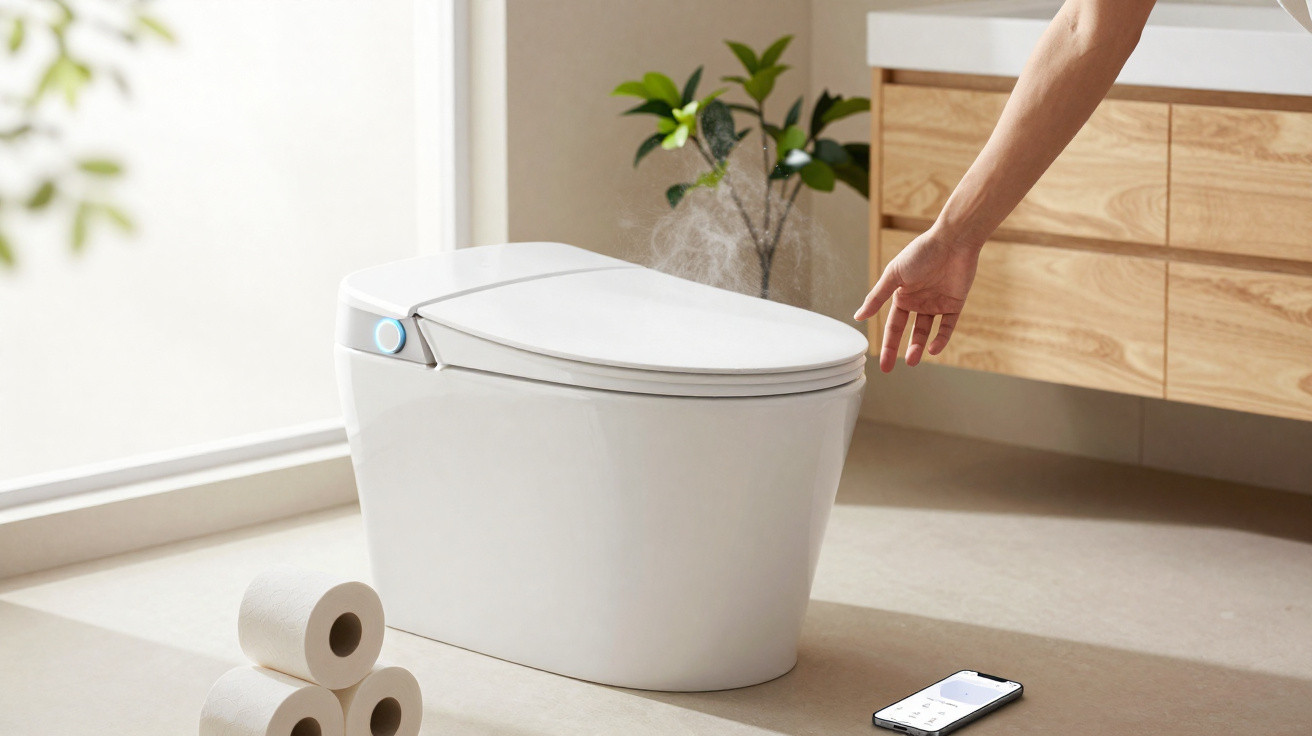
In many countries, toilet paper is still seen as an essential part of the bathroom routine, but this is beginning to change as so-called smart toilets become more widely available. Combining the functions of a conventional toilet and a bidet, these appliances appeal to people looking for greater hygiene, convenience and less waste. They are increasingly featured in homes, hotels and bathroom refurbishments across a range of budgets.
What is a smart toilet and how does it work?
A smart toilet combines a toilet seat with water cleansing in one unit, lowering reliance on toilet paper. Rather than drying with paper alone, users can activate adjustable water jets for more precise intimate cleansing.
Many models allow their functions to be tailored for greater comfort and to suit different users, including people with sensitive skin or reduced mobility. The most common settings include:
- Jet direction, to target particular areas;
- Water pressure, ranging from a gentle flow to a stronger spray;
- Water temperature, whether cold, warm or hot;
- Drying mode, using heated air on certain models.
Can a smart toilet replace toilet paper?
In everyday use, many owners report a significant drop in the number of rolls they use, with paper serving only as a final finishing step. With more fully featured models, some people stop using toilet paper almost entirely, particularly where the drying function performs well.
This shift in routine, however, depends on how each household adapts and on the confidence inspired by the appliance, which must be properly maintained and fitted with hygienic nozzles. Jet quality, the feeling of cleanliness, familiarity with technology and the time available in the bathroom all directly affect this transition.
Which smart toilet features and benefits stand out?
Available options range from attachable bidet seats to fully integrated toilets with sophisticated designs. Comfort is often the first benefit noticed, although convenience is also a major consideration for those with limited space or who wish to avoid extensive building work.
Among the features regularly highlighted by manufacturers and users, some become genuine “everyday-use advantages” and can help support the initial investment:
- Heated seat, particularly useful on cold days;
- Automatic lid opening and closing;
- Night lighting, removing the need to switch on the main light;
- Self-cleaning and disinfection modes for the nozzle and bowl;
- Personalised profiles that save each user’s settings.
How should you assess smart toilet consumption, cost and installation?
When it comes to consumption, many modern models use less water per flush than older toilets, but they require electricity for heating and electronic functions. The balance between water use, energy consumption and reduced paper use differs according to the model, household habits and the appliance being replaced.
Price remains a barrier, especially for integrated systems with more features, which can cost a similar amount to high-end bathroom fittings. However, expanding availability and the arrival of new manufacturers are likely to provide more choice and make technical support easier to access. This is making smart toilets an increasingly practical option for people planning to build or renovate and seeking a bathroom that is more comfortable, hygienic and technologically advanced.



Comments
No comments yet. Be the first to comment!
Leave a Comment