
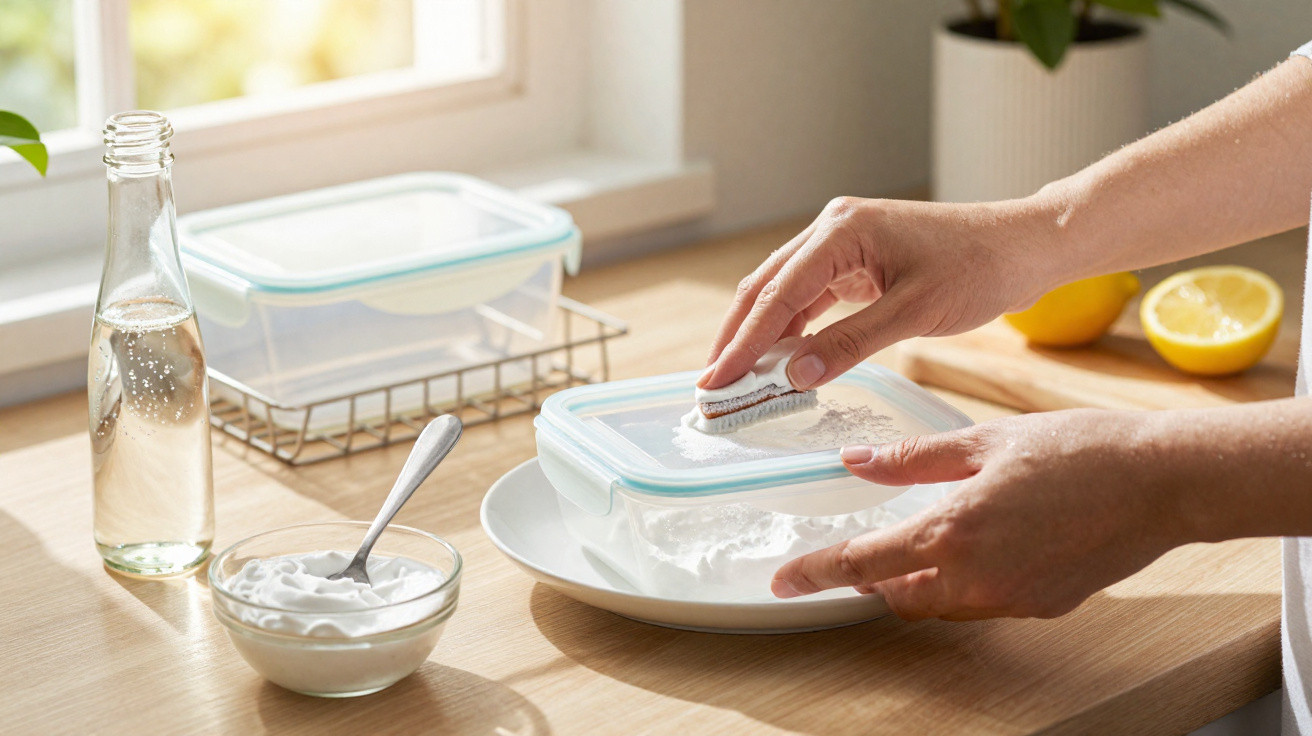
Plastic lunchbox lids often retain orange stains and food smells even after routine washing at home. This happens because the material contains tiny gaps that trap sauce, grease and odours through everyday use.
Why does a plastic lunchbox lid become stained and smelly?
The plastics used for lunchboxes are convenient, but they can become marked by hot tomato sauce, curry or greasy food. Their porosity allows pigments to penetrate, leaving the lid looking worn by the end of the week.
Scrubbing vigorously does not solve the issue and may make it worse, as fresh scratches create gaps where dirt can settle. The best approach combines gentle chemical action, controlled soaking and a soft sponge to clean the plastic without damaging it.
The most common signs are:
- Sauce: tomato and brightly coloured seasonings leave orange marks.
- Grease: helps pigments adhere more firmly to plastic.
- Porosity: tiny gaps retain smells for longer.
- Scratches: harsh abrasives create new places for dirt to collect.
- Sunlight: helps lighten and air the lid after washing.
How does bicarbonate of soda help clean a lunchbox?
Bicarbonate of soda is described as a chemical compound with the formula NaHCO3, and is usually found as a fine white powder. In household cleaning, its texture helps lift surface residue without requiring constant aggressive abrasion on the lunchbox.
A bicarbonate of soda paste works effectively because it stays on the stain for several minutes, allowing it time to work before rinsing. Applied in circular motions, it reaches stained areas and helps lessen smell and discolouration.
How to make bicarbonate of soda paste properly
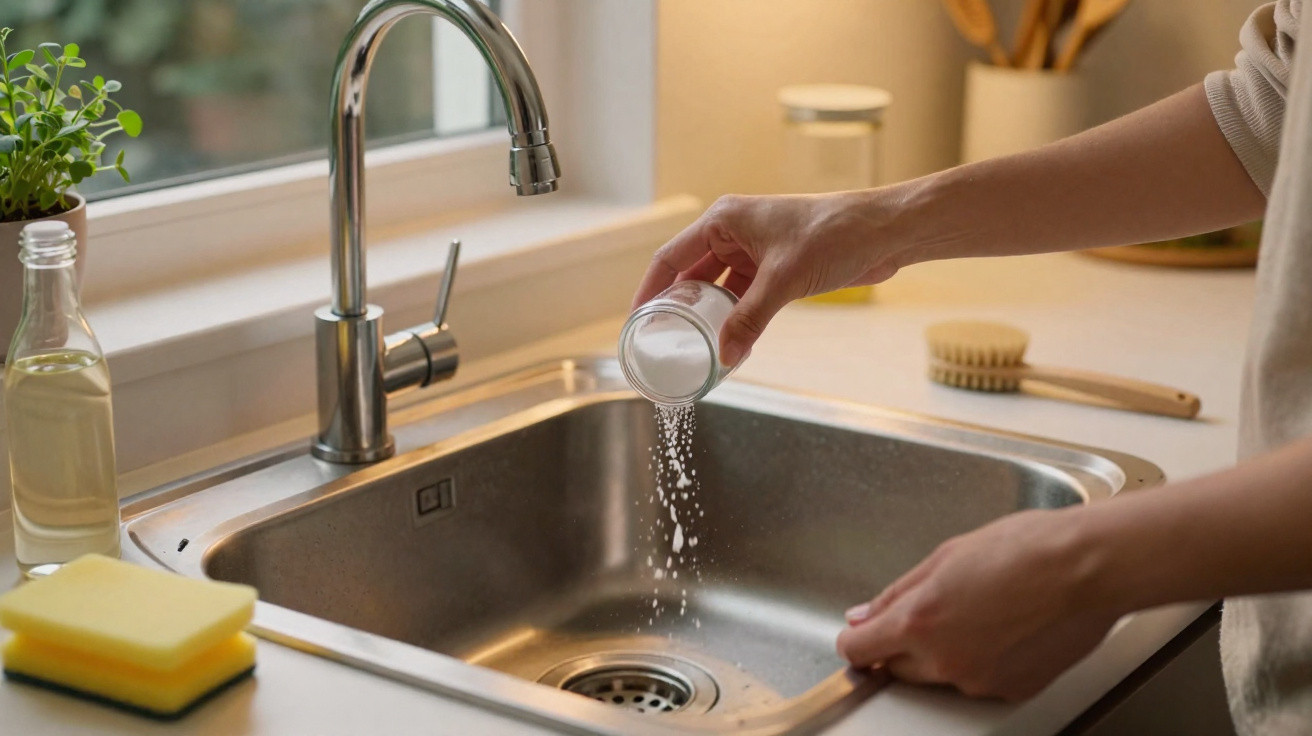
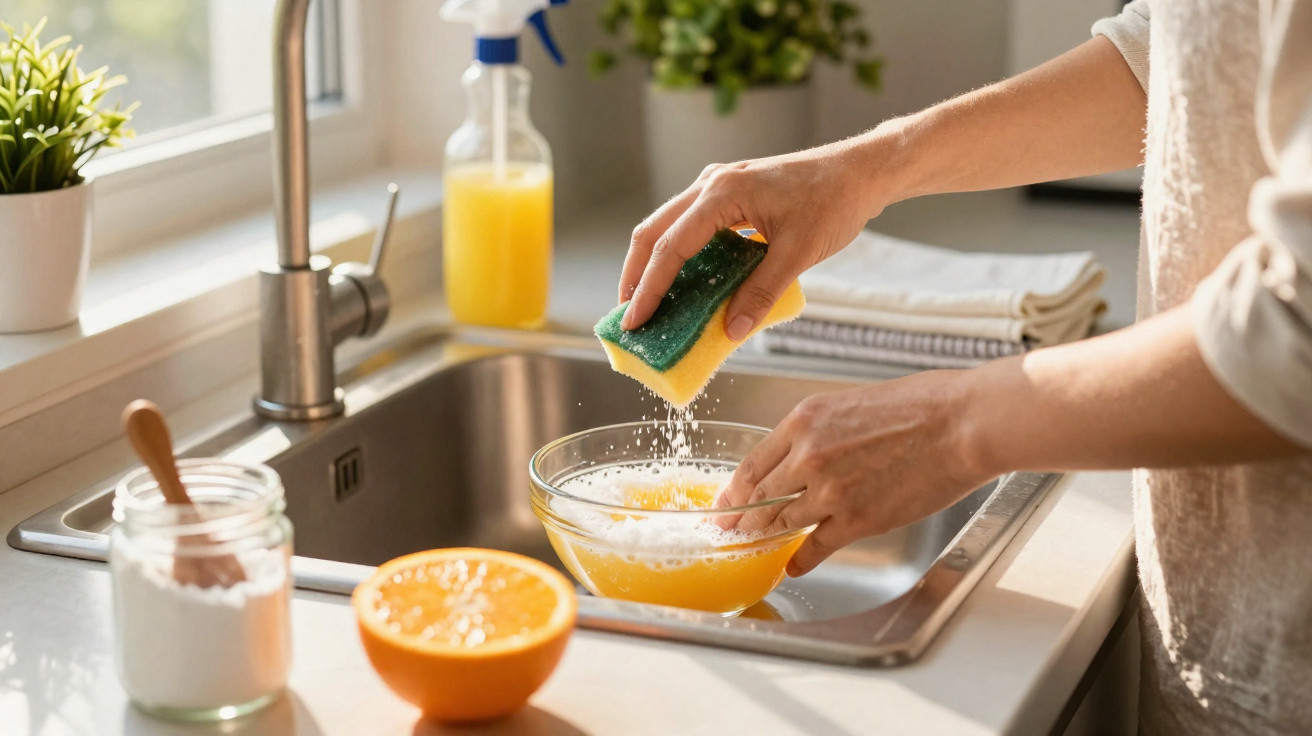
To make it, combine bicarbonate of soda with a small amount of water until it forms a creamy paste, without making it too runny. Apply it to stains on the lid and rub with a soft sponge, using circular movements and light pressure for a few seconds.
A gentle paste for stubborn stains
The consistency needs to be creamy.
If it is too runny, the mixture drips away before it can work on the stain.
If it is too dry, it may create unnecessary friction against the plastic.
After rubbing, leave the paste in place for several minutes before rinsing it off thoroughly. If the stain remains visible, repeat the process without using a scouring pad, as this scratches the plastic and can trap dirt afterwards.
Use the technique in this order:
- wash the lid first with mild washing-up liquid;
- mix bicarbonate of soda with a little water to create a paste;
- rub with a soft sponge in circular motions;
- leave it to work for a few minutes before rinsing;
- dry thoroughly before storing the lunchbox.
When should you use vinegar and sun drying?
Vinegar is most useful when the main issue is an ingrained odour, particularly in lids used for garlic, onion or food stored for several days. Soak it in warm water with vinegar, then wash it with mild washing-up liquid.
Sunlight can also help, as moderate exposure lightens surface stains and reduces stale smells after washing. Place the clean lid in a ventilated spot, away from excessive heat, so it dries fully and regains freshness and appearance.
These measures work best when you:
- use warm, not boiling, water to avoid warping the plastic;
- soak only for as long as needed to loosen odours;
- rinse thoroughly to remove the smell of vinegar;
- dry in moderate sunlight and a ventilated place;
- avoid storing the lid while it is still damp.
How can you prevent new stains on a lunchbox lid?
Those who like simple solutions, such as the household uses of lemon in cleaning, can apply the same principle to lunchboxes: mild acidity, cleaning powder and proper drying. The key is to act early, before a stain and odour become fixed.
To prevent fresh marks, allow very hot food to cool slightly before putting the lid on, and do not store sauces for several days. Washing soon after use protects the plastic, prevents persistent smells and increases its durability.
Comments
No comments yet. Be the first to comment!
Leave a Comment