
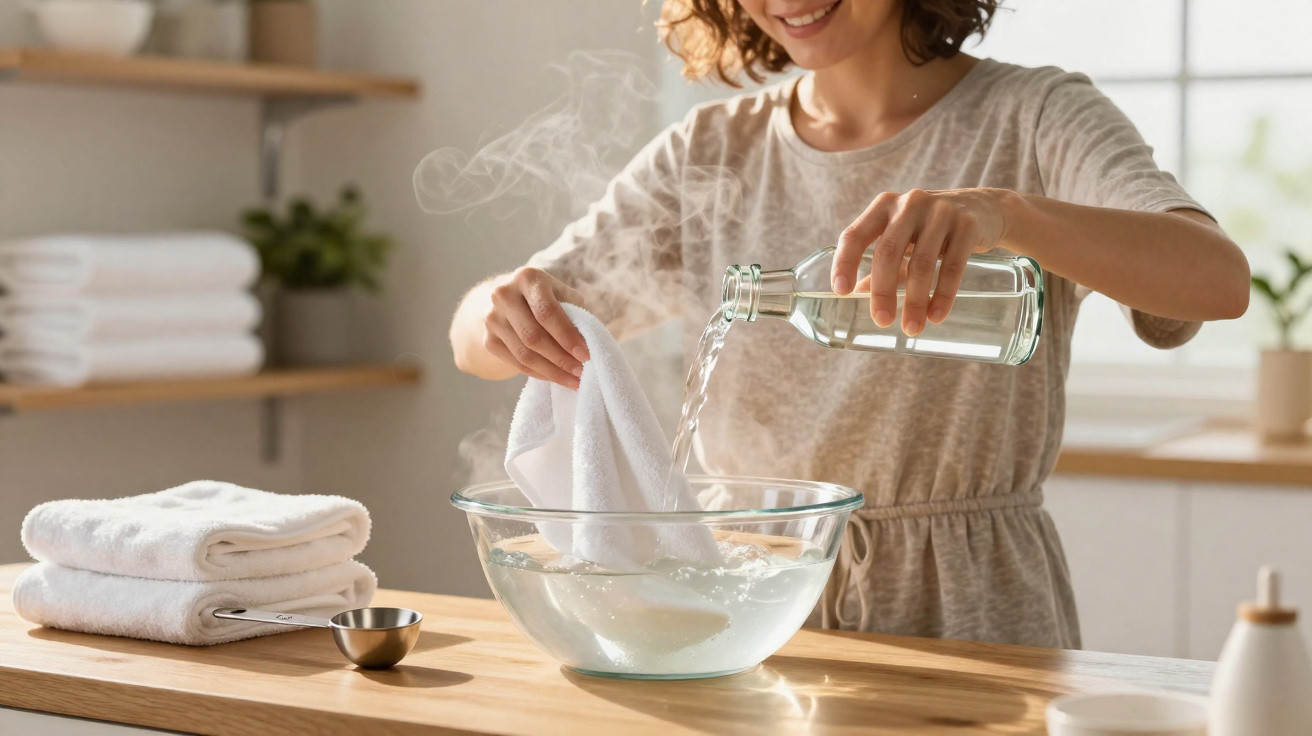
Bath towels that no longer absorb water effectively are usually affected by a build-up of residue in their fibres. Over time, excess fabric conditioner, detergent and even minerals in the water can create a coating that stops the fabric from performing properly. However, a simple, inexpensive household method can help restore much of their absorbency.
Why do towels lose their ability to absorb water?
The issue often begins during washing itself. Frequent use of fabric conditioner leaves a film on the fibres, producing an immediate soft feel but also effectively “coating” the fabric and making it harder for water to penetrate.
When this is combined with too much powder or liquid detergent, some of the product is not rinsed away and becomes lodged in the towel’s weave. In areas with harder water, mineral salts such as calcium and magnesium can build up too, making the towel heavy, slow to dry and as though it has never been rinsed properly.
Watch a video on the Fazendo em Casa YouTube channel explaining how to remove grease from the fibres of rough bath towels, so that they dry properly again and become soft:
https://www.youtube.com/watch?v=W-L57kQ8I-M
How do 2 tablespoons in hot water help restore towels?
A practical way to remove this residue layer is to use distilled white vinegar mixed with hot water. Together, they help dissolve detergent, fabric conditioner and minerals trapped in the fibres, creating space within the fabric for it to hold water again.
For an easy household solution, add around 2 tablespoons of distilled white vinegar to each medium-sized basin of very hot water, but do not let it boil. The amount can be adapted to suit the number of towels, provided the water-to-vinegar ratio is maintained.
- White vinegar: helps break down grease from fabric conditioner and detergent residue.
- Hot water: boosts the vinegar’s effect by loosening dirt built up in the fibres.
- Soaking time: allows the solution to reach deeper layers of the fabric.
What is the step-by-step method for treating towels?
This method combines soaking in hot water and vinegar with a further wash and thorough rinse. As a result, the fibres become less restricted and are ready to absorb water more effectively once fully dry.
- Separate the towels: gather only bath or hand towels with poor absorbency, without mixing them with other laundry.
- Heat the water: fill a basin, bucket or sink with enough hot water to cover all the towels.
- Add the ingredient: stir 2 tablespoons of white vinegar into each medium-sized container of water.
- Soak the towels: immerse the items, ensuring every towel is fully covered by the solution.
- Leave the solution to work: soak for around 30 to 60 minutes, stirring occasionally.
- Rinse thoroughly: drain the water and rinse the towels under running water until the vinegar smell is very faint.
- Wash again in the washing machine: run a normal wash using a small amount of detergent and no fabric conditioner, selecting a good rinse cycle.
If your washing machine has a fabric conditioner drawer, you can put a small amount of vinegar in this compartment instead of the usual product for this wash only. This approach often improves rinsing and further reduces the feeling of “detergent clinging” to the fabric.
How can towels stay soft and absorbent for longer?
With normal household use, the hot-water and vinegar treatment can be repeated every 1 or 2 months, depending on the hardness of the local water and how often the towels are used. It does not need to be done with every wash; it is simply periodic maintenance.
Between treatments, use only a small amount of detergent, following the manufacturer’s dosage guidance, avoid conventional fabric conditioner, hang towels fully open in a well-ventilated place and do not overuse high drying temperatures. These straightforward habits keep the fibres freer from residue, extend the life of the towels and prevent the feeling of a “new towel that does not dry you”.
Comments
No comments yet. Be the first to comment!
Leave a Comment