
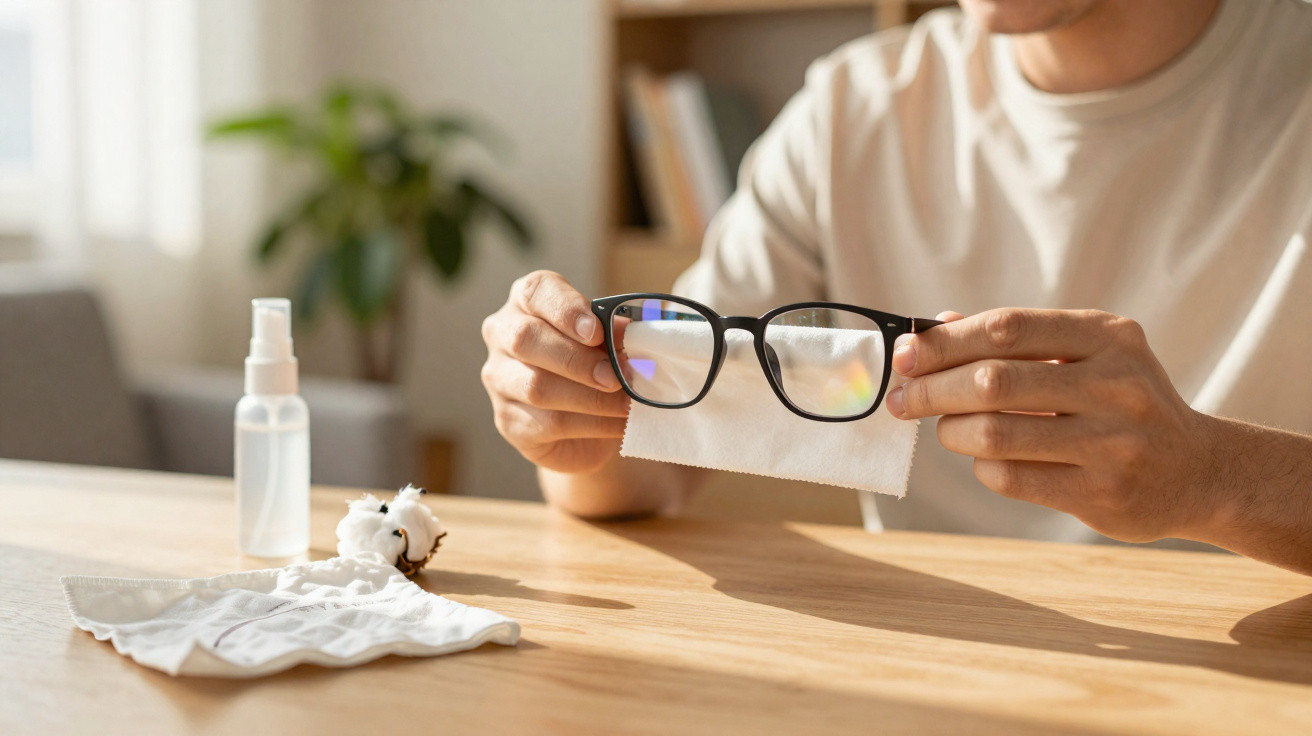
Anyone who wears glasses knows the problem: one small mark or smear on a lens is enough to make the world look blurred. Ironically, the supposedly handy “quick fixes” often cause the greatest damage. A few straightforward habits can make vision noticeably clearer while extending the life of your glasses.
Why cleaning glasses incorrectly can become expensive
Modern glasses can easily cost several hundred pounds. Their lenses often have sophisticated coatings to protect against reflections, UV radiation or blue light. These layers are precisely what can be sensitive to heat, friction and harsh chemicals.
Most micro-scratches are caused not by drops, but by incorrect day-to-day cleaning.
The tricky part is that many scratches are barely visible at first. Over time, however, glasses can look “cloudy”, contrast is reduced and headaches may become more frequent. Replacing the lenses then often becomes unavoidable – an expensive and entirely unnecessary outcome if a few rules are followed.
Keep your hands off: cleaning methods that damage glasses
Before looking at the right techniques, it is worth considering the common mistakes that almost everyone makes at some point.
- Hot water: Excessive heat can loosen or distort coatings.
- Paper tissues and kitchen roll: These contain fibres and often tiny particles that act like fine sandpaper.
- Clothing: A T-shirt, jumper or scarf collects dirt and dust, which is then rubbed across the lenses.
- Glass cleaner, all-purpose cleaner and nail varnish remover: Solvents can attack plastics and coatings.
Paper and textiles in particular appear harmless because they look soft. In practice, though, they collect dust, sand, skin flakes, make-up and tiny foreign particles – the ideal recipe for fine scratches.
1. Gentle basic cleaning with water and mild detergent
The simplest and, at the same time, most thorough approach comes straight from a good optician’s workshop: cool to lukewarm water and a mild cleaning product.
How glasses wearers should proceed step by step
- Wash your hands thoroughly so that no sand or grease gets onto the lenses.
- Hold the glasses under cool or slightly warm water – never hot water.
- Put a tiny drop of mild, non-moisturising hand wash or washing-up liquid onto your fingers.
- Carefully rub the lenses and frame with your fingers, including the bridge and temples.
- Rinse thoroughly with water until no streaks of the product remain.
- Dry gently using a clean, soft cloth or a microfibre cloth.
Many opticians explicitly recommend this method because it reliably removes dirt, skin oil and cosmetic residue. There is also a welcome side benefit: freshly degreased lenses often mist up less quickly for a while, which is useful during temperature changes or when wearing a mask.
A drop of mild washing-up liquid often works better than expensive specialist sprays.
2. Microfibre cloth instead of a tissue: the everyday essential
For a quick clean while out and about, a good microfibre cloth is usually sufficient. Its fine fibres lift dirt and grease without damaging the lens surface.
What glasses wearers should keep in mind
- Use only microfibre cloths specifically intended for glasses.
- Do not use paper towels, napkins or tissues.
- If the lenses are heavily soiled, rinse them briefly with water before wiping.
- Apply only light pressure and use small circular movements when cleaning.
Many people receive a small cloth when buying their glasses. If it goes missing, a replacement is generally available inexpensively from an optician. If necessary, a lint-free cotton cloth can also be used, such as a very smooth tea towel – but wash it first to remove any finishing residues.
3. The most frequently overlooked detail: cleaning the cloth itself
A microfibre cloth picks up grease, dust and dirt every time it is used. If it remains unwashed for months, it gradually turns into an abrasive grey layer.
A dirty microfibre cloth can scratch glasses just as much as kitchen roll.
Keeping the cloth usable for a long time
- Clean the microfibre cloth regularly in the washing machine, ideally at 40 °C.
- Do not use fabric conditioner, as it clogs the fine fibres.
- Let the cloth dry completely after washing, then store it somewhere clean.
- Replace it with a new cloth at least once a year, or more often if it is used heavily.
Anyone reaching for their glasses several times a day should simply add the cloth to the regular wash every few weeks. This keeps its cleaning performance high and prevents scratches caused by accumulated particles.
4. Shine and hygiene with diluted household vinegar
Many households keep a bottle of clear household vinegar in the cleaning cupboard. When diluted, it is excellent for degreasing glass surfaces and leaving them shiny – and spectacle lenses can benefit too.
A simple vinegar mixture for home use
- Mix one part clear household vinegar with one part water.
- Pour the mixture into a small spray bottle or apply it directly to a microfibre cloth.
- Lightly spray or dab the lenses, then wipe them thoroughly with the cloth.
- Finally, polish with a fresh, dry cloth.
The acid in vinegar dissolves greasy deposits and produces a streak-free shine. It also reduces bacteria – an advantage because glasses come into contact with skin, sweat and make-up every day.
It is important to check the material when dealing with delicate frames. Metal or acetate frames generally tolerate the diluted solution well. For particularly unusual, painted or coated frames, it is worth asking an optician first.
5. Ultrasonic cleaners: professional cleanliness at home
Many opticians have a small device in which glasses are occasionally allowed to “bathe”: an ultrasonic cleaner. These machines are now also available for private use at moderate prices.
Ultrasound reaches areas that no cloth or brush can get to.
How an ultrasonic cleaner works
The device consists of a small water-filled tank, often with a removable basket. Ultrasonic vibrations create countless tiny bubbles in the water. These implode against the glasses’ surface, loosening dirt particles even from tight spaces around hinges, nose pads or engravings.
| Advantages | What to watch out for |
|---|---|
| Cleans extremely thoroughly, including concealed areas | Use only suitable cleaning fluid |
| Gentle on lenses and frames | Do not leave the glasses in the device longer than necessary |
| Can also be used for jewellery | Read the instruction manual carefully |
Many models operate in under a minute. For heavily soiled glasses, such as those exposed to building-site dust, gardening or sport, this type of device can make a clear difference.
How often glasses wearers should clean – and what else helps
How often glasses need cleaning depends greatly on everyday life. Office workers will usually manage with one thorough wash each day and a few quick cleans in between. Anyone working outdoors will need water and cleaning product more frequently.
A few small habits are useful too:
- Always store glasses in a sturdy case, rather than loose in a bag.
- Never place lenses face down on a table or washbasin.
- When exercising, use a suitable strap or sports glasses so they do not fall.
- Avoid contact with hairspray and perfume – spray first, then put your glasses on.
What lens coatings do – and why they need protection
Many people underestimate just how complex modern spectacle lenses are. Several ultra-thin layers are applied to the base material – usually plastic – including anti-reflection treatment, hard coating, tinting, and filters against UV or blue light. Chemicals and high temperatures can damage every one of these layers.
Regularly cleaning with glass cleaner, strong household products or hot water therefore gradually destroys the very protection paid for at the time of purchase. Many supposedly “cheap” cleaning shortcuts ultimately lead to considerably higher costs.
Anyone unsure which method is suitable for their lenses can ask an optician at any time. A quick inspection of the glasses at the practice, along with a few specific tips, can prevent costly follow-on damage later. This keeps vision clear and avoids replacing expensive glasses prematurely.

Comments
No comments yet. Be the first to comment!
Leave a Comment