
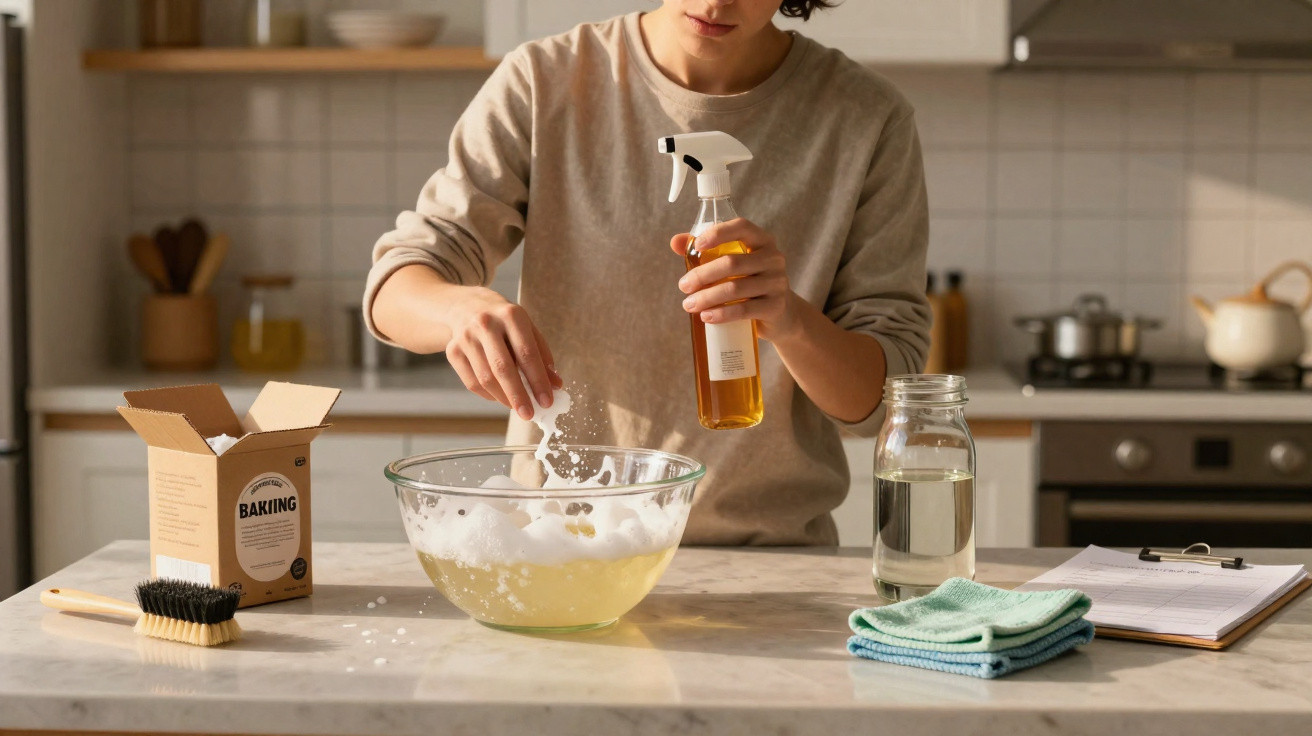
People switching to natural cleaners often reach automatically for vinegar and bicarbonate of soda. It fizzes, it bubbles and it smells like a “freshly cleaned” home. Yet this supposed miracle mixture is increasingly proving counterproductive: limescale marks return, stubborn dirt remains in place and odours disappear only briefly. The turning point comes with one realisation: the products themselves are not the issue, but the way they are combined.
The common kitchen mistake: confusing a showy reaction with cleanliness
The same scene plays out in countless homes: sprinkle bicarbonate of soda over a surface, add a splash of vinegar, watch the spectacle for a moment, then wipe it away. It feels like “thorough cleaning”. Foam signals action, and the mind mentally ticks the job off.
That is precisely where the misunderstanding lies. Although the visible reaction looks dramatic, the real cleaning performance often falls far short of expectations. The usual warning signs become obvious over time:
- Limescale rings around taps return after only a few days.
- Dull films remain in the shower and washbasin.
- Odours from drains or the toilet quickly come back.
- Surfaces still feel slightly rough or “sticky” beneath the sponge.
Anyone cleaning properly expects the result to last longer. When it does not, the cause is rarely laziness; it is simply the wrong method. Grease and limescale behave in entirely different ways. One “all-purpose recipe” can hardly deal with both effectively.
“The mixture puts on a show – but strips both products of the very properties that make them so effective.”
What really happens chemically: self-sabotage in the cleaning bucket
From a scientific perspective, the explanation is straightforward: bicarbonate of soda is a base, while household vinegar is an acid. When they meet directly, they neutralise one another. The well-known fizzing is simply a neutralisation reaction.
What is essentially left at the end is:
- Water
- Carbon dioxide (the gas responsible for the bubbling)
- A salt with a largely neutral effect
In other words, the vinegar no longer works as a powerful limescale remover, and the bicarbonate of soda cannot make use of its strength as a mild abrasive. The reaction looks impressive, but its effect on the surface is surprisingly gentle.
Another common mistake is preparing these mixtures in spray bottles for later use. However, the chemical reaction begins immediately and finishes after a short time, leaving the bottle with little more than lukewarm water and residue. The longer it sits, the less useful it becomes.
“Anyone who mixes and stores vinegar and bicarbonate of soda deliberately destroys exactly what makes each of them so effective on its own.”
Using vinegar properly: when acid reaches its full potential
Used on its own, vinegar plays to its greatest strength: dissolving mineral deposits, meaning anything related to limescale. Typical uses include:
- Limescale-covered taps and shower heads
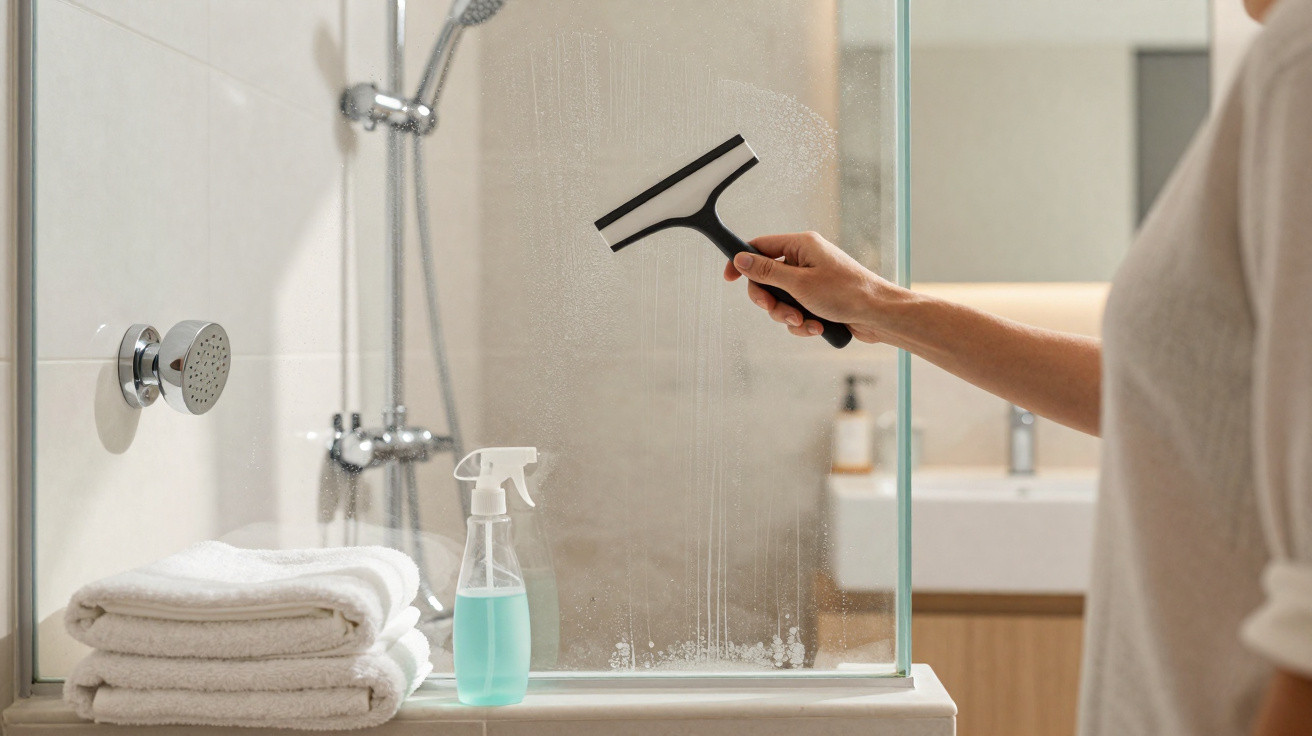
- Dull shower screens with stubborn water-mark rings
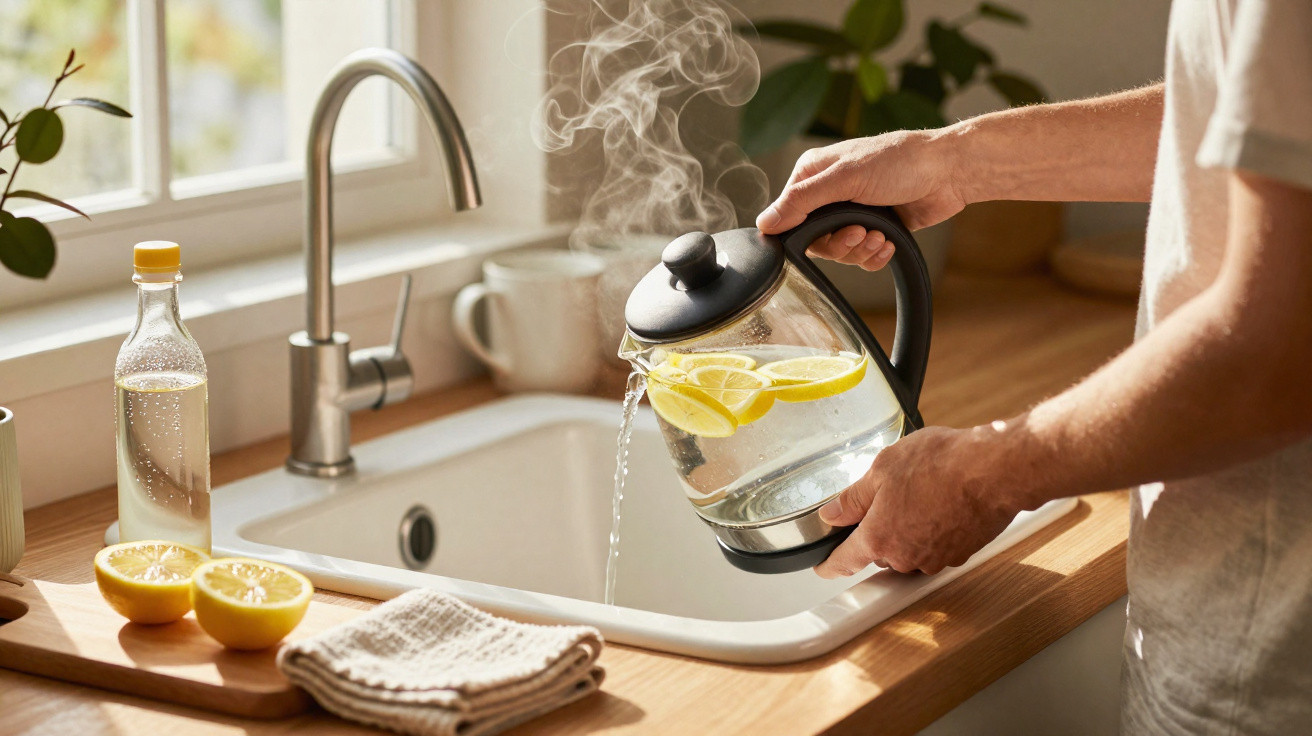
- Kettles and coffee machines (using a suitable dilution)
- Toilet rims and urine scale
The most important point is that vinegar needs time. Spraying it on briefly and wiping it off straight away wastes much of its potential. Particularly with heavy limescale, a clear three-step approach is worthwhile:
- Apply vinegar or vinegar cleaner generously, or soak a cloth and place it over the affected area.
- Leave it to work for several minutes or longer, depending on the amount of limescale.
- Rinse thoroughly and wipe over afterwards.
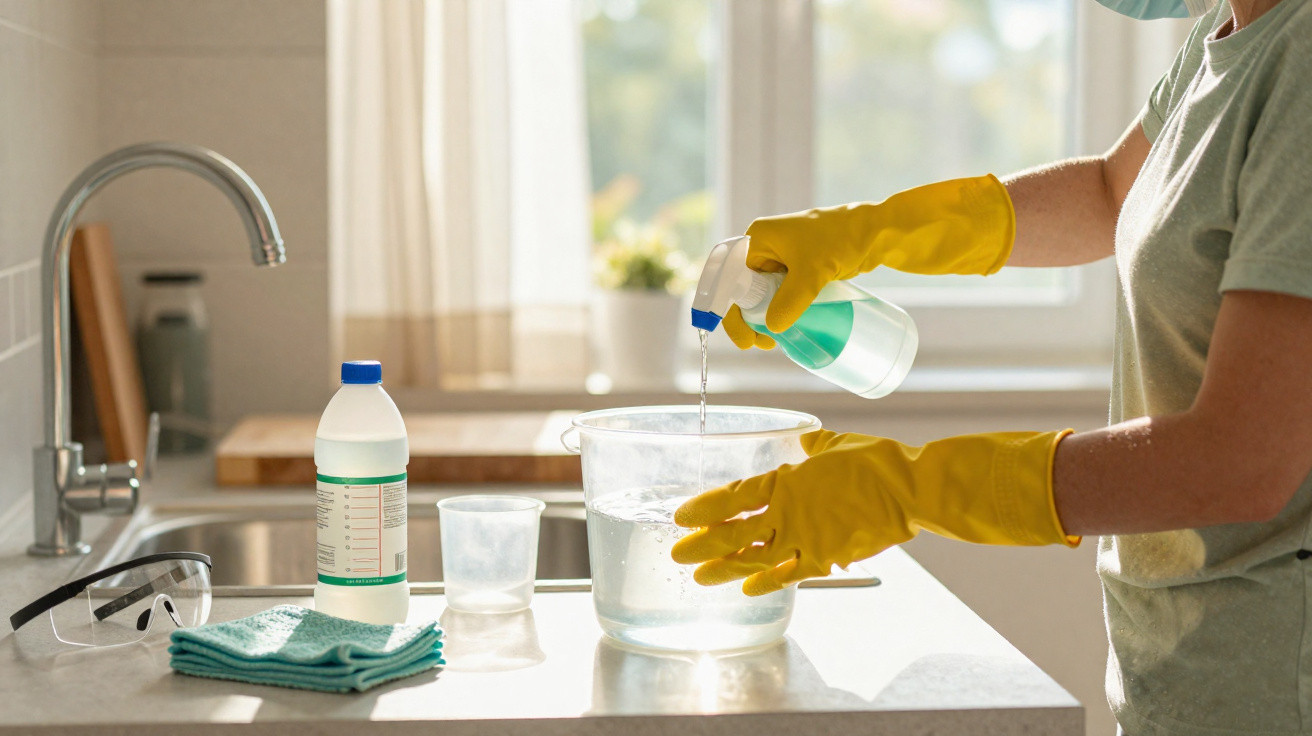
Good ventilation matters just as much, especially in small bathrooms and toilets. The sharp smell disperses more quickly, while the room remains pleasant to use.
Vinegar is not a cure-all. Delicate materials such as natural stone (marble, limestone), certain metals and some silicone seals can react badly. If a surface turns dull or becomes discoloured, that is a clear signal to stop. Rather than making the acid “stronger”, switch to a different product instead – for example, gentle scrubbing with bicarbonate of soda.
Using bicarbonate of soda correctly: when gentle pressure works better than foam
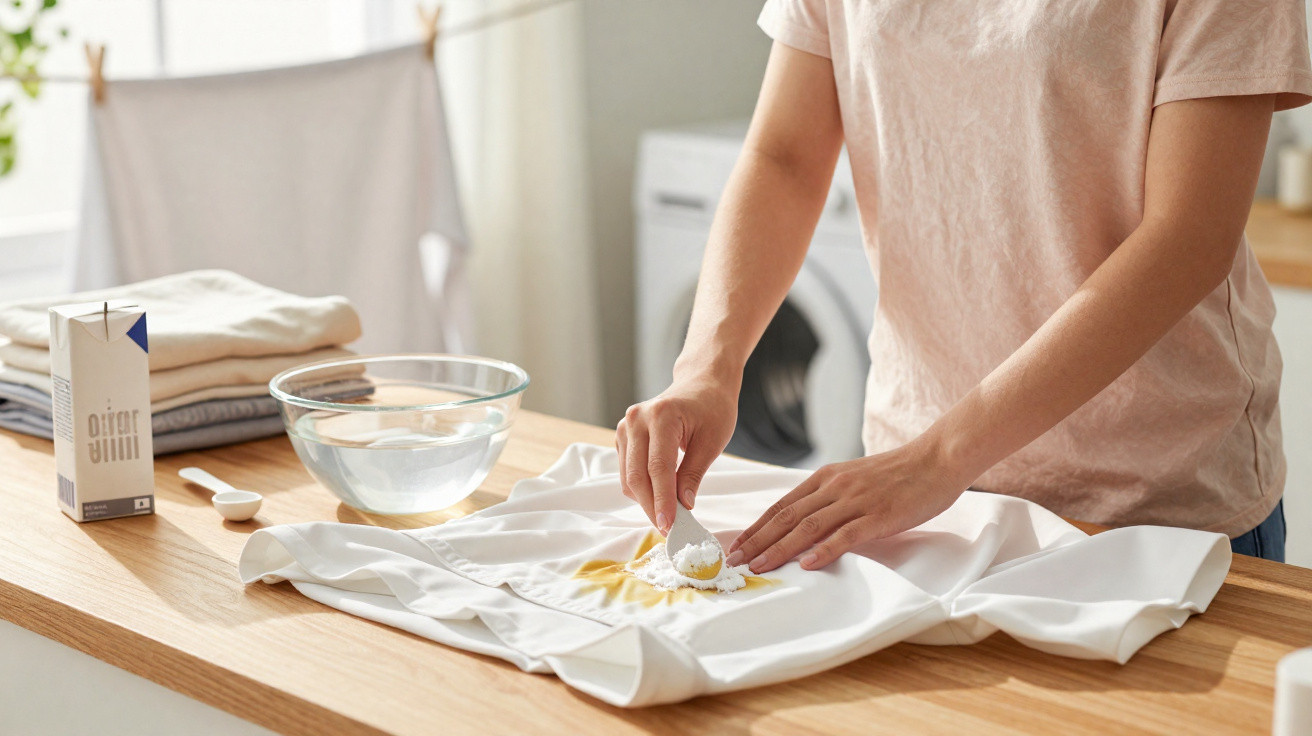
Bicarbonate of soda is most effective for mechanical cleaning. It is not dramatic, but it is dependable. It is particularly useful as a paste: mix a little powder with a small amount of water until it forms a spreadable consistency.
Suitable applications include:
- Discoloured grout in bathrooms and kitchens
- Burnt-on residue in the oven
- Burnt-on marks on hobs (do not scrub ceramic glass aggressively)
- Worn-looking stainless-steel or ceramic sinks
- Stains on chopping boards or worktops
Its effect comes mainly from abrasion that is not overly harsh. While wiping, you can feel dirt lifting away without scratching the surface – provided you do not use an excessively abrasive sponge. Afterwards, always rinse well with water or wipe with a wet cloth so that no residue is left behind.
Bicarbonate of soda becomes especially useful when paired with soap. Greasy deposits on the hob, extractor hood or kitchen cupboards can be removed particularly well this way: the soap tackles the grease, while bicarbonate of soda helps with light scrubbing. Unlike vinegar, this pairing does not create a chemical short circuit.
“Good cleaning combinations complement one another in their function – they do not cancel each other out.”
The better vinegar and bicarbonate of soda strategy: separate rather than mix
A simple principle goes a surprisingly long way if you want to avoid frustration:
| Problem | Best product | Important point |
|---|---|---|
| Limescale, water marks, urine scale | Vinegar on its own | Leave it to work, then rinse |
| Grease, burnt-on dirt, grout | Bicarbonate of soda as a paste | Scrub gently, rinse thoroughly |
| Heavy grease + stuck-on dirt | Soap + bicarbonate of soda | Combines dissolving and scrubbing |
| Dramatic foaming effects | Vinegar + bicarbonate of soda one after the other, do not store | Use only briefly, then rinse everything away |
If you want to use the fizzing as a trick, do so only in two separate steps: first sprinkle on bicarbonate of soda or apply it as a paste, then add vinegar to specific spots for a little “movement” – and rinse thoroughly immediately afterwards. This keeps it as an occasional helper rather than the foundation of your entire cleaning routine.
A practical everyday checklist
A short, clear reminder list on the cleaning cupboard can help stop old habits creeping back in:
- Always use undiluted vinegar for limescale; do not mix it.
- Use bicarbonate of soda as a paste for scrubbing jobs.
- Never store vinegar and bicarbonate of soda together in ready-made sprays.
- Strange smells or poor results? Check whether the products were used separately.
- Test on an inconspicuous area first when dealing with delicate materials.
Why natural cleaners are often unfairly seen as “weak”
Many people who return to harsh chemical cleaners in disappointment have cleaned with good intentions but the wrong technique. When vinegar loses its acidity and bicarbonate of soda loses its alkaline nature, both genuinely perform “like water”. It is then easy to assume that “natural products are simply no good”.
In reality, numerous practical household tests and comparison reports show that, when used correctly, vinegar and bicarbonate of soda can hold their own against many specialist cleaners – but with a far shorter ingredient list and usually a lower price. The key is assigning each product clearly: what is limescale? What is grease? Where does the surface need a gentle partner, and where can the cleaning action be a little stronger?
Once you understand how these two basics work, you can avoid plenty of unnecessary purchases in the cleaning aisle – and, above all, the feeling of constantly scrubbing without ever really making progress. What matters in the end is not how spectacular the cleaning process looks, but whether the tap shines, the shower screen feels smooth and the kitchen truly feels clean after wiping down.
Comments
No comments yet. Be the first to comment!
Leave a Comment