
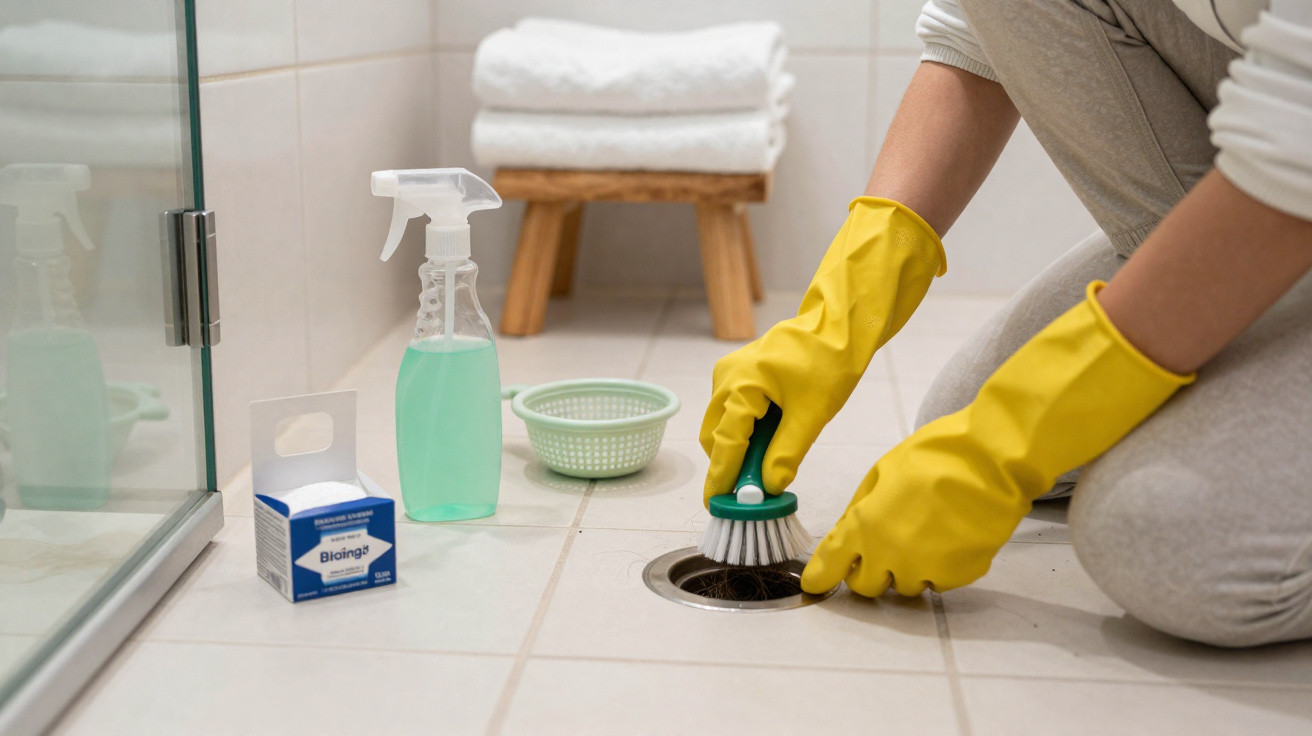
The bathroom drain collects hair, soap, body oils, cream, toothpaste, dust and biofilm through everyday use. When it is overlooked during cleaning, water begins to drain slowly, unpleasant smells develop and dampness creates a slimy layer that cannot be shifted with running water alone.
What builds up in the bathroom drain?
The build-up usually starts with strands of hair caught in the cover or trap. Soap residue, shampoo, conditioner, shaving cream and dead skin then cling to the hair, creating a damp mass.
Over time, this debris feeds biofilm: a slippery coating that allows microorganisms to attach to the drain’s internal surfaces. This is why bad smells may linger even when the floor and toilet are clean.
Why does neglecting this cleaning affect hygiene?
A dirty drain does more than slow the flow of water. It can trap odours, encourage slime around the edges, attract drain flies and spread contaminated splashes when water hits the drain area forcefully.
- Collected hair restricts the flow of water and makes blockages more likely.
- Soap and body oils leave a sticky film around the edges.
- Biofilm retains unpleasant smells even after surface cleaning.
- Constant moisture encourages slime, mould and small insects.
How often should you clean it for effective results?
In bathrooms used every day, light maintenance should be carried out once a week. This means removing hair from the cover, washing the drain lid and clearing visible residue before it hardens into a crust.
A more thorough clean can be done every fortnight or once a month, depending on use. Homes with long hair, pets washed in the bathroom, several occupants or a slow-draining outlet need shorter intervals.
How to clean the bathroom drain properly
The safest approach starts with physically removing the debris. Before pouring any mixture into the drain, put on gloves, take off the cover, lift out hair and residue with paper, old tweezers or a small brush, and dispose of it in the bin.
- Remove the drain grille or cover and wash it with mild washing-up liquid.
- Clear away hair and built-up soap residue from the opening.
- Scrub the edges using a brush, warm water and a few drops of washing-up liquid.
- Pour in hot, but not boiling, water to help loosen oils and soap.
- Add about 120 ml of bicarbonate of soda, followed by about 120 ml of white vinegar.
- Leave it for 10 to 15 minutes, then finish with more hot water.
Effective cleaning starts before a blockage develops
The bathroom drain responds better to regular maintenance than to harsh treatments once a problem has already appeared. Removing hair, scrubbing the grille and using hot water with washing-up liquid helps prevent soap, body oils and biofilm from forming a thick layer inside the pipework.
For a more hygienic bathroom, use bicarbonate of soda and vinegar only as supporting measures, never instead of manual removal. Do not mix vinegar with bleach either, as this combination can release dangerous gases. If sewage backs up, unpleasant smells persist or water remains standing, the best option is to call a plumber.



Comments
No comments yet. Be the first to comment!
Leave a Comment