
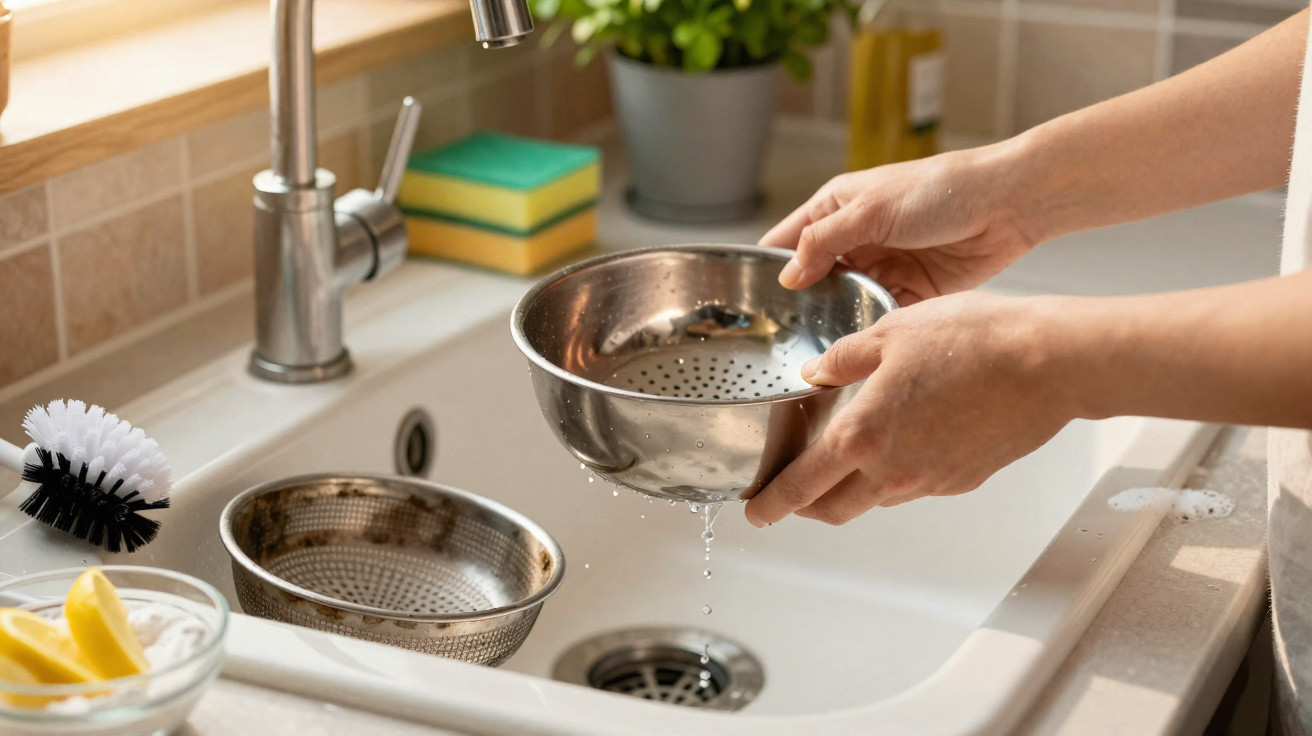
Everyday kitchen routines often conceal small details that make a major difference to household hygiene. One of them is the sink strainer: it catches food debris and helps prevent blockages, yet it can also collect grease, organic matter and micro-organisms. Without proper care, it may change in appearance, develop an unpleasant smell and even attract insects.
Why does a sink strainer turn dark and start to smell?
A sink strainer becomes darker because grease and organic residue build up on its surface and in its gaps. Food particles, frying oil, sauces and drinks settle there with every wash-up, even when larger leftovers are put in the bin.
Over time, this combination oxidises, creating a dark, sticky film encouraged by constant dampness. Bacteria and fungi multiply in these conditions and cause bad odours, which can become stronger on warm days or when the strainer is left wet all the time.
When should you replace a sink strainer and what signs should you look for?
The right replacement interval depends on the material, how often it is used and the cleaning routine. In domestic kitchens with moderate use, replacement is generally recommended every 3 to 6 months. In homes where a high volume of food is prepared, however, this period may be reduced to 1 or 2 months.
More important than tracking the time is watching for signs that cleaning is no longer enough. These show that the material has deteriorated and is likely to retain dirt and odours increasingly quickly.
- A persistent smell, even after washing with washing-up liquid and disinfectant.
- Dark marks that will not come off, indicating stubborn deposits or the start of corrosion.
- Cracks, warping or broken sections that trap additional debris.
- A rough surface that makes it easier for grease and slime to build up.
- A slimy layer forming repeatedly after only a short period of use.
How to clean a sink strainer properly every day
A straightforward hygiene routine slows down darkening and unpleasant smells while reducing the presence of micro-organisms. Ideally, remove debris immediately after use and carry out a more thorough clean during the week.
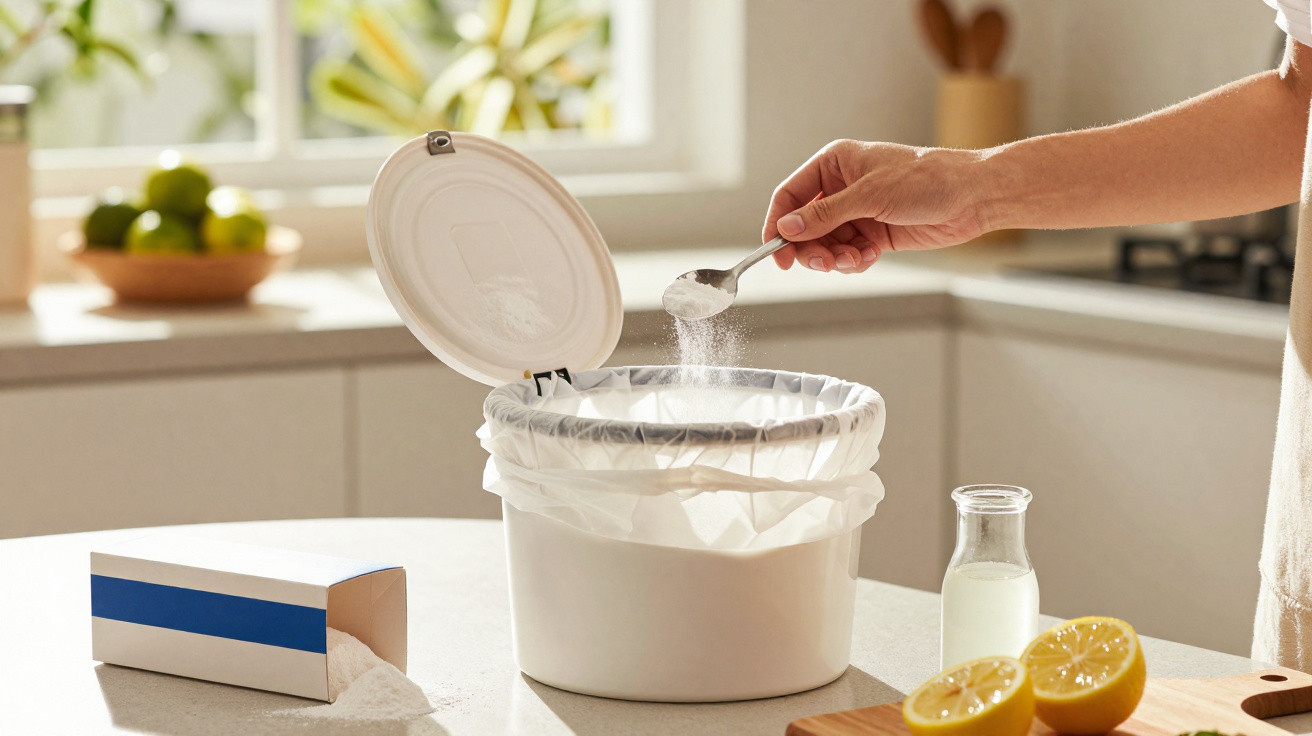
As well as washing-up liquid and disinfectant, products such as bicarbonate of soda and vinegar can help tackle odours, provided they are used sparingly so they do not damage the material. The following basic measures help extend the life of a sink strainer:
- Remove food scraps after every use and put them in the bin.
- Wash with mild washing-up liquid, scrubbing with a sponge or small brush.
- Use a firm-bristled brush to clean gaps and small holes.
- Apply disinfectant or a bleach solution once a week, following the label instructions.
- Rinse thoroughly and leave it to dry on a clean cloth or draining rack.
Which sink strainer material is best for domestic use?
The material has a direct effect on ease of cleaning and durability. In general, stainless-steel models are more resistant to corrosion and have a smooth surface, making it harder for grease and food particles to collect. When cleaned properly, they also retain their appearance for longer.
Plastic strainers are lightweight and inexpensive, but they scratch easily and tend to absorb pigments and odours. Aluminium versions may stain and oxidise when exposed to stronger products. Stainless steel is therefore usually the most practical and durable option, as long as it is paired with proper disposal of waste, regular cleaning and attention to signs of wear over time.




Comments
No comments yet. Be the first to comment!
Leave a Comment