
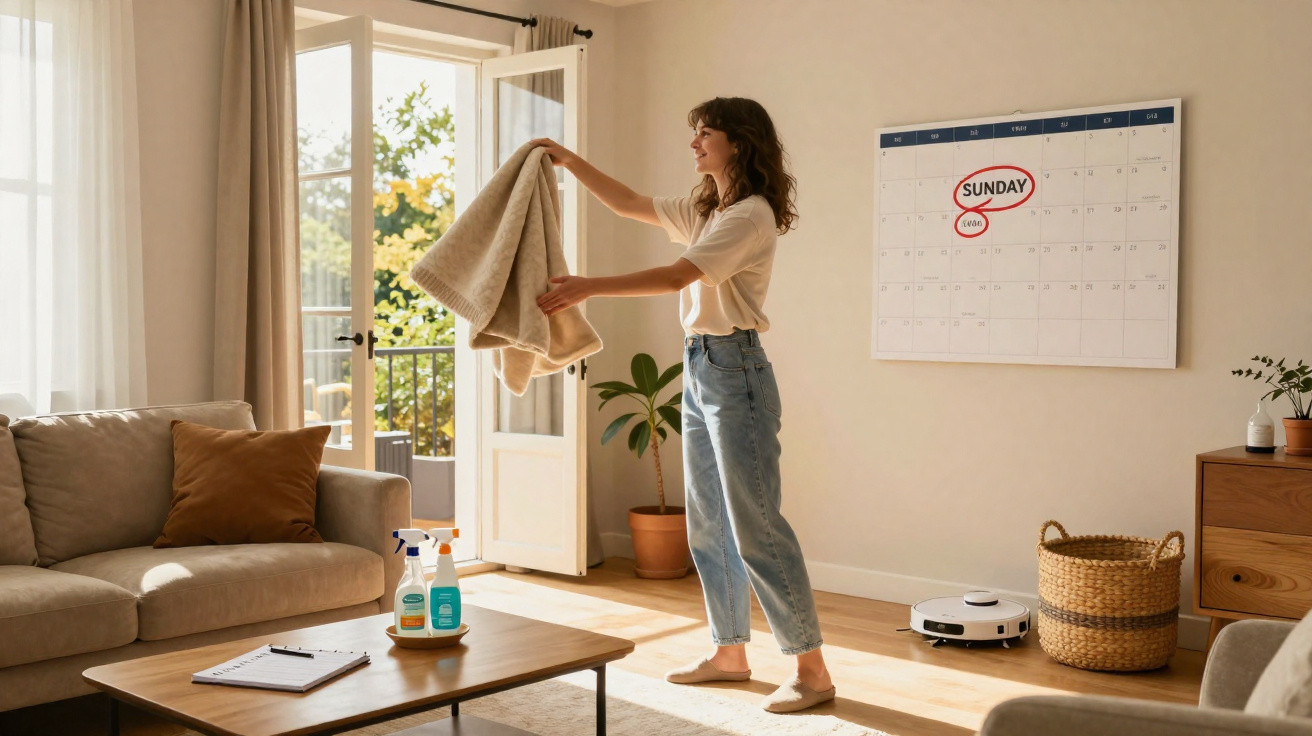
Move a few tasks around and your home can feel more peaceful, with clutter less likely to spill over into already busy days.
Home-care experts increasingly recommend one fixed weekly anchor to create a routine and reduce stress. Choose the time that suits you, then keep the remaining jobs brief throughout the week.
Why a weekly anchor day makes such a difference
Having one set reference day concentrates your attention. Important areas are less likely to be overlooked, and there is no need for late-night rushes. Cleaning is more effective because you can give it your full focus. This structure keeps your home looking presentable without draining catch-up marathons.
Choose one anchor day for the heavy lifts, then run brief, targeted maintenance blocks across the week.
The method also cuts interruptions and prevents you from retracing your steps. It safeguards your evenings. In most homes, unexpected messes become less common and the overall level of cleanliness remains more consistent.
Why Sunday works better than Monday or Saturday
Experts favour Sunday for straightforward reasons. Life tends to move more slowly, and most people are at home. There are usually fewer deliveries, errands and meetings, leaving room for strategic tasks that make the week ahead easier.
Monday competes for your focus: it brings the start of the working week, school runs and emails. Cleaning on Monday can easily be postponed or take far longer than planned. Saturday often comes with rival commitments, including errands, children's activities and social plans. That combination can lead to long cleaning sessions and frustration. Sunday offers the ideal balance of available time, limited pressure and worthwhile results.
Sunday builds momentum. Monday and saturday create friction you feel by midweek.
Three Sunday tasks that save time all week
- Change bed linen: this supports fresher sleep, reduces allergens and avoids a midweek rush. Strip the bed, let the mattress air for 10 minutes, then remake it.
- Vacuum living areas: remove crumbs and grit before they travel into corners and carpets. Make one measured pass, moving slowly and deliberately.
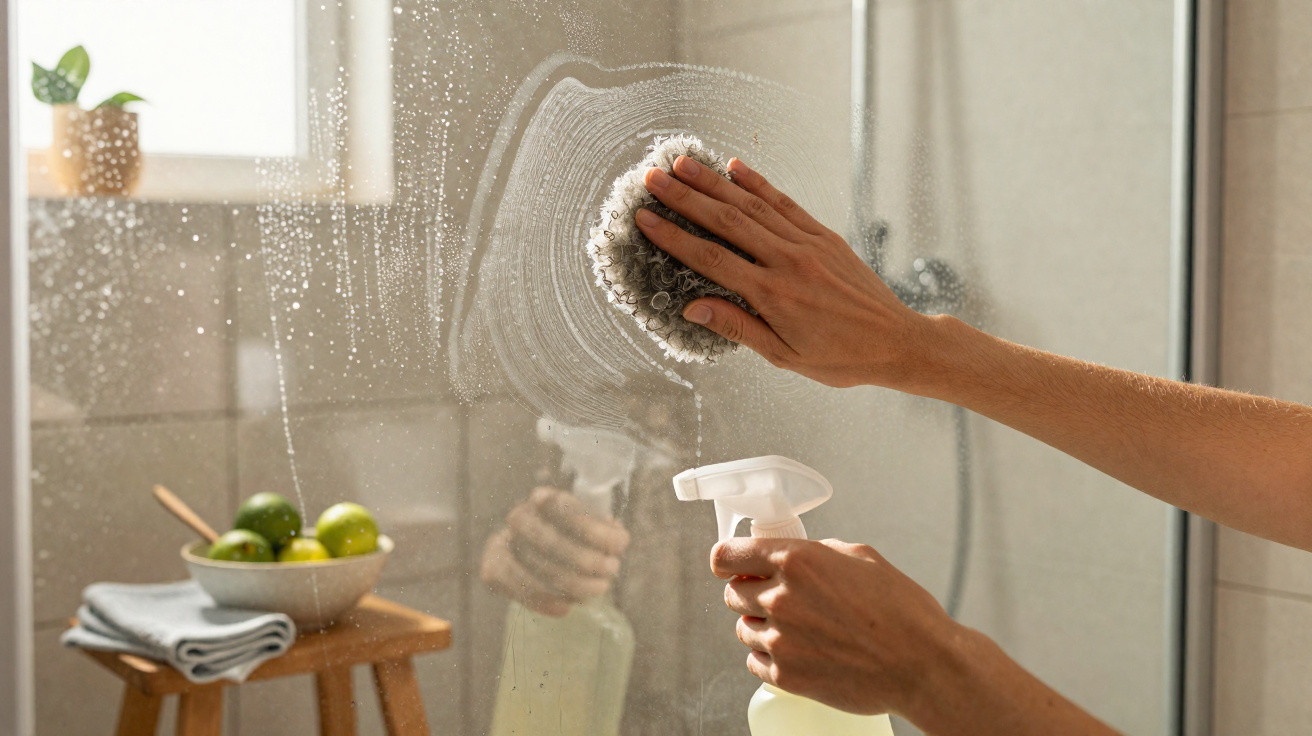
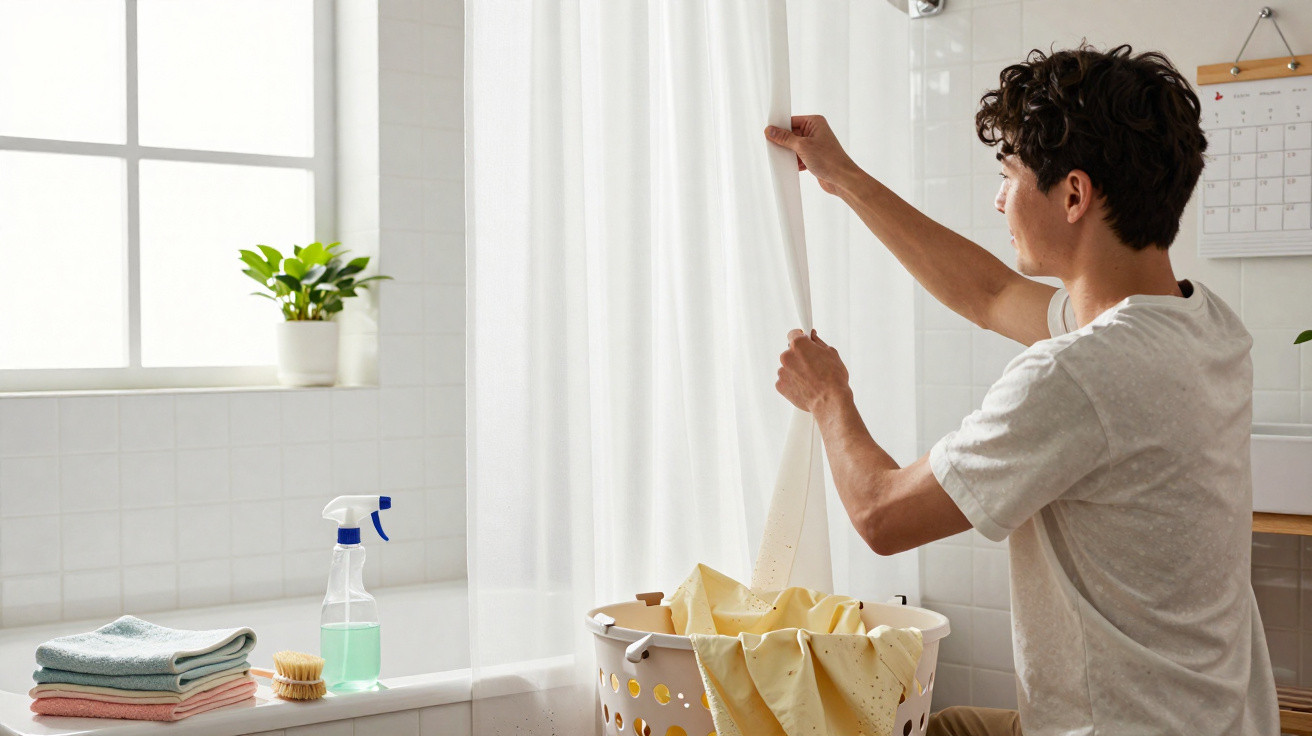
- Deep-clean the shower: tackle limescale before it builds up. Rinse with hot water, apply a mild descaler, leave it for 5 minutes, scrub and then use a squeegee on the glass.
Together, these three tasks establish a clean starting point. They also make every later session shorter, as dirt never gets the chance to become established.
A manageable rhythm for the rest of the week
Keep weekday tasks brief and focused. Allow 15 to 20 minutes, set a timer and finish when it goes off. The aim is consistent progress that you can maintain.
| Day | Focus | Minutes | Quick note |
|---|---|---|---|
| Monday | Bathroom touch-up | 15 | Disinfect the toilet, wipe the basin and taps, then quickly sweep or vacuum the floor. |
| Tuesday | Dust high and middle surfaces | 15 | Use a microfibre cloth on furniture tops, skirting boards, frames and vents. |
| Wednesday | Whole-house vacuuming | 20 | Start with corners, then tackle walkways. Slow passes work better than fast ones. |
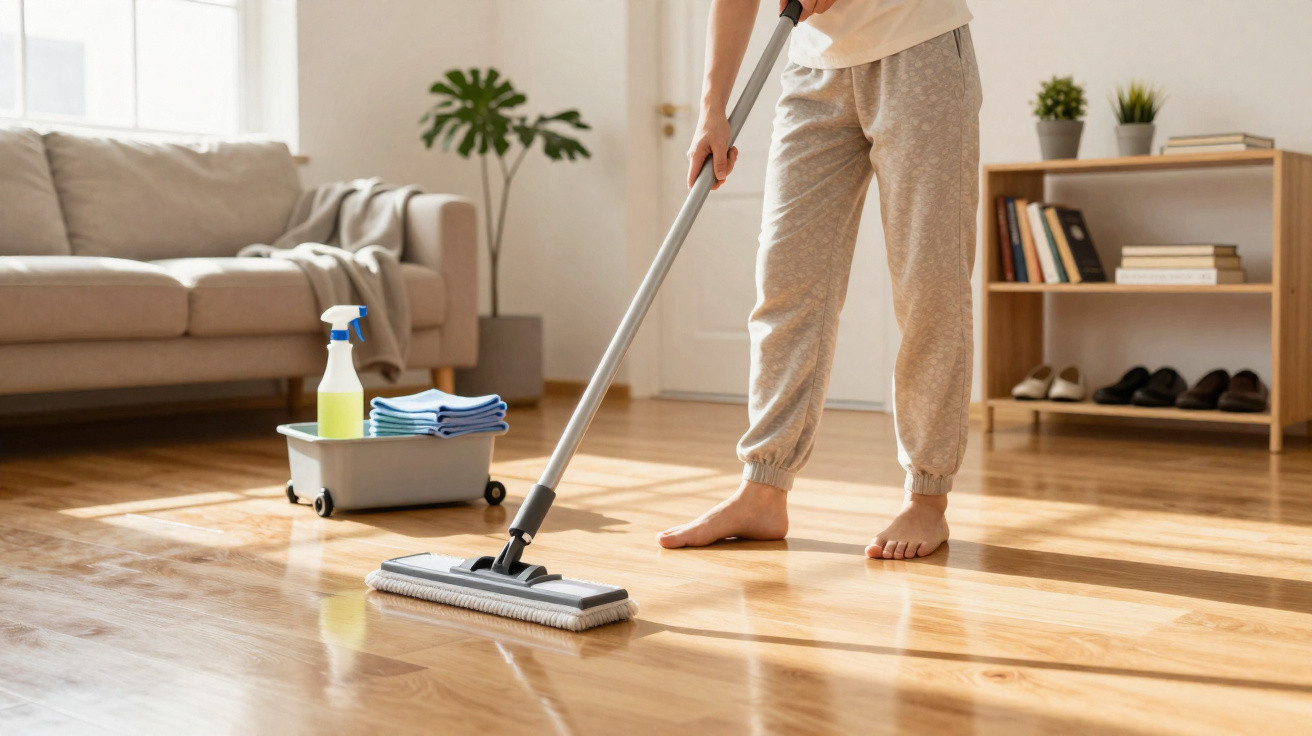
| Thursday | Floor washing | 20 | Laminate: use very little water. Wood: use a damp mop and wood-safe cleaner. Tile: use a well-wrung mop. |
| Friday | Kitchen reset | 15 | Check the fridge, wipe spills, discard leftovers and list staples that need replacing. |
| Saturday | Loose ends | 20 | Deal with larger loads and secondary rooms, then put away tools for a clean Sunday start. |
Small, predictable blocks keep you ahead. The house stays stable without long sessions that steal your weekend.
Keeping up the routine without burning out
- Choose a regular starting time. Start as soon as the timer begins, with no negotiation.
- Keep supplies close to where they are needed. A caddy on each floor is more useful than one large cupboard.
- Divide the work. One adult can take responsibility for the bathroom and the other for the kitchen. Children can empty small bins and clear surfaces every day.
- Make use of micro-breaks. Two minutes spent topping up soap, replacing a sponge or clearing a worktop still makes a difference.
Adjust the plan for your real home
Scale tasks to your space. Vacuuming the living area of a studio flat may take 10 minutes, while a large open-plan room may need 20. Treat each floor type properly. Stone is best cleaned with a pH-neutral product. Wood should only be mopped when lightly damp. Laminate can warp if it is soaked. If you have pets, add a quick midweek vacuum of rugs and the sofa.
Mistakes that can quietly undermine a clean home
- Leaving sheet changes for too long. Sleep quality suffers, and the bedroom takes more time to clean later.
- Allowing limescale to build up in the shower. You will need stronger products and more effort afterwards.
- Missing the Friday fridge check. Forgotten food creates odours, sticky surfaces and extra weekend scrubbing.
- Using too much water on laminate floors. The boards can swell, edges may lift and repairs can follow.
- Running out of supplies during the week. Schedule a small Friday top-up of bags, microfibre cloths and gentle cleaning products.
What changes after four weeks
Households notice clear improvements. There is less visible dust, the shower is faster to clean, and floors stay presentable between sessions. Late-night chores become less frequent. Small successes build on each other, and people stop debating what needs doing because the plan already provides the answer.
A straightforward time check for a family of four
Sunday takes less than an hour: around 20 minutes for two beds, 20 minutes vacuuming the living area, 10 minutes for the shower, plus setting laundry cycles running. Weekdays add four or five short sessions of 15 to 20 minutes. Across seven days, the total comes to roughly three hours. Many families reduce this from the five or six hours they previously spent when every job accumulated into one huge session.
Practical additions that quickly pay off
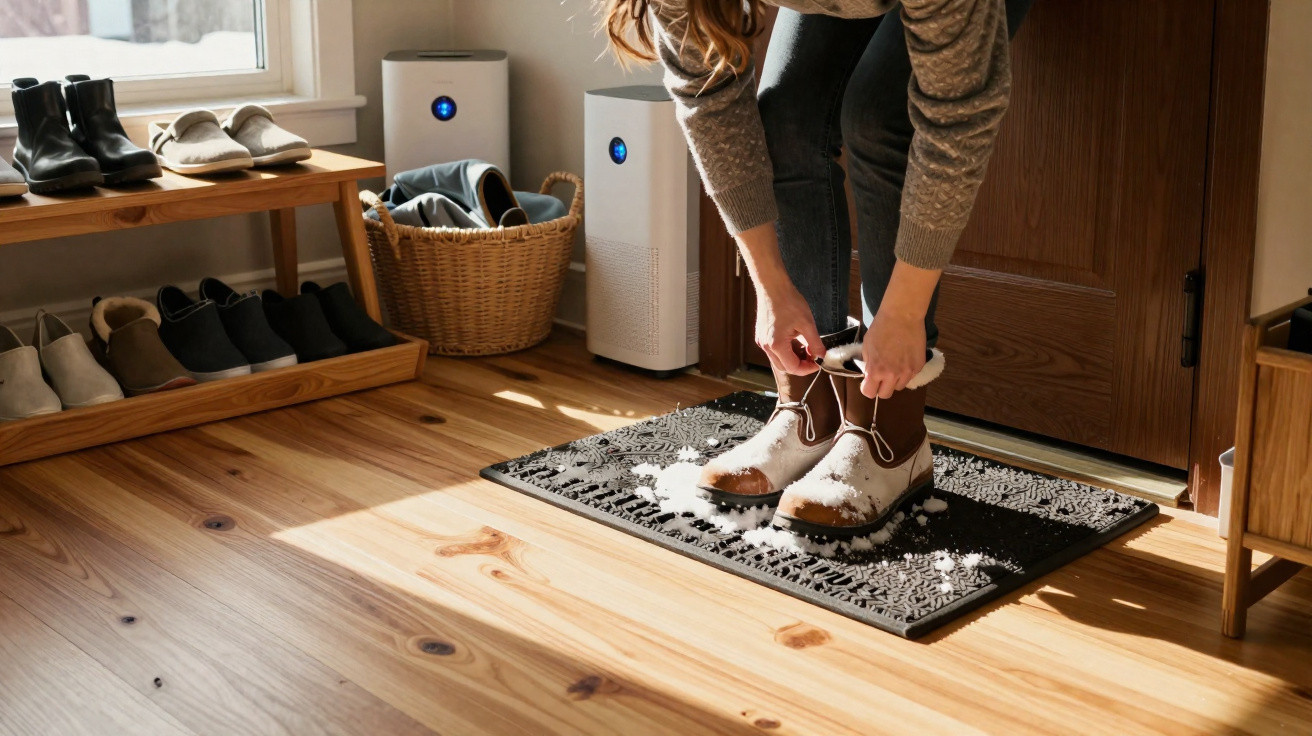
Start with prevention. A sturdy doormat, removing shoes at the door and keeping a microfibre cloth handy in the kitchen reduce dirt at its source. A fast squeegee after every shower keeps glass clear and limescale light. Line bins to avoid sticky messes. Mark one fridge shelf as “eat next.” That one change cuts both waste and wiping down.
Plan consumables on Friday. Check your supply of bags, eco dishwasher tablets, toilet paper and your preferred pH-neutral cleaner. Refill spray bottles. Wash used microfibre cloths in warm water with a small amount of detergent. Avoid fabric conditioner, as it reduces absorbency.
Have pets or allergies? Add a midweek pass over the sofa and rugs using a turbo brush. Wash pet blankets on Saturday using an odour-neutralising cycle. When pollen levels are high, vacuum entrance rugs every day and keep jackets close to the door. These adjustments maintain standards without lengthening your sessions.
Want to test the approach? Write down your main trouble spots for one week, then assign the largest one to Sunday's anchor session. Put the others into short weekday slots. Record the minutes accurately. If a task runs beyond the timer more than twice, divide it up. For instance, dust high surfaces on Tuesday and clean skirting boards on Wednesday. You will still get everything done without losing motivation.
Safety remains part of the routine. Ventilate the room while cleaning the bathroom. Never combine bleach with acids or ammonia. Wear gloves when using descalers. Keep capsules and sprays out of reach. These small habits protect both your surfaces and the people in your home.


Comments
No comments yet. Be the first to comment!
Leave a Comment