
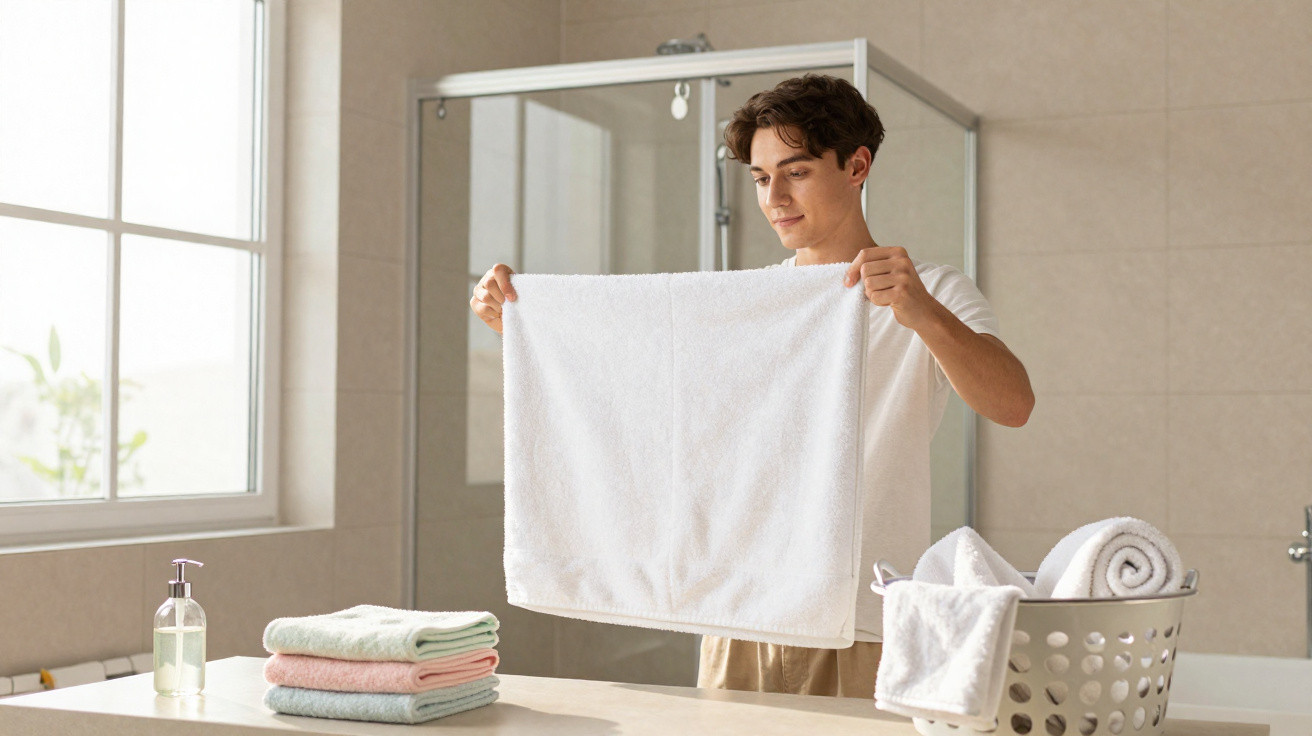
Leaving a bath towel hanging in the bathroom for weeks is often seen as a sustainable habit. A microbiology expert considers this routine risky: after only a few uses, bathroom textiles can accumulate vast quantities of bacteria and fungi, potentially affecting both skin and health.
Why towels become dirty sooner than we realise
A newly washed towel may still look clean after several days, but appearances are deceptive. Each time you dry yourself, it collects traces of:
- dead skin cells
- skin oils and sweat
- residue from shower gel, shampoo, make-up and sun cream
These substances settle in the fibres. While they may sound harmless, they provide an ideal feast for micro-organisms. The typical bathroom environment makes matters worse: it is warm, humid and often poorly ventilated.
“A damp towel in a poorly ventilated bathroom becomes an ideal breeding ground for bacteria and fungi – sometimes after just a few uses.”
New York microbiologist Philip Tierno points out that considerably more germs can be detected on towels after only two or three uses. If they then remain unwashed in a damp bathroom for several days, the risk of skin problems increases further.
People with acne, eczema, fungal infections or allergies are particularly sensitive. Anyone who regularly uses asthma inhalers or other inhaled medication also introduces additional particles and germs to their face, making towel cleanliness far more important than many people realise.
How often should towels really be washed?
Many households follow a simple rule: wash them once a week. Some bath towels remain in use for two or even three weeks. Hygiene specialists, however, recommend much shorter intervals.
“Recommendation: wash bath towels after no more than three to four uses – which often means every two to three days.”
The precise frequency depends on how often someone showers, how well the bathroom is ventilated and whether they have pre-existing skin conditions. Different types of towels have different recommended intervals:
| Type of towel | Recommended washing frequency |
|---|---|
| Bath towels | after 3–4 uses |
| Hand towels by the basin | every 1–2 days |
| Sports and sauna towels | after every use |
| Face towels / flannels | daily |
Anyone living in a particularly damp older property or using an internal bathroom without a window should shorten these intervals. The longer a towel stays wet after use, the faster germs multiply.
Risks of dirty towels: from skin irritation to infections
Most bacteria found on towels do not cause serious illness. Even so, repeated exposure can worsen existing issues or trigger new ones:
- Acne may become worse when the same germs are repeatedly rubbed onto the face.
- Fungal infections on the feet or in skin folds can spread more easily when several people share a towel.
- Staphylococci and other germs can encourage infections where skin is broken or irritated.
- People with allergies report itching and redness more often when towels are washed infrequently.
There is another consideration: anyone who is unwell – for example with a cold, a stomach bug or flu – also transfers pathogens to textiles. In such cases, hand towels and bath towels should be machine-washed much more frequently, ideally every day.
Keeping towels hygienic: practical everyday rules
Hygienic towels depend on more than simply washing them regularly. A few straightforward habits can make a considerable difference.
Dry towels properly rather than leaving them damp
- Spread towels out fully after use instead of hanging them in a thick bundle.
- Where possible, hang them on a hook or rail with space between the towel and the wall.
- In very humid bathrooms, move towels to another well-ventilated room to dry.
- Open a window or run the extractor fan until moisture has cleared from the room.
“The faster a towel dries, the fewer opportunities bacteria have to multiply.”
Washing temperature, detergent and fabric conditioner
A 60°C wash cycle is recommended for towels. This temperature is generally enough to reduce most germs substantially. A standard powder detergent often works better against odours and bacteria than very mild liquid products.
It is worth using fabric conditioner sparingly. It coats the fibres like a film: although this makes them feel soft, it also reduces absorbency. Many households find it works well to use it only every third or fourth wash – or to avoid it altogether and add a splash of white household vinegar to the fabric-conditioner drawer instead. This can neutralise odours and soften laundry without coating the fibres.
Do not share: everyone should use their own towel
In families or shared households, it is common for somebody to use another person's towel “just for a moment”. From a hygiene perspective, this is not advisable. Every household should establish clear ownership, for instance with different colours or hanging loops.
- A colour-coding system prevents mix-ups during busy everyday routines.
- Children learn early on to use their own towel.
- During infections (e.g. conjunctivitis, fungal infections or stomach bugs), keep textiles strictly separate.
How long do towels last?
Even with good care, textiles do not last indefinitely. Over time, they become less absorbent, the fibres break down and the fabric is harder to clean properly. Specialists advise replacing heavily used towels roughly every two years, although this may be a little sooner or later depending on use.
Signs that it is time for a new set include:
- The fabric feels greasy or stiff even after washing.
- Grey or yellowish shadows remain despite the towel having been freshly washed.
- It smells slightly musty immediately after drying.
- Fibres come loose, loops pull into threads or the first holes appear.
For people with sensitive skin, it can be useful to wash new towels twice before using them for the first time. This removes manufacturing residues and excess dyes while improving absorbency.
How often should towels be washed in special situations?
Some circumstances require stricter rules than everyday life for a healthy adult.
- Babies and young children: Change hand towels and flannels daily where possible, and wash bath towels after every two to three uses.
- Caring for relatives at home: Keep towels for people requiring care separate and wash them more often, ideally at 60°C with standard detergent.
- Skin conditions such as fungal infections, eczema or acne: Follow the advice of the treating practice closely and, if in doubt, choose shorter washing intervals.
- Athletes: Always wash sports and sauna towels after training, as sweat is a strong breeding ground for germs.
Those without a tumble dryer can also reduce the microbial load by allowing towels to dry completely in the air for longer – ideally in a room with low humidity and good air circulation.
What studies show about bacteria on damp textiles
Microbiology research demonstrates how quickly micro-organisms can double on wet surfaces. On a damp towel, their numbers can rise significantly in a short period, in some cases within 20 minutes. That may sound alarming, but it explains why a textile that remains soaking wet after every shower develops an unpleasant smell so quickly.
The familiar musty smell is almost always caused by bacteria and fungi breaking down organic residue. If a towel has a noticeable odour after showering, it is a clear sign that it belongs in the laundry basket rather than back on the hook.
A practical everyday approach: less guessing, more planning
Anyone who does not want to keep wondering when each towel needs washing can adopt a simple routine. For example:
- Set two or three regular laundry days each week for washing hand towels and bath towels.
- Give each person three or four bath towels in rotation: one in use, one clean, one in the wash and one spare.
- Change hand towels by the basin on fixed days, such as Monday, Wednesday and Friday.
Following routines like these not only protects your skin but also reduces the strain on your immune system. Clean, thoroughly dried towels are not a luxury detail; they are a quiet but highly effective part of a healthy daily routine – and they simply smell better.



Comments
No comments yet. Be the first to comment!
Leave a Comment